Understanding Geolocation in Mobile Apps: How Location-Based Services Enhance User Experience
Mobile apps today don’t just respond to users, they anticipate their needs. Whether it’s finding the nearest restaurant, tracking a delivery in real time, or discovering local offers instantly, users now expect apps to deliver smart, location-aware experiences. This shift has made geolocation in mobile apps one of the most powerful technologies driving modern digital experiences.
From ride-hailing platforms and food delivery services to eCommerce apps, fintech solutions, healthcare applications, and on-demand services, location-based services are transforming how businesses connect with users. By leveraging GPS tracking, real-time location data, and location-based notifications, mobile apps can deliver personalized experiences that boost engagement, improve convenience, and increase conversions.
Today, users expect apps to understand their context, provide nearby recommendations, and offer real-time updates without friction. This is where geolocation technology becomes essential. It empowers businesses to build smarter, more intuitive applications while enhancing mobile app user experience, personalization, and operational efficiency.
In this guide, we’ll explore geolocation in mobile apps, how it works, key benefits, real-world use cases, and why businesses should integrate location-based services, mobile app development solutions, and GPS-enabled features to create more engaging and scalable digital products.
What is Geolocation in Mobile Apps?
Geolocation refers to the process of identifying the real-time geographic location of a device using technologies such as GPS, Wi-Fi, Bluetooth, IP address tracking, and cellular networks. This technology enables mobile applications to detect where users are located and deliver location-specific content, services, and personalized recommendations. By leveraging geolocation, businesses can create more contextual and relevant user experiences that improve engagement and overall app performance.
Modern geolocation in mobile apps goes beyond simple navigation. It allows apps to understand user behavior, preferences, and movement patterns to provide smarter experiences. These capabilities make geolocation an essential component of mobile app development and custom mobile app development solutions.
Geolocation in mobile apps helps businesses:
- Provide personalized recommendations based on user location
- Offer real-time navigation and route optimization
- Deliver location-based notifications and alerts
- Improve customer experience with contextual content
- Enable live tracking for deliveries, rides, and services
- Support geofencing for targeted marketing campaigns
- Enhance safety and security features
As mobile apps continue to evolve, location-based services have become a key feature across industries such as eCommerce, healthcare, travel, fintech, logistics, and on-demand services. Businesses that integrate geolocation capabilities into their mobile app development strategy can create smarter applications, improve user retention, and deliver more engaging digital experiences.
Why Geolocation is Important for Mobile Apps
Geolocation enhances mobile app functionality by making applications more context-aware and user-focused. When apps understand where users are located, they can deliver relevant content and improve overall engagement.
Here are some key reasons why geolocation is important:
-
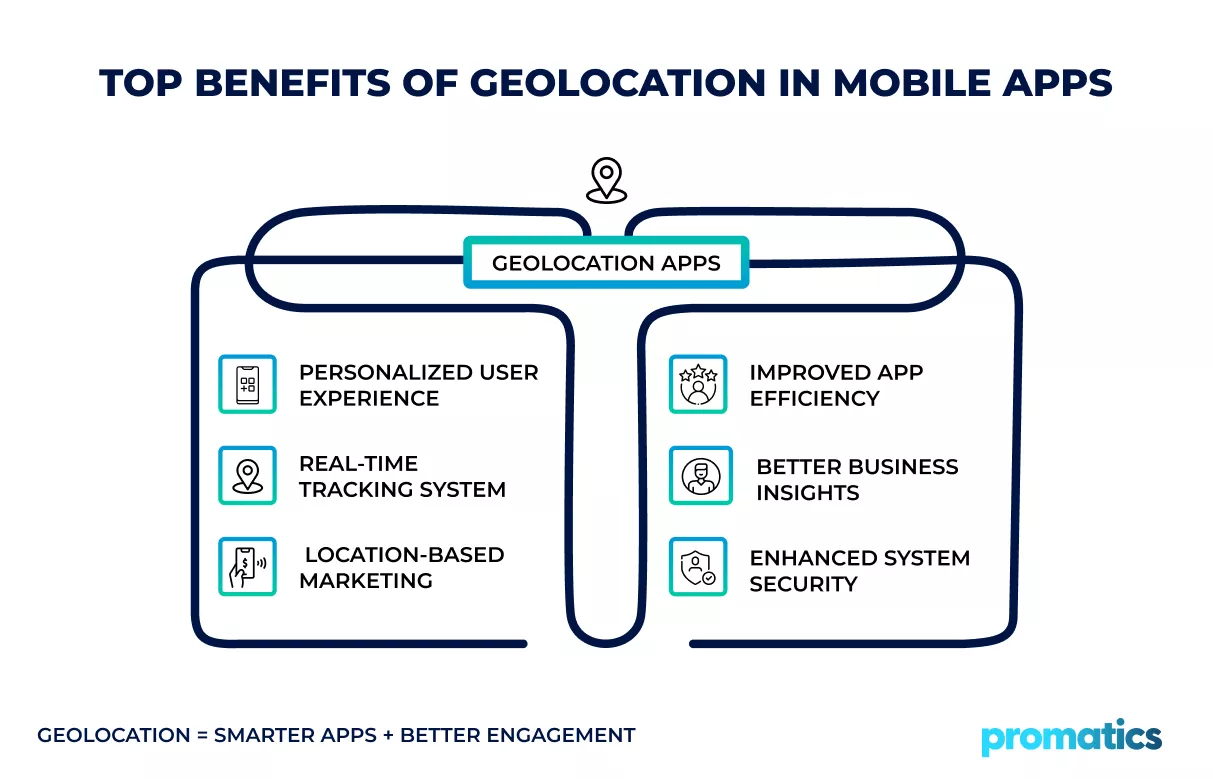
Personalized User Experience
Geolocation allows apps to deliver tailored experiences based on user location. For example:
- Nearby restaurant suggestions
- Local deals and offers
- Weather updates
- Nearby stores or services
Personalization improves engagement and encourages users to interact more frequently with the app.
-
Real-Time Tracking and Navigation
Geolocation technology enables real-time tracking, which is widely used in:
- Ride-sharing apps
- Food delivery apps
- Logistics platforms
- Navigation apps
Users can track their rides, deliveries, or routes in real time, improving convenience and trust.
-
Location-Based Marketing Opportunities
Businesses can use geolocation to send targeted promotions and notifications. For example:
- Nearby store offers
- Event notifications
- Local promotions
- Personalized push notifications
This helps businesses increase conversions and improve customer engagement.
-
Improved Business Insights
Geolocation provides valuable data about user behavior and movement patterns. Businesses can use this information to:
- Optimize services
- Improve delivery routes
- Identify high-demand areas
- Enhance marketing strategies
These insights help businesses make data-driven decisions.
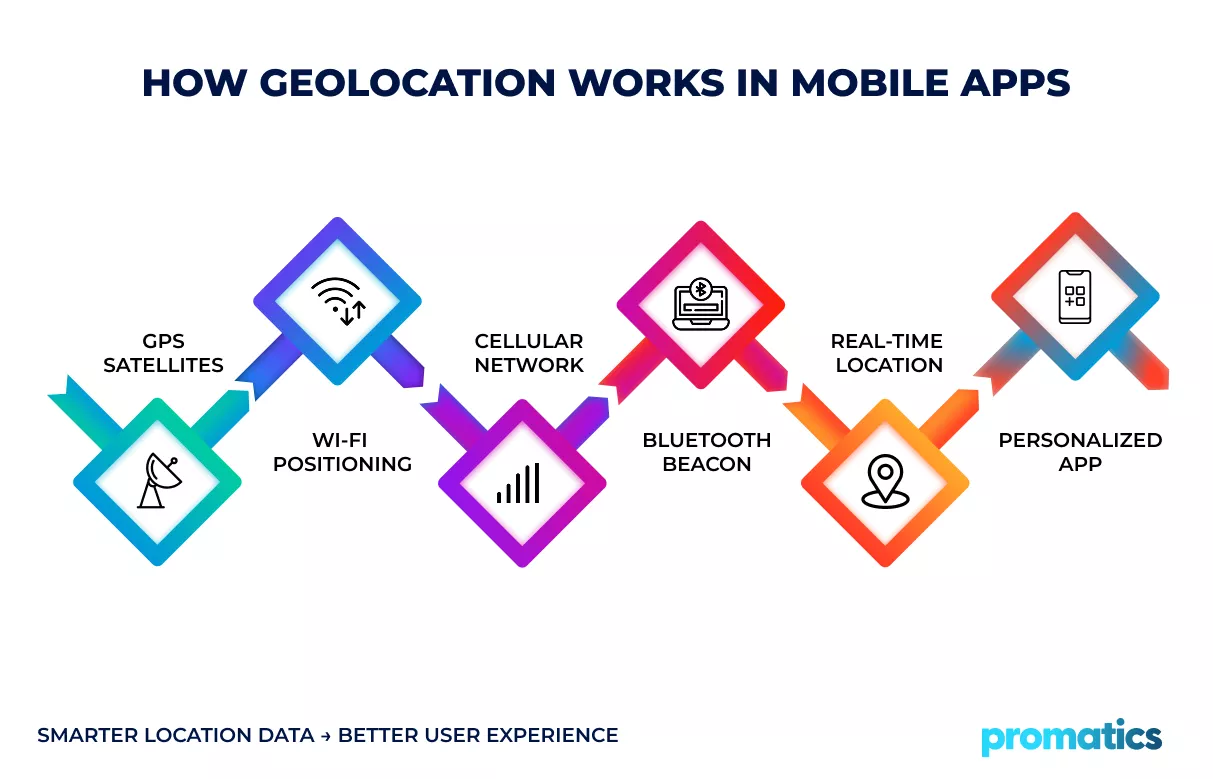
How Geolocation Works in Mobile Apps
Mobile apps use multiple technologies to determine a user’s location:
-
GPS (Global Positioning System)
GPS uses satellites to provide accurate outdoor location tracking.
-
Wi-Fi Positioning
Wi-Fi signals help determine location, especially in indoor environments.
-
Cellular Network Triangulation
This method identifies locations using nearby cell towers.
-
Bluetooth and Beacons
Bluetooth and beacon technology enable indoor navigation and proximity-based experiences.
These technologies often work together to provide accurate and reliable location tracking.
Types of Geolocation in Mobile Apps
Geolocation in mobile apps can be implemented in multiple ways depending on business requirements, user experience goals, and app functionality. Understanding the different types of geolocation helps businesses choose the right approach for their applications.
-
Real-Time Geolocation
Real-time geolocation allows mobile apps to track user locations continuously. This is commonly used in ride-hailing apps, delivery platforms, logistics tracking, and navigation applications. Real-time tracking improves transparency, enhances user experience, and enables faster decision-making.
-
Foreground Geolocation
Foreground geolocation tracks user location only when the app is actively being used. This approach helps reduce battery consumption while still providing location-based services such as nearby recommendations, navigation, and local search results.
-
Background Geolocation
Background geolocation allows apps to track location even when the app is not actively open. This is useful for delivery tracking, fitness apps, travel apps, and logistics platforms. Background tracking helps deliver seamless experiences and real-time updates.
-
Geofencing-Based Location
Geofencing enables apps to trigger actions when users enter or exit specific locations. Businesses use geofencing for targeted promotions, event notifications, reminders, and personalized offers. This technology improves engagement and enhances location-based marketing strategies.
Key Benefits of Geolocation in Mobile Apps
-
Enhanced User Experience
Geolocation helps apps provide relevant and timely information, making user interactions smoother and more engaging.
-
Real-Time Updates
Users receive real-time updates about:
- Traffic conditions
- Delivery tracking
- Ride status
- Nearby events
-
Increased Customer Engagement
Location-based notifications encourage users to engage with apps more frequently.
-
Better Operational Efficiency
Businesses can optimize logistics, delivery routes, and service areas using geolocation data.
-
Improved Safety and Security
Geolocation is used in emergency services, ride-sharing apps, and banking apps to enhance security.
Popular Use Cases of Geolocation in Mobile Apps
-
Ride-Hailing Applications
Ride-hailing apps use geolocation for:
- Driver tracking
- Route optimization
- Estimated arrival time
- Live navigation
-
Food Delivery Apps
Food delivery apps use geolocation to:
- Show nearby restaurants
- Track delivery partners
- Optimize delivery routes
- Provide estimated delivery times
-
eCommerce Apps
eCommerce apps use geolocation to:
- Show local deals
- Offer faster shipping options
- Suggest nearby stores
- Personalize product recommendations
-
Travel and Tourism Apps
Travel apps use geolocation to:
- Suggest nearby attractions
- Provide maps and navigation
- Show local recommendations
- Offer travel alerts
-
Healthcare Apps
Healthcare apps use geolocation to:
- Find nearby hospitals
- Track emergency services
- Enable patient monitoring
- Provide health alerts
-
Social Media Apps
Social media platforms use geolocation for:
- Location tagging
- Check-ins
- Event discovery
- Nearby friends
Industries Using Geolocation in Mobile Apps
Geolocation technology is widely used across industries to enhance mobile app functionality and improve user experience. Businesses across sectors leverage location-based services to deliver personalized, real-time, and efficient digital experiences.
-
Retail and eCommerce
Retail apps use geolocation to provide nearby store suggestions, local deals, faster delivery options, and personalized product recommendations.
-
Logistics and Transportation
Logistics companies rely on geolocation for route optimization, fleet tracking, delivery management, and real-time shipment monitoring.
-
Healthcare
Healthcare apps use geolocation to locate nearby hospitals, enable emergency services, and track patient or medical equipment movement.
-
Travel and Hospitality
Travel apps use location-based services to recommend nearby attractions, provide navigation, and offer personalized travel experiences.
-
Fintech
Fintech apps use geolocation for fraud detection, transaction verification, and location-based financial services.
-
On-Demand Services
On-demand platforms use geolocation to connect users with nearby service providers, improve response time, and enhance customer experience.
Emerging Trends in Geolocation Technology
-
AI-Powered Location Intelligence
Artificial intelligence enhances geolocation by predicting user preferences and behaviors.
-
Geofencing Technology
Geofencing allows apps to trigger actions when users enter specific locations, such as:
- Store promotions
- Event notifications
- Reminder alerts
-
Indoor Navigation
Indoor navigation is gaining popularity in:
- Shopping malls
- Airports
- Hospitals
- Large buildings
Key Features to Include in Geolocation-Based Apps
When building location-enabled mobile apps, businesses should focus on integrating features that enhance user experience and operational efficiency. Here are the essential features to include:
-
Real-Time Tracking
Allows users to track deliveries, rides, or services in real time.
-
Interactive Maps
Provides visual navigation and location-based information using map integration.
-
Route Optimization
Helps businesses optimize delivery routes and reduce travel time.
-
Geofencing Alerts
Triggers notifications when users enter or leave specific locations.
-
Location-Based Notifications
Sends personalized offers, alerts, and updates based on user location.
-
Offline Location Support
Allows navigation and location tracking even without internet connectivity.
-
Location History Tracking
Helps businesses analyze user movement patterns and improve services.
-
Multi-Device Tracking
Allows tracking across multiple devices for logistics and fleet management.
Augmented Reality and Location-Based Experiences
AR applications use geolocation to create interactive experiences in gaming, tourism, and retail.
Privacy and Security Considerations
While geolocation offers many benefits, privacy and data security remain important. Businesses should:
- Request user permission
- Use secure data storage
- Provide transparency
- Follow data protection regulations
This helps build trust and ensures responsible use of location data.
Challenges of Using Geolocation in Mobile Apps
Some challenges include:
- Privacy concerns
- Battery consumption
- Accuracy limitations
- Data security risks
However, modern technologies continue to improve geolocation accuracy and efficiency.
Why Businesses Should Use Geolocation in Mobile Apps
Businesses that integrate geolocation can:
- Improve customer experience
- Increase engagement
- Boost conversions
- Optimize operations
- Gain competitive advantage
Geolocation has become a powerful tool for creating smarter, more efficient mobile apps.
Future of Geolocation in Mobile Apps
Geolocation technology continues to evolve with advancements in artificial intelligence, 5G connectivity, and smart devices. The future of geolocation in mobile apps is focused on delivering smarter, faster, and more personalized experiences.
-
AI-Powered Location Intelligence
Artificial intelligence will enhance geolocation by predicting user behavior and delivering proactive recommendations.
-
5G-Enabled Real-Time Tracking
5G technology will improve location accuracy and enable faster real-time tracking.
-
Augmented Reality Navigation
AR-based navigation will provide immersive location-based experiences in retail, travel, and gaming.
-
Smart City Integration
Geolocation will play a major role in smart city infrastructure, traffic management, and public safety.
-
IoT-Powered Location Tracking
IoT devices will enhance location tracking across industries like logistics, healthcare, and manufacturing.
Conclusion
Geolocation technology is redefining how mobile apps interact with users by enabling personalized, real-time, and context-aware experiences. From smart navigation and live tracking to location-based marketing and data-driven insights, geolocation in mobile apps has become a powerful tool for enhancing user engagement and business growth. As user expectations continue to evolve, integrating location-based services is no longer just an added feature. It is a strategic advantage for businesses looking to deliver smarter and more intuitive digital experiences.
Businesses that leverage geolocation technology, mobile app development solutions, and location-based features can create highly engaging applications, improve customer satisfaction, and gain a competitive edge in today’s fast-moving digital landscape.
At Promatics, we specialize in building scalable, feature-rich mobile applications powered by advanced technologies like geolocation, AI, and real-time analytics. Whether you are developing a ride-hailing platform, delivery app, eCommerce solution, or enterprise mobile application, our team helps you integrate location-based services that enhance user experience and drive business growth.
Ready to build a smarter, location-enabled mobile app? Get in touch with Promatics today and let our experts help you create powerful mobile solutions tailored to your business needs.
Frequently Asked Questions
1. What is geolocation in mobile apps?
Geolocation in mobile apps refers to identifying a user’s real-time location using technologies such as GPS, Wi-Fi, Bluetooth, IP address tracking, and cellular networks. This allows apps to deliver location-based services like navigation, nearby recommendations, and real-time tracking.
2. How do mobile apps use geolocation technology?
Mobile apps use geolocation technology to provide services such as real-time tracking, route optimization, nearby recommendations, location-based notifications, and personalized user experiences based on user location.
3. What are the benefits of geolocation in mobile apps?
Geolocation improves user experience, enables real-time tracking, enhances personalization, supports location-based marketing, optimizes operations, and helps businesses make data-driven decisions.
4. Which industries benefit from geolocation in mobile apps?
Industries such as logistics, eCommerce, healthcare, travel, fintech, social media, and on-demand services benefit significantly from geolocation technology in mobile apps.
5. Is geolocation safe to use in mobile apps?
Yes, geolocation is safe when businesses implement proper data security measures, request user permissions, follow privacy regulations, and ensure transparency in how location data is used.
