AI ML Development Solutions That Drive Automation, Innovation, and ROI
TL;DR
- AI/ML enables automation, predictive insights, and smarter manufacturing decisions
- Improves productivity, reduces costs, and minimizes downtime
- Supports use cases like predictive maintenance and supply chain optimization
- Delivers measurable ROI through efficiency and cost savings
- Drives Industry 4.0 with scalable, data-driven operations
Manufacturing is no longer powered by machines alone. It is powered by intelligence. From predicting equipment failures before they occur to optimizing entire production lines in real time, Artificial Intelligence development is redefining how modern factories operate. Tasks that once relied on manual monitoring and reactive decision-making are now managed by AI-powered applications that learn, adapt, and continuously improve. In fact, 97% of companies deploying AI and machine learning report measurable business benefits, highlighting the growing impact of intelligent technologies in industrial environments.
Today, manufacturers are adopting AI ML development services to solve real operational challenges such as reducing downtime, improving product quality, optimizing supply chains, and enhancing resource efficiency. Predictive maintenance powered by machine learning solutions helps prevent costly disruptions, while computer vision systems ensure consistent quality and reduce waste. Intelligent automation solutions further streamline workflows, enabling manufacturers to improve productivity and operational performance.
Artificial Intelligence development is no longer a futuristic innovation. It is becoming a strategic driver of automation, innovation, and measurable ROI across the manufacturing ecosystem.
In this blog, we explore how AI ML development solutions are transforming manufacturing, the key technologies driving this change, and how businesses can leverage Artificial Intelligence development to build smarter, more efficient operations.
Why AI is Essential in the Future of Manufacturing
Artificial Intelligence development is rapidly becoming a cornerstone of modern manufacturing. As production environments grow more complex and increasingly data-driven, manufacturers are leveraging AI to analyze vast amounts of operational data and transform it into actionable insights. This shift allows organizations to move beyond reactive decision-making and adopt proactive, data-driven strategies across the entire production lifecycle.
Machine Learning development plays a critical role in this transformation. By leveraging advanced algorithms, AI systems continuously learn from historical and real-time data, improving accuracy, optimizing workflows, and enhancing operational efficiency. These intelligent systems identify inefficiencies, predict potential disruptions, and support better planning and forecasting. As a result, manufacturers can reduce downtime, improve productivity, and make smarter operational decisions.
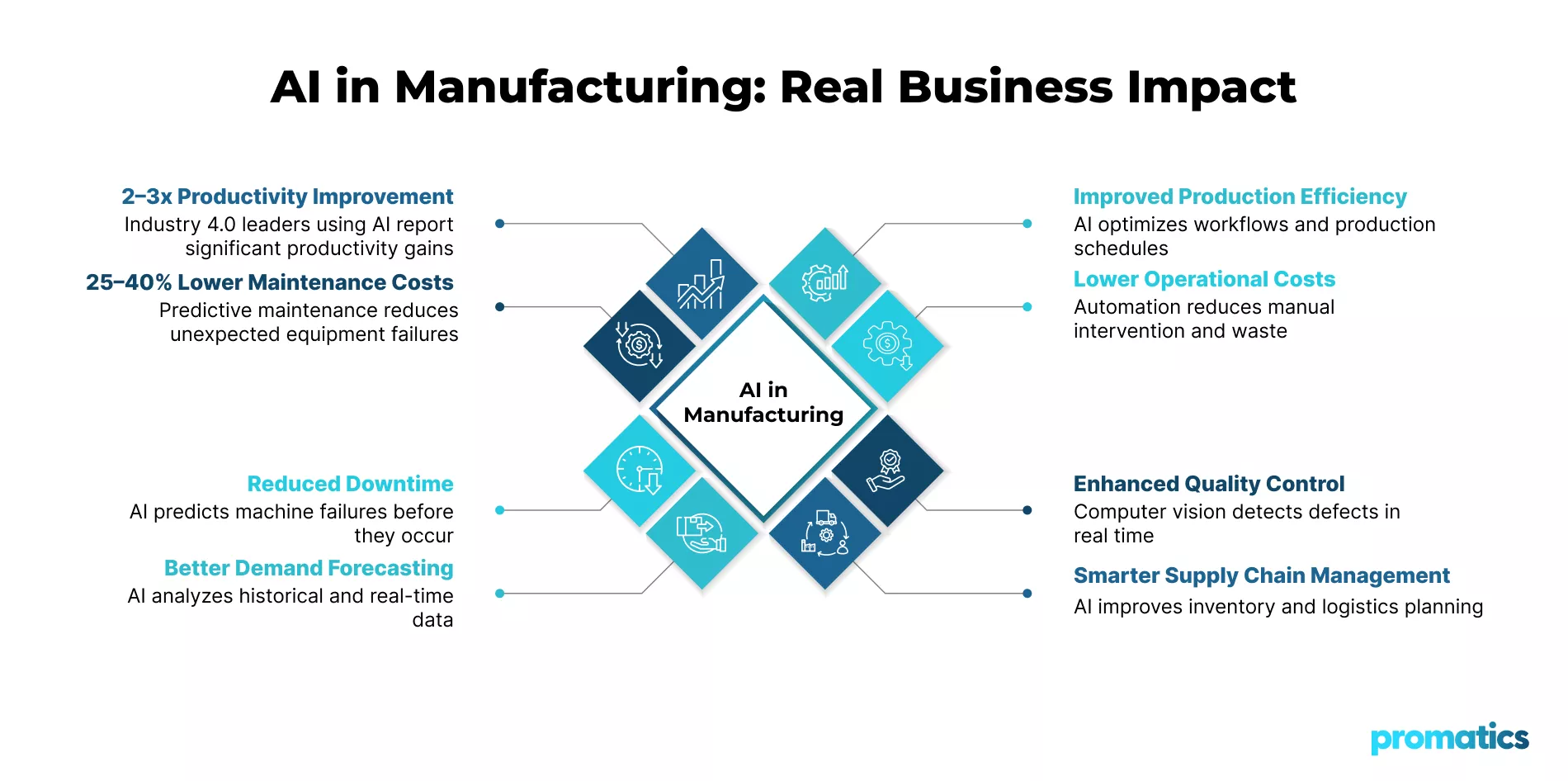
The impact of Artificial Intelligence development in manufacturing is already measurable. According to industry insights highlighted by McKinsey, 79 percent of executives are familiar with AI technologies, while 22 percent are already using them regularly. Additionally, AI adoption in manufacturing and supply chain operations has the potential to reduce costs by up to 500 billion dollars. Predictive maintenance powered by AI can reduce maintenance costs by 25 to 40 percent, while AI-driven quality inspection helps minimize product defects and manufacturing waste.
Beyond automation, Artificial Intelligence development enables advanced capabilities such as predictive analytics, intelligent quality control, demand forecasting, and production optimization. These technologies help manufacturers build smarter, more agile, and more efficient operations, making AI a key driver of innovation and long-term growth.
Types of AI Technologies in Manufacturing : A Quick Insight
Artificial Intelligence development in manufacturing includes multiple technologies designed to improve different aspects of the production lifecycle.
Machine Learning (ML)
Machine Learning development analyzes historical and real-time production data to identify patterns and trends. This helps manufacturers predict equipment failures, optimize production line speeds, and reduce material waste.
Computer Vision
Computer vision uses AI-powered applications to inspect products, detect defects, and ensure consistent quality across production lines.
Natural Language Processing (NLP)
Natural language processing enables workers to interact with machines using voice or text commands, improving productivity and communication.
Robotics and Automation
AI-powered robotics improve flexibility and efficiency by handling multiple tasks and adapting to changing production needs.
Digital Twins
Digital twin technology creates virtual replicas of machines and processes, allowing manufacturers to test improvements without disrupting operations.
Predictive Analytics
Predictive analytics helps manufacturers forecast demand, optimize inventory, and plan maintenance schedules.
How AI ML Development Drives Intelligent Automation
One of the most impactful benefits of AI ML development services is intelligent automation. Businesses can automate workflows, improve operational accuracy, and reduce manual effort.
AI integration services help automate workflows across departments such as operations, HR, finance, and customer support. AI-powered applications such as chatbots and virtual assistants improve response times and customer satisfaction.
Machine learning solutions further strengthen automation by extracting information from documents, forecasting demand, and identifying risks.
By implementing intelligent automation solutions, organizations can scale operations efficiently while reducing operational complexity.
AI in Manufacturing: A Game Changer for Operational Efficiency
Manufacturing is one of the industries experiencing the most significant transformation through Artificial Intelligence development. AI ML development solutions help manufacturers improve productivity, reduce downtime, and optimize supply chain operations.
AI-powered applications enable predictive maintenance, quality control automation, and demand forecasting. These capabilities help manufacturers build more efficient and resilient operations.
Key AI Use Cases in Manufacturing
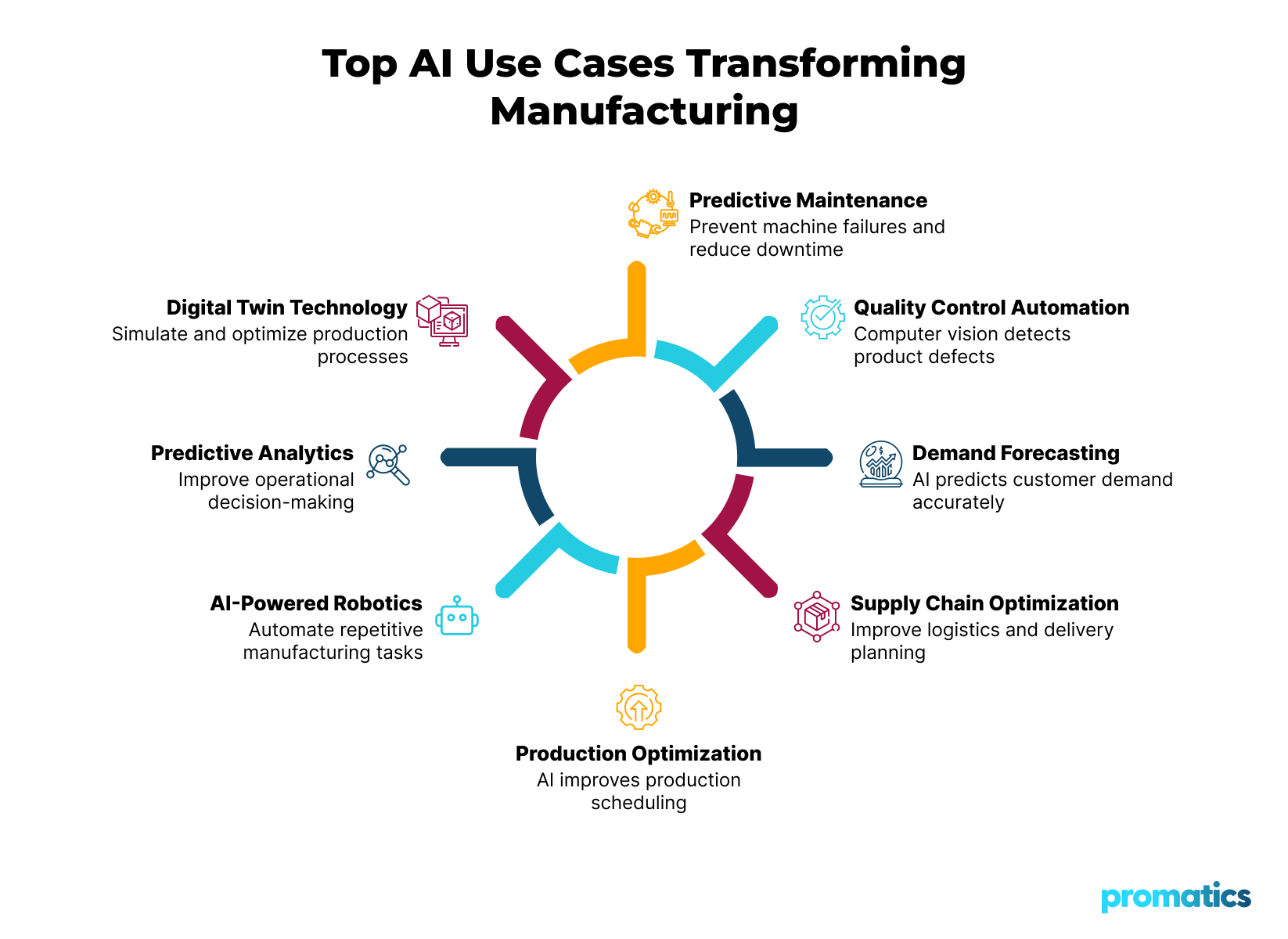
Artificial Intelligence is transforming manufacturing operations by introducing smarter, more efficient ways to manage production, quality, and supply chains. AI ML development solutions enable manufacturers to automate processes, improve accuracy, and make data-driven decisions across the entire production lifecycle. Below are some of the most impactful AI use cases in manufacturing.
Predictive Maintenance
Predictive maintenance is one of the most valuable applications of Artificial Intelligence in manufacturing. AI software development allows manufacturers to monitor equipment performance in real time and identify potential issues before they lead to failures. Machine learning solutions analyze historical and operational data to predict maintenance needs, helping reduce unexpected downtime, extend equipment lifespan, and improve operational efficiency.
Quality Control Automation
Computer vision powered AI systems automate product inspection and quality control processes. These systems detect defects, monitor alignment, and ensure consistency across production lines. By reducing manual inspections and human error, manufacturers can improve product quality, minimize waste, and maintain higher production standards.
Demand Forecasting
AI ML development solutions analyze historical data, market trends, and customer behavior to forecast demand more accurately. This helps manufacturers plan production schedules, optimize inventory levels, and reduce both shortages and overproduction. Accurate demand forecasting improves operational efficiency and supports better business planning.
Supply Chain Optimization
AI integration services enable manufacturers to monitor supplier performance, optimize logistics, and streamline delivery schedules. AI-powered insights help organizations improve inventory management, reduce delays, and enhance supply chain visibility. This leads to improved operational efficiency and cost savings.
Production Optimization
AI-powered applications enable manufacturers to streamline production schedules, utilize resources more effectively, and detect operational bottlenecks in real time. By analyzing production data, these intelligent systems enhance productivity, minimize downtime, and improve overall manufacturing efficiency.
Collectively, these AI-driven capabilities help manufacturers operate more intelligently, accelerate processes, and lower operational costs while maintaining consistent performance
Industry Use Cases of AI ML Development
Artificial Intelligence and Machine Learning development are transforming industries far beyond manufacturing.
Healthcare
Healthcare organizations are leveraging AI and ML solutions to improve patient outcomes and optimize operational workflows.
Use cases include:
- Medical image interpretation
- Predictive healthcare analytics
- Virtual health assistants
- Patient data management
- Automated documentation
AI-powered systems enable healthcare providers to deliver faster, more accurate, and more efficient patient care.
Retail and E Commerce
Retail businesses use AI software development to create personalized customer experiences and improve conversion rates.
Use cases include:
- Recommendation engines
- Customer behavior analysis
- Inventory forecasting
- AI chatbots
- Dynamic pricing
AI integration helps retailers strengthen customer engagement while driving revenue growth.
Finance and Banking
Approximately 68% of financial institutions use AI for risk and compliance management, demonstrating the increasing adoption of AI ML development in financial services.
Use cases include:
- Fraud detection
- Risk analysis
- Customer insights
- Automated financial operations
- Credit scoring
AI-powered applications help financial institutions improve efficiency, enhance security, and reduce risks.
Logistics and Supply Chain
AI and ML solutions assist logistics companies in optimizing operations and lowering operational costs.
Key use cases include:
- Route optimization
- Demand forecasting
- Warehouse automation
- Inventory management
- Delivery optimization
AI-driven software enhances efficiency across supply chain operations.
Enterprise AI Development for Scalable Growth
Enterprise AI development enables organizations to integrate Artificial Intelligence into their existing infrastructure and workflows. Through AI integration services, businesses can modernize operations, enhance decision-making, and scale efficiently.
Common enterprise AI solutions include:
- Predictive analytics
- Intelligent automation
- AI-powered dashboards
Custom AI Solutions for Business Needs
Every organization operates differently. Custom AI solutions allow businesses to develop AI-powered applications aligned with their specific workflows and objectives.
These solutions may include:
- Recommendation systems
- Predictive analytics
- Natural language processing
- Computer vision
- Intelligent automation platforms
Custom AI development improves operational efficiency, increases flexibility, and helps businesses maintain a competitive edge.
Machine Learning Development for Predictive Intelligence
Machine Learning development allows businesses to analyze historical data, identify patterns, and predict future trends.
Common machine learning solutions include:
- Predictive analytics
- Demand forecasting
- Customer segmentation
- Fraud detection
- Recommendation systems
These capabilities support smarter decision-making, improved efficiency, and long-term growth.
Measuring ROI from AI ML Development
Organizations investing in AI and ML development are achieving measurable returns through improved productivity, cost savings, and enhanced decision-making. AI-powered systems automate routine tasks, improve customer experiences, and continuously evolve over time, delivering long-term business value.
The Benefits of AI in Manufacturing: Driving Measurable ROI
AI in manufacturing delivers measurable outcomes that directly impact business performance. By implementing AI-driven manufacturing solutions aligned with clear objectives, manufacturers can increase productivity, reduce waste, and gain better operational visibility.
Industry 4.0 leaders using AI report 2–3x productivity improvements, highlighting how AI-driven manufacturing helps organizations scale while maintaining quality and efficiency.
As digital transformation accelerates, AI is becoming a key driver of operational excellence, cost optimization, and long-term growth.
Lower Operational Costs
AI and ML solutions help prevent equipment failures through predictive maintenance and optimize machine performance. Identifying issues early reduces emergency repair costs and minimizes production downtime.
Improved Productivity
AI-powered inspection tools detect defects faster and more accurately than manual methods. This reduces rework, lowers material waste, and improves product quality.
Faster Time to Market
Generative AI accelerates product design and testing cycles, enabling companies to move from concept to production faster without compromising quality.
Smarter Supply Chains
AI-powered forecasting improves demand planning, optimizes inventory, and strengthens supplier coordination. This helps avoid shortages and reduces excess inventory costs.
How to Implement AI in Manufacturing Without Disrupting Existing Workflows
For many manufacturers, implementing AI does not require replacing existing infrastructure. Instead, AI can be integrated into current workflows to improve efficiency and performance.
Identity the Right Opportunities
Not every process requires AI. Organizations should focus on key problem areas such as equipment failures, quality bottlenecks, or supply chain inefficiencies. Starting with high-impact use cases helps demonstrate value quickly.
Connect to the System You Rely On
AI delivers maximum impact when integrated with systems like MES, ERP, and quality management platforms. This ensures data flows seamlessly and insights are available where decisions are made.
Improve Data Quality
Machine learning models rely heavily on data accuracy. Ensuring sensors are calibrated, data is cleaned, and inputs are consistent helps build reliable AI systems.
Challenges in Scaling AI in Manufacturing
Despite clear advantages, scaling AI across manufacturing operations can be challenging. Many organizations discover that pilot projects do not always translate smoothly into full-scale deployments.
Understanding common challenges and addressing them proactively can help manufacturers successfully scale AI initiatives and maximize ROI.
| Challenges | What It Means | Practical Solution |
| Poor Data Quality and Access | AI and machine learning in manufacturing rely on accurate, consistent data. Incomplete records, uncalibrated sensors, and siloed systems can limit the effectiveness of AI applications. | Audit existing data sources, calibrate sensors, and integrate AI tools with MES, ERP, and quality systems to ensure reliable, real-time data. |
| Integration with Legacy Systems | Older factory systems may not integrate easily with modern AI technologies, leading to delays and increased costs. | Use middleware or API layers to connect AI platforms with legacy systems and minimize operational disruptions. |
| Skills and Workforce Readiness | Without proper training, teams may struggle to interpret AI insights and apply them effectively. | Provide training programs for engineers, operations teams, and managers to improve AI adoption and usage. |
| High Initial Costs and Unclear ROI | AI implementation can appear costly, especially when ROI is not clearly defined at the start. | Begin with high-impact pilot projects such as predictive maintenance, measure outcomes, and scale gradually. |
| Security and Compliance Risks | AI-powered systems increase data exchange, which may introduce cybersecurity and compliance challenges. | Follow industry compliance standards, secure networks, and implement role-based access controls to protect sensitive data. |
Why Choose Promatics Technologies for AI ML Development
Promatics Technologies delivers end to end AI ML development services that help businesses automate operations and drive innovation.
Our AI ML development services include:
- Artificial Intelligence development
- Machine Learning development
- AI software development
- AI powered applications
- Enterprise AI development
- Custom AI solutions
- Intelligent automation solutions
- AI integration services
We build scalable, secure, and high performance AI solutions tailored to your business needs.
Conclusion
Artificial Intelligence development is evolving at an unprecedented pace, reshaping how businesses operate, innovate, and grow. From intelligent automation and predictive analytics to AI-powered applications and enterprise-wide integration, organizations are leveraging AI ML development solutions to improve efficiency, reduce costs, and unlock new opportunities. Businesses that adopt AI technologies today are not only enhancing their current operations but also building a strong foundation for long-term innovation and scalability.
As industries continue to embrace digital transformation, AI-powered solutions will play an even greater role in enabling smarter decision-making, optimizing workflows, and improving customer experiences. Organizations investing in Artificial Intelligence development today will be better positioned to adapt to changing market demands, accelerate innovation, and maintain a competitive edge.
At Promatics Technologies, we help businesses harness the full potential of AI ML development. Our expert team delivers customized AI solutions designed to automate operations, enhance productivity, and drive measurable ROI.
Whether you’re looking to implement intelligent automation, build AI-powered applications, or integrate machine learning into your existing systems, we provide end-to-end support tailored to your business goals. Transform your business with AI. Partner with Promatics Technologies to build smarter, faster, and future-ready solutions.
