How Fitness Apps Track Data: Sensors, APIs & AI

TL;DR
- Fitness apps use sensors to track activity, heart rate, sleep, and calories
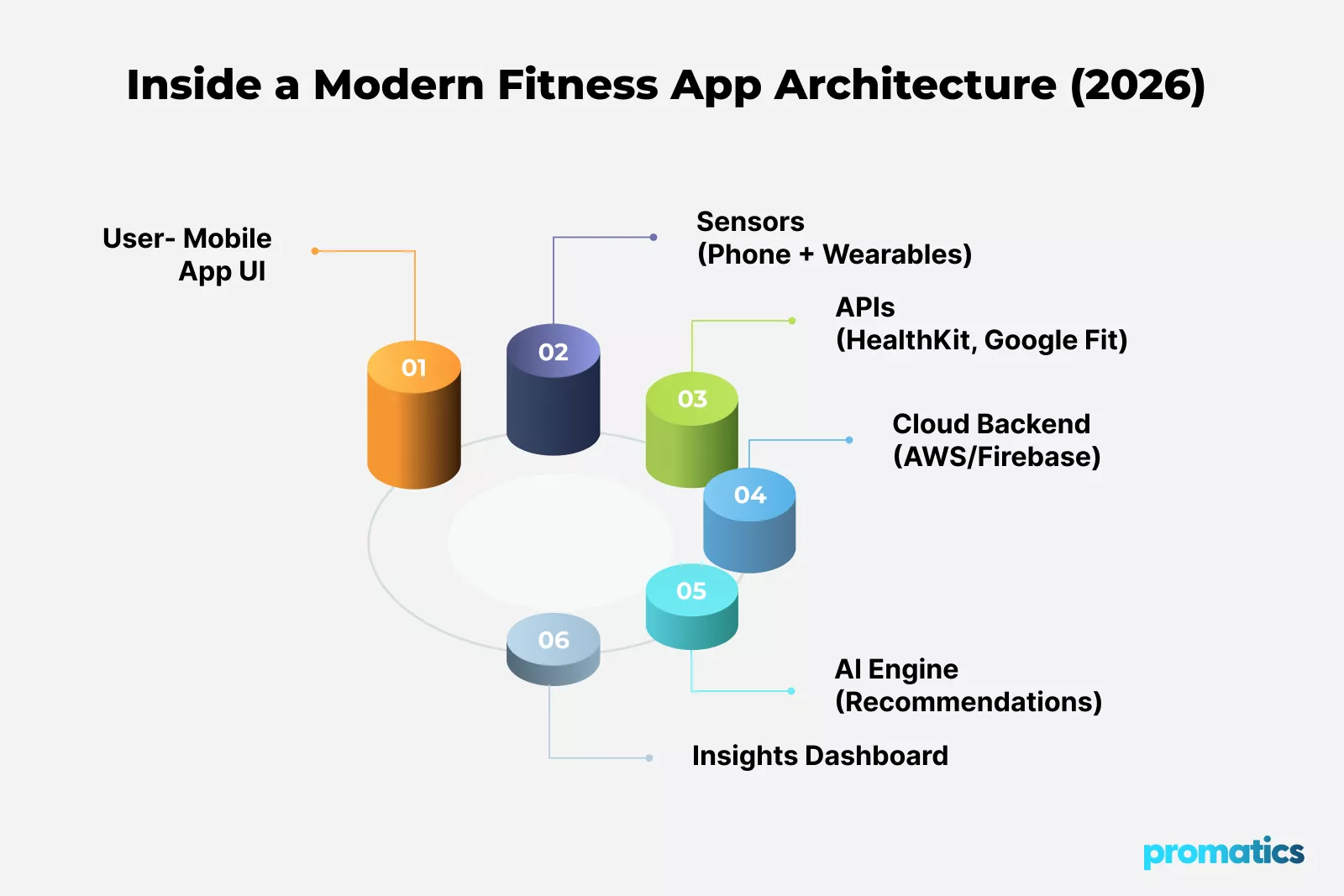
- APIs connect wearable data to apps for real-time insights
- AI analyzes data for personalized workouts and recommendations
- Enables real-time feedback, performance tracking, and health monitoring
- Drives smarter, data-driven fitness experiences
Fitness app development in 2026 is no longer about building everything at once, it is about building the right thing first. The most successful apps start with a clear purpose, solve one meaningful problem, and expand only after validating real user needs.
The opportunity in this space is massive and still growing. The global fitness app market is already valued at over $13–22 billion in 2026 and continues to expand at a strong pace. At the same time, demand remains high, with fitness apps recording more than 850 million downloads in 2024 alone.
But growth alone does not guarantee success. While millions of users download fitness apps, only a portion stay engaged. Nearly 23% of users abandon apps after trying them, making retention and user experience the real differentiators.
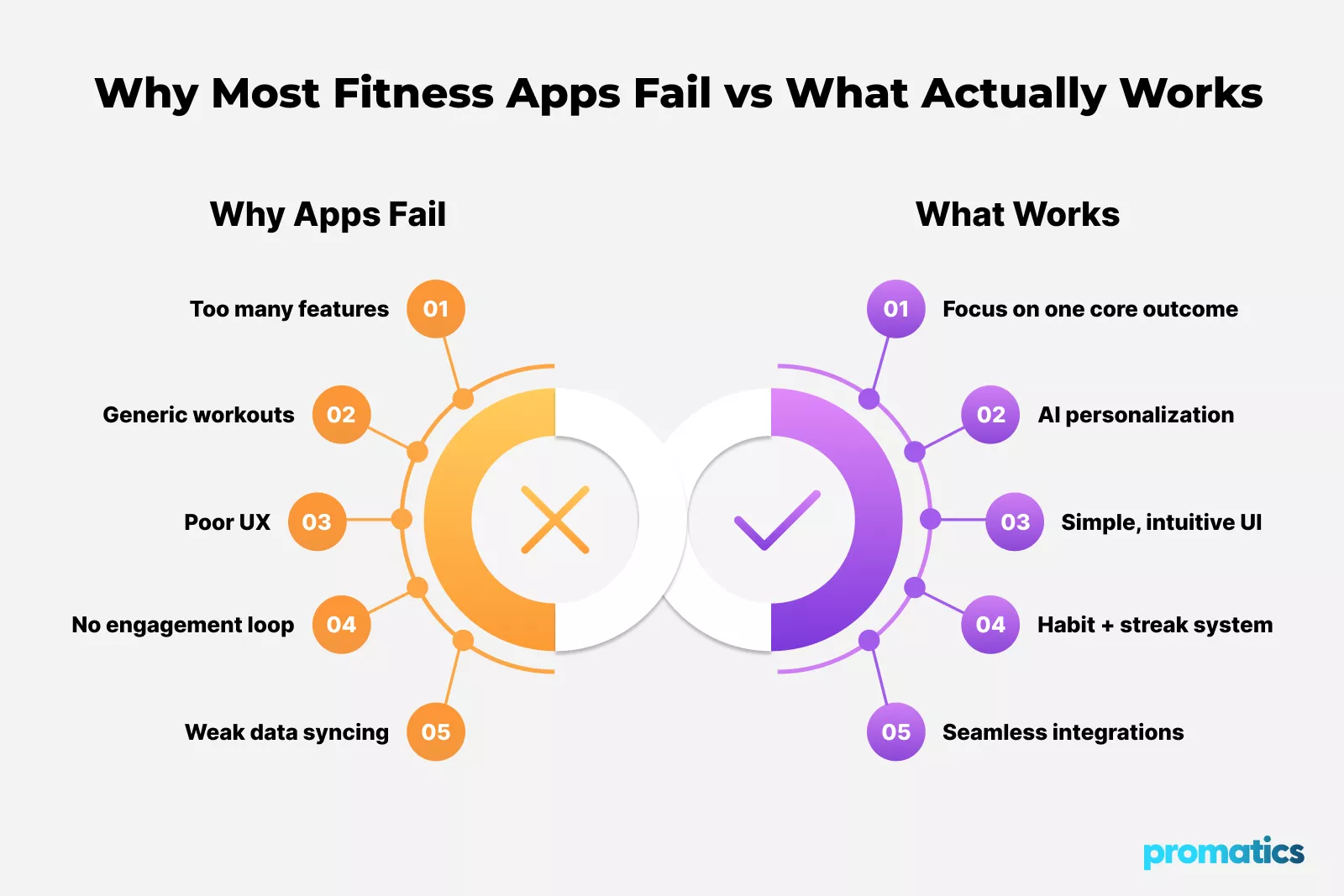
This shift has changed what success looks like. High-performing apps are no longer feature-heavy, they are experience-driven. What matters most is usability, accurate tracking, and seamless integrations that fit naturally into a user’s daily routine. The best apps work quietly in the background while delivering relevant, personalized insights.
User expectations have also evolved. People now expect workouts that adapt over time, data that syncs effortlessly, and recommendations that feel genuinely useful. If an app feels repetitive or overly instructional, it is quickly replaced.
Despite these challenges, the opportunity remains strong. The market continues to grow, driven by subscription models and personalized experiences rather than basic activity tracking alone.
However, the biggest risk is not demand, it is execution. Poor decisions around app type, feature prioritization, data handling, or scalability can impact retention and costs long after launch, when fixing them becomes significantly more expensive.
This blog is written for teams that are serious about building a fitness app in 2026. It will help you make smarter decisions early, so your product is not just launched, but built to scale, sustain, and succeed over time.
Quick Question
Best platforms for fitness app development
The best platforms combine cross-platform frameworks, native development, and cloud + AI tools to deliver scalable and high-performance fitness apps.
Top Choices:
- Cross-platform: Flutter, React Native → fast & cost-effective
- Native: iOS (Swift), Android (Kotlin) → best performance & accuracy
- Backend/Cloud: AWS, Firebase → real-time data & scalability
- Wearables: Apple HealthKit, Google Fit → seamless tracking
- AI Tools: TensorFlow, OpenAI → personalization & insights
Best approach: Use a hybrid stack that balances speed, performance, and scalability for long-term success.
Top Reasons To Invest in Fitness App Development in 2026
The business potential continues to grow as digital fitness becomes mainstream. The fitness app market is expected to reach over $33 billion by 2033, driven by AI, wearables, and subscription-based experiences. This growth is not coming from basic tracking anymore, it is powered by personalization, engagement, and recurring revenue models.
Rising Demand for Personalization Digital Fitness
Users today expect more than generic workout plans. AI-driven personalization, real-time progress tracking, and adaptive fitness recommendations are now standard expectations. Apps like Fitbod and Freelectics showcase how AI can tailor workouts, nutrition, and recovery plans to individual users, leading to higher engagement and retention.
Strong Revenue Potential and Recurring Income
Smartwatches and fitness bands are now essential tools for users, integration with platforms like Apple Fitness + and Fitbit enhances real-time insights, improves accuracy, and boosts daily usage.
Shift Toward Prevention and Holistic Health
Consumers increasingly focus on prevention care. Modern fitness apps support physical activity, mental wellness, sleep, and nutrition, extending usage beyond workouts.
Lower Entry Barriers with Modern Technology
Cross-platform frameworks, cloud infrastructure, and AI tools have reduced development costs and time-to-market. Startups can now launch MVPs faster, validate ideas, and scale efficiently.
Corporate and Enterprise Adoption
Companies are investing in employee wellness programs, creating additional revenue streams for apps designed for corporate fitness.
Fitness App Market Trends to Watch in 2026
User expectations are evolving alongside market growth. While downloads remain high, the industry is shifting toward quality over quantity, with more users sticking to apps that deliver consistent value through subscriptions and personalization. This is why trends like AI personalization, wearable syncing, and simplicity are becoming non-negotiable.
- Personalization is now a baseline expectation: In modern fitness app development and healthcare personalization, users no longer accept static plans. They expect workouts, goals, and recommendations to adapt based on their progress or inactivity. This becomes even more important in long-term engagement, where repetitive experiences often lead to drop-offs.
- Wearables are essential, not optional: For many users, devices like smartwatches and fitness bands are already part of daily life. As a result, fitness tracker app development now prioritizes seamless and reliable background syncing. Any delay or inconsistency in data can quickly reduce user trust.
- Subscription models dominate monetization: Most fitness apps today are designed around recurring value rather than one-time purchases. These models succeed when users consistently receive meaningful benefits, not when features are locked too early or excessively.
- Simplicity outperforms complexity: A common realization in fitness app development is that adding more features does not guarantee better performance. Apps with a focused set of well-designed features often outperform those that try to do everything but feel overwhelming.
- Trust has become a core feature: As fitness apps collect sensitive personal data, users are increasingly aware of privacy and data usage. Transparency, security, and responsible data handling now play a key role in whether users continue using an app or abandon it.
Types of Fitness Apps You Can Build
Selecting the right type of fitness app is the first step in defining your target audience, core features, and overall product direction.
- Activity Tracking Apps : These apps monitor daily activities such as steps, calories burned, distance covered, and heart rate using smartphones and wearable devices.
- Workout and Training Apps : Provide guided workout sessions, video-based training, and structured fitness programs tailored to different skill levels and goals.
- Diet and Nutrition Apps : Enable users to log meals, track calorie intake, monitor macros, and follow personalized diet plans.
- Personal Training Apps : Offer customized fitness guidance by connecting users with professional trainers or AI-powered coaching systems.
- Mental Wellness Apps : Focus on improving overall well-being through features like meditation, stress management, sleep tracking, and mindfulness practices.
Quick Question: What types of fitness apps are most popular?
Activity tracking, workout training, nutrition, personal coaching, and wellness apps are the most widely used categories.
How to Create a Workout Tracking App: Tools, Frameworks & Approach
If you are planning to build a fitness app, think of the process as a series of smart decisions rather than a one-time execution. Each step influences usability, data accuracy, scalability, and overall cost. Many long-term issues in app development usually come from decisions that were rushed or overlooked in the early stages.
1. Iterative Approach: Refining the Vision
This approach focuses on continuous improvement. Instead of building everything at once, you start with a basic version and refine it using feedback and insights.
Rapid Prototyping
AI tools help convert simple ideas or sketches into functional screens quickly. This allows teams to test concepts early, make changes faster, and avoid wasting time and budget.
AI-Enhanced UI/UX Optimization
Using AI-driven insights like heatmaps, teams can understand user behavior and improve interface design before final development, ensuring a smooth and intuitive experience.
2. Incremental Approach: Building the Foundation
This method is centered around speed and structured growth. The app is developed in smaller, functional modules and released step by step.
Modular Development (Step-by-Step Build)
Instead of launching everything together, you release core features first, such as a step tracker, followed by advanced features like AI meal planning or community features.
Continuous Value Delivery
Users receive regular updates and new features over time, which keeps engagement high and avoids the risk of a one-time, heavy launch.
3. AI-Powered Engineering: Accelerating Development
AI acts as a powerful support system in modern app development by handling complex and repetitive tasks efficiently.
AI-Assisted Development
Developers use AI tools to generate backend logic, automate repetitive coding tasks, and speed up the overall development cycle.
Natural Language-Based Development
Teams can interact with development tools using simple instructions to design databases, define workflows, and implement security measures, reducing errors and technical complexity.
4. Continuous Testing & Learning: Ensuring Stability
Modern fitness apps are constantly evolving. Continuous testing ensures stability, performance, and a better user experience.
Automated Testing & Self-Healing Systems
AI-driven testing tools run continuously to identify issues. If a system update causes a problem, the system can detect and suggest fixes quickly, maintaining app reliability.
Real-Time User Insights
Analytics tools track how users interact with features. If a feature like goal setting shows low engagement, it can be improved in the next update cycle.
5. Future-Proofing & Maintenance
Long-term success depends on how well your app adapts to change.
Security & Compliance
AI tools continuously monitor compliance with standards like GDPR and HIPAA, ensuring user data remains secure as regulations evolve.
Automated Updates & Optimization
As new OS versions or technologies emerge, AI helps identify required updates, keeping the app modern, compatible, and high-performing without major rework.
Cost to Develop a Personalized Fitness App: The 2026 Pay-As-You-Grow Model
The rapid growth of the market is backed by strong monetization potential. Health and fitness apps generated over $5–6 billion in revenue annually, with a majority coming from subscriptions. This reinforces why most modern fitness apps are designed around recurring revenue models rather than one-time purchases.
| Phase | Focus | Cost |
| MVP | Core features | $10,000–$25,000 |
| Growth | AI + integrations | $30,000–$60,000 |
| Advanced | Custom AI | $80,000+ |
How much does it cost to build a fitness app?
Traditional pricing models often lead to overspending on features that users may never use. A more effective approach in 2026 is an AI-driven, pay-as-you-grow model, where investment aligns with actual product growth and user validation.
Why This AI-Driven Approach Reduces Costs
- Faster development cycles: AI-assisted coding can reduce development time by up to 50%
- No feature bloat: Only validated features are built, avoiding unnecessary expenses
- Built for scale: Architecture supports growth from thousands to millions of users without major rebuilds
Strategic Monetization & Revenue Optimization
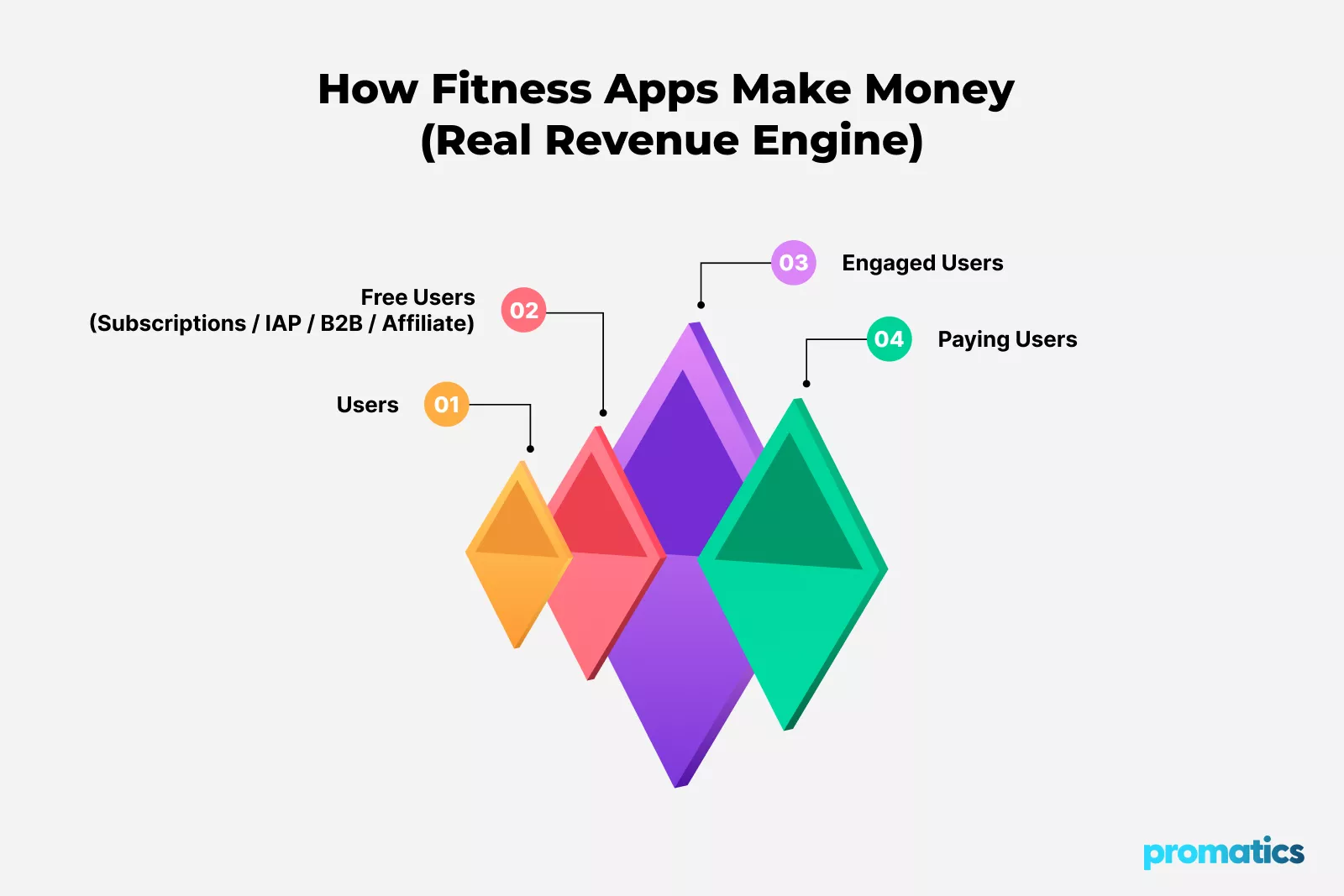
Building a profitable fitness app requires more than basic purchase options. In 2026, successful apps use a hybrid monetization strategy that balances user value with recurring revenue.
1. Freemium Model (Value First)
Offer essential features for free to build trust, then convert users with premium upgrades at the right moment using AI-driven insights.
2. Tiered Subscription Plans
Create multiple pricing tiers to serve different user segments:
- Basic access
- Advanced features with AI personalization
- Premium coaching experiences
3. In-App Purchases (IAPs)
Allow users to purchase specific programs, plans, or digital features without committing to subscriptions.
4. Corporate Wellness Programs
Partner with businesses to offer your app as an employee wellness benefit, generating stable and scalable revenue.
5. Affiliate & Sponsored Content
Integrate relevant product recommendations and brand-sponsored challenges to create additional revenue streams without disrupting user experience. This structured investment and monetization approach ensures your fitness app is not just cost-efficient to build, but also designed to generate sustainable, long-term revenue.
Quick Question: How do fitness apps make money?
Fitness apps earn through subscriptions, in-app purchases, corporate partnerships, and affiliate marketing.
Why Partner with Promatics Technologies
Choosing the right development partner can determine whether your app succeeds or fades out after launch. Here’s what makes Promatics Technologies a strong choice for building scalable, future-ready digital products:
AI-Driven Development Approach
Promatics integrates Generative AI and automation into the development lifecycle to accelerate delivery and improve accuracy. From rapid prototyping to AI-augmented coding, this approach reduces development time while maintaining high-quality standards.
Scalable & Future-Ready Architecture
Applications are built with modular, scalable architectures that support growth from MVP to enterprise scale. This ensures your product can handle increasing users, data, and integrations without requiring a complete rebuild.
Data-First Product Strategy
Instead of guesswork, Promatics focuses on real user behavior and analytics to guide feature development. This helps eliminate unnecessary features and ensures every investment contributes to user retention and ROI.
Strong Focus on Security & Compliance
With increasing data sensitivity, Promatics prioritizes enterprise-grade security, compliance (GDPR, HIPAA), and data protection from the start helping you avoid costly fixes later.
Faster Time-to-Market
Using AI-assisted workflows and incremental development, Promatics delivers functional modules quickly, allowing businesses to launch faster, validate ideas, and iterate based on real feedback.
Continuous Testing & Improvement
Their process includes automated QA, real-time monitoring, and iterative updates, ensuring your app evolves continuously and remains stable across updates and platforms.
Cost-Optimized Development Model
Promatics follows a “pay-as-you-grow” approach, focusing on MVP-first development to control initial costs and scale investments based on validated demand reducing financial risk.
End-to-End Expertise
From strategy and UI/UX design to development, deployment, and post-launch scaling, Promatics offers complete product lifecycle support, making them a long-term technology partner not just a vendor.
Proven Business Impact
Their approach focuses on building products that are not just functional but engaging, monetizable, and sustainable, helping businesses achieve long-term growth and competitive advantage.
Conclusion
The fitness app industry is not slowing down. With projections showing the market potentially reaching $45 billion in the next decade, businesses that focus on user experience, personalization, and scalability will lead the space. Building a successful fitness app in 2026 is no longer about launching quickly, it is about building intelligently, scaling strategically, and continuously evolving with user needs. From choosing the right app type to leveraging AI, data, and wearable integrations, every early decision directly impacts long-term success, retention, and ROI.
This is where the right technology partner makes all the difference. With its AI-driven development approach, scalable architecture, and data-first strategy, Promatics Technologies helps you move beyond just building an app to creating a high-performing, future-ready digital product that users actually stick with.
If you are ready to turn your fitness app idea into a scalable, revenue-generating platform, now is the time to act.
Let’s build something that lasts. Connect with Promatics Technologies to validate your idea, launch faster with an MVP, and scale confidently with AI-powered innovation.
