AI in Action: How Popular Apps Use AI to Enhance User Experience
TL;DR
- Shows how AI enhances user experiences in modern mobile applications.
- Covers personalization, chatbots, recommendations, and automation.
- Explains practical AI integration strategies for apps.
- Highlights business benefits and implementation challenges.
- Helps businesses create smarter and more engaging digital products.
From transforming blurry childhood photos to offering real-time grammar suggestions or turning homework into a breeze—Artificial Intelligence (AI) has quietly taken over the apps we use every day. While most headlines spotlight powerhouse tools like ChatGPT or Google Gemini, the real magic often happens in your phone’s everyday apps—the ones that don’t scream “futuristic” but are quietly revolutionizing how we edit, write, learn, and communicate.
This article takes a deep dive into a set of widely used apps that apply AI in incredibly practical ways—think Grammarly for seamless writing support or FaceApp for eerily realistic ageing filters. These aren’t large-scale, general-purpose language models, but focused, task-specific applications of AI designed to solve specific user problems. Whether you’re a student seeking homework help, a marketer needing product photos, or someone trying to perfect their accent in English, there’s likely an AI-powered app quietly working behind the scenes to assist you.
Based on in-depth research and analysis, this guide examines 10 popular apps that leverage AI in niche but powerful ways. Each app was chosen for its specific use of artificial intelligence, popularity among users, and the uniqueness of its AI function—not for being trendy, but for truly enhancing how we interact with technology on a daily basis.
Let’s break down how these apps are turning AI into everyday magic—no technical jargon required.
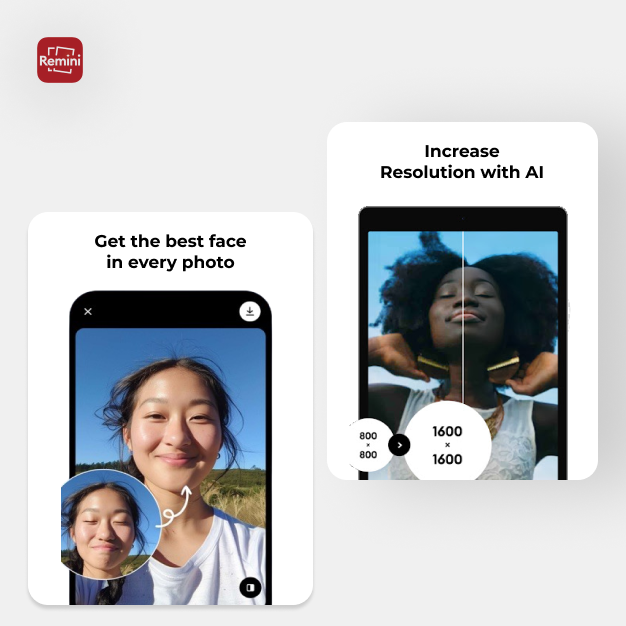
1. Remini: Revitalizing Memories with AI
- Functionality: Remini enhances low-resolution, blurry, or old photos by restoring and improving image quality. It sharpens details, especially facial features, making it perfect for restoring old family pictures or improving low-quality images.
- AI Integration: Remini uses deep learning algorithms to enhance image clarity by analyzing and predicting missing details. It reduces noise, smooths pixelation, and improves textures, often turning old photos into high-definition versions.
- User Engagement: Remini has 31.77 million monthly active users as of 2025. Its user-friendly app, along with a freemium model, makes it popular among both casual users and professionals looking to enhance their photos
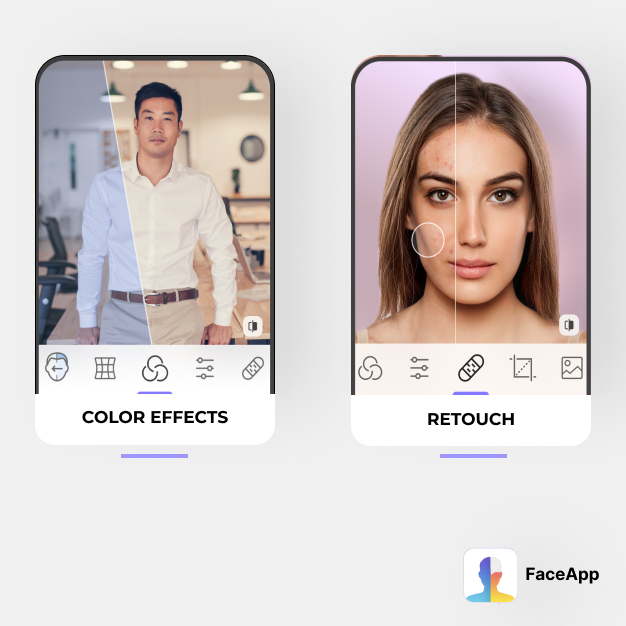
2. FaceApp: Transforming Selfies with AI
- Functionality: FaceApp offers users the ability to apply various transformations to their selfies, including age progression, gender swaps, and stylistic changes.
- AI Integration: Leverages neural networks to analyze facial features and apply realistic modifications, providing users with entertaining and sometimes startlingly accurate transformations.
- User Engagement: With an estimated 100 million users, FaceApp’s AI-driven features have made it a staple in the realm of photo editing applications.
3. Photoroom: Streamlining Product Photography
- Functionality: Photoroom assists users in making professional product photographs by erasing the background and offering configurable settings, which are perfect for content creators and e-commerce. It has Magic Retouch for boosting, Instant Background for removing the background automatically, and features to insert text and logos. It is meant to transform standard pictures into sleek visuals with minimal input.
- AI Integration: Photoroom uses AI to identify and cut out subjects in photos for accurate background removal. The AI also improves the quality of images, enhances edges, and adds filters. It is real-time, enabling fast edits for professional work.
- User Engagement: As of 2025, Photoroom has 13.67 million monthly active users, and is well-liked in e-commerce for making product shots. Its user-friendly interface and rapid processing make it one of the favourites among content creators, increasing its far-reaching usage.

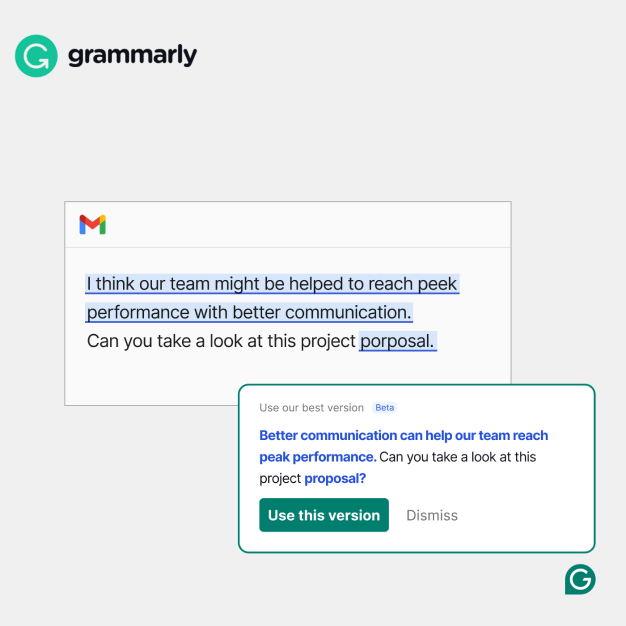
4. Grammarly: Enhancing Writing with AI
- Functionality: Grammarly is a writing assistant that helps users improve grammar, spelling, punctuation, style, and clarity. It provides real-time feedback for various types of writing, from emails to essays, and includes tools for plagiarism detection and vocabulary enhancement.
- AI Integration: Using machine learning, Grammarly analyzes text to identify errors and suggests improvements based on context. The AI adapts over time, personalizing feedback and improving its suggestions. It integrates seamlessly with platforms like Microsoft Word, Google Docs, and web browsers.
- User Engagement: Grammarly serves over 30 million daily active users as of 2025, with a freemium model that attracts users seeking basic tools and retains premium users with advanced features. Its broad appeal across students, professionals, and writers keeps its user base engaged.
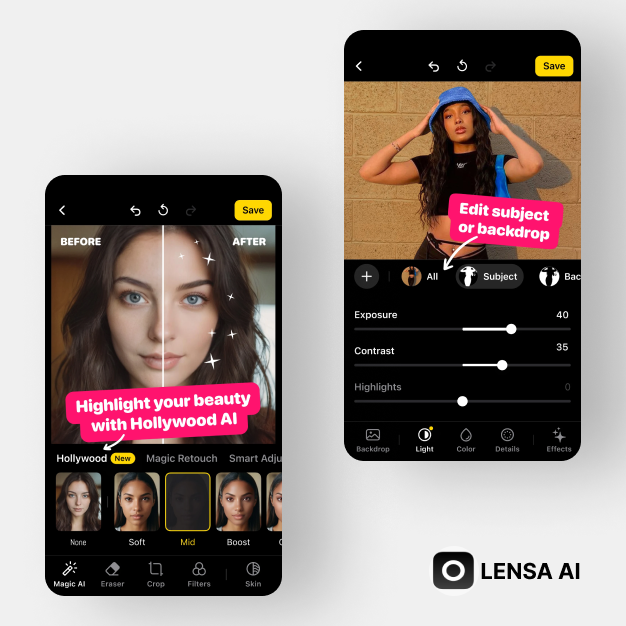
5. Lensa AI: Artistic Photo Enhancements
- Functionality: Lensa AI is an image editing application that improves photos and generates customized avatars using AI-powered filters and effects. It is particularly skilled at facial feature modification, skin tone enhancement, and background effects. It also provides “Magic Avatars,” which transform photos into digital artwork in different styles, giving users a distinctive appearance for social media or business use.
- AI Integration: Lensa AI utilizes sophisticated neural networks to recognize facial features and enrich details such as lighting and complexion. Its AI also drives the avatar function, converting user photos into artworks such as cartoons or paintings, making for customizable visual content.
- User Interaction: Lensa AI is very popular among content creators and influencers, and its paid subscriptions begin at $3.99 for 50 avatars. Although it does not release exact user counts, its creative tools and capacity to create sharable content ensure high interaction, particularly for users who wish to augment their online presence.
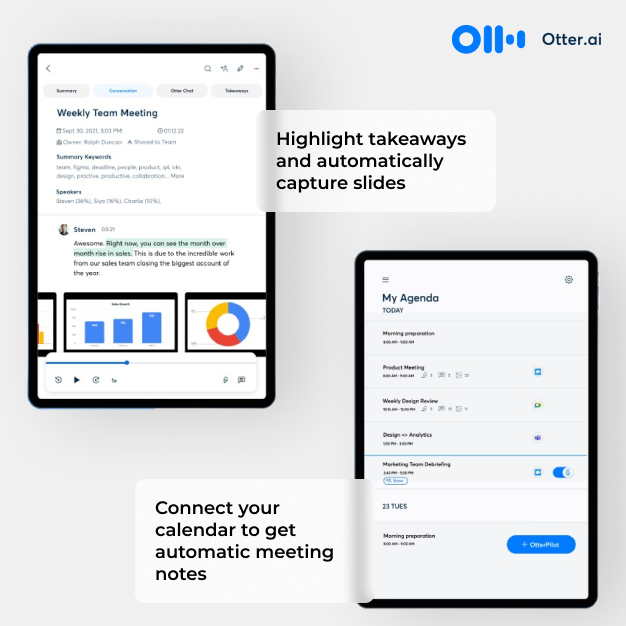
6. Otter.ai: Transcribing Conversations with AI
- Functionality: Otter.ai transcribes spoken content from meetings, lectures, or interviews into text. It offers real-time transcription, along with tools to add highlights, tags, and comments. It integrates with platforms like Zoom, making it a go-to tool for businesses and remote teams.
- AI Integration: Otter.ai uses deep learning and natural language processing to accurately transcribe audio. It identifies speakers, adds punctuation, and summarizes content, continually improving its transcription accuracy through machine learning.
- User Engagement: Otter.ai has 29.1 million monthly active users as of 2025. It’s popular in business, journalism, and education for its transcription accuracy and real-time capabilities. The app’s free and premium plans make it accessible to a wide range of users.
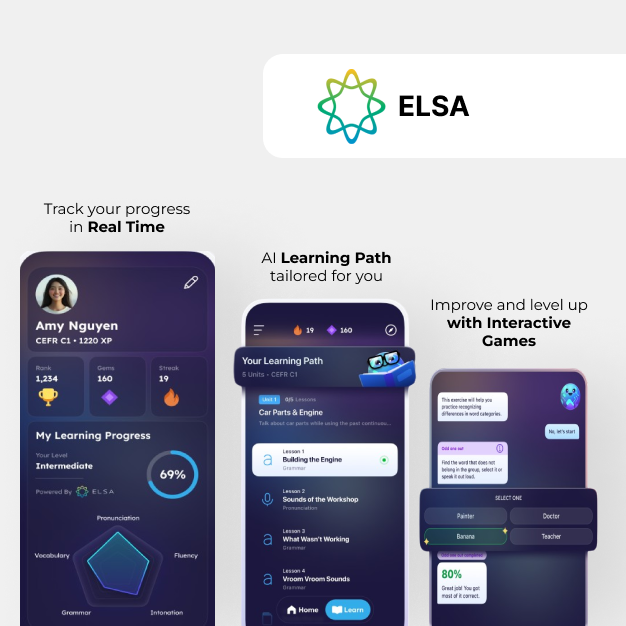
7. ELSA Speak: Personalized Language Learning
- Functionality: ELSA Speak is an AI-powered app designed to improve English pronunciation through personalized lessons and real-time feedback. It provides interactive exercises tailored to each user’s accent and proficiency level, helping non-native speakers refine their spoken English.
- AI Integration: Using advanced speech recognition, ELSA analyzes pronunciation and offers corrective feedback. The AI adapts to each user’s specific pronunciation issues, providing custom lessons and tracking progress over time for continuous improvement.
- User Engagement: While user statistics aren’t disclosed, ELSA has become popular globally for language learning. The app’s subscription model, starting at $19.99/month, and its positive reviews reflect its success in helping users improve their speaking skills, particularly in non-English speaking countries.
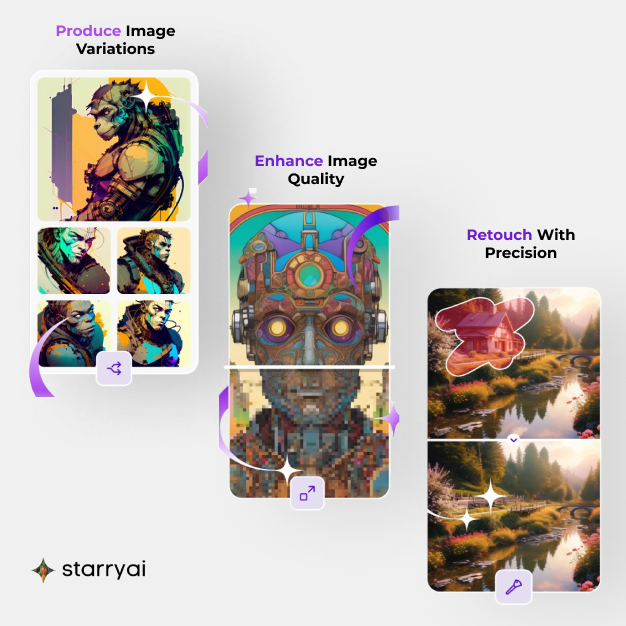
8. StarryAI: Generating Art from Text
- Functionality: StarryAI generates AI-based artwork from text prompts. It offers various styles like abstract and photorealistic, and allows for customization of color schemes and compositions. Artists and designers use it to create unique visuals without needing advanced skills.
- AI Integration: The app uses GANs (Generative Adversarial Networks) and deep learning to translate text into detailed art. The AI adapts to user input, generating a wide variety of styles and compositions, making the experience highly personalized.
- User Engagement: StarryAI has gained a solid user base in the creative community, with growing popularity among digital artists. Though exact user numbers aren’t available, the app’s increasing recognition on social media platforms and its impact on creative industries reflect its success.
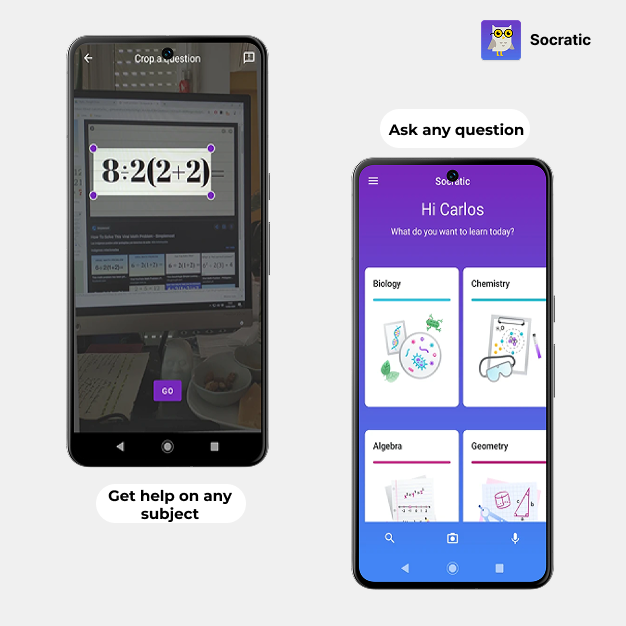
9. Socratic by Google: AI-Powered Homework Help
- Functionality: Socratic by Google assists students with homework through explanations, video tutorials, and step-by-step solutions. It covers subjects such as math, science, and literature, providing in-depth guidance and educational resources.
- AI Integration: Socratic employs AI-enabled search algorithms to scan questions supplied by users fetch pertinent information and provide easy solutions. The AI gets better with time, adjusting to varied user inputs and providing personalized learning material.
- User Engagement: Being a part of Google’s ecosystem, Socratic is widely utilized by students. Although data on exact active users for the year 2025 is not available, its smooth integration with Google services and its use as a tool to help students have resulted in strong adoption, particularly for exam prep.
10. Murf: AI-Generated Voiceovers
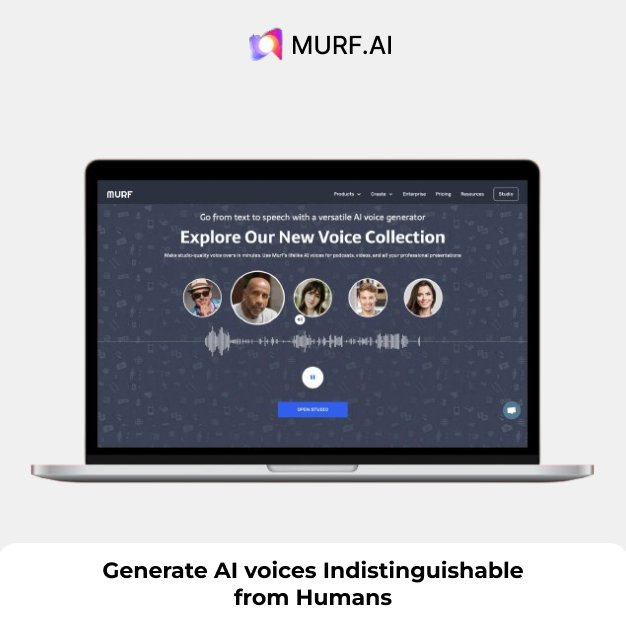
- Functionality: Murf is an AI-based text-to-speech platform that converts text into natural-sounding speech. With over 100 voices in various languages, it’s used for creating voiceovers for videos, podcasts, and presentations. The platform offers customizable features for users to adjust voice tone, pace, and accent.
- AI Integration: Murf uses deep learning to generate lifelike speech, adjusting intonation and cadence based on the context. The AI continuously improves by processing more content, allowing for more natural-sounding voices over time.
- User Engagement: Murf is popular across industries like media and education, though specific user stats are unavailable. Its integration with platforms like PowerPoint and Zoom and its affordable pricing makes it accessible to a wide range of content creators and businesses.
Conclusion
AI is no longer something to be imagined in sci-fi films, research institutions, or enterprise systems. As shown by the ten apps we’ve delved into in this article—Remini, FaceApp, Photoroom, Grammarly, Lensa AI, Otter.ai, ELSA Speak, StarryAI, Socratic, and Murf—AI is embedded seamlessly in the day-to-day tools we use to edit images, speak clearly, learn foreign languages, produce art, and much more.
What makes these apps great isn’t so much their functionality—it’s how deeply AI is integrated into their core experience without drowning the user. Unlike big language models that tend to need prompts, training, or even technical expertise, these apps provide intuitive experiences with AI quietly working in the background. They are what the future of AI in consumer tech actually looks like: accessible, targeted, and extremely functional.
More significantly, however, this progress uncovers an increasingly popular trend in app development: the transition from “AI-powered for the sake of buzz” to AI-enhanced for actual user benefit. These applications fix particular issues: enhancing a faded family photo (Remini), making your tone clearer in a work email (Grammarly), or giving your e-commerce item the look and feel of it having been photographed in a studio (Photoroom).
For consumers, the message is clear: AI is here to stay, not only in splashy headline-generating language models but in real, very useful features built into apps you already use—or should be using. Whether you’re a casual user, a content creator, or just someone looking to be more productive, these apps are a glimpse of AI’s potential when implemented well.
As this technology keeps improving, we can look for even more advanced tools that narrow the gap between human ability and machine effectiveness. The secret is to know which ones actually enrich your experience—and now you have ten good ones to begin with.
