Artificial Intelligence in Remote Patient Monitoring: The Future of Smart Healthcare
TL;DR
- AI-powered RPM enables real-time patient monitoring and insights
- Reduces hospital visits and improves care accessibility
- Enables early detection and predictive healthcare decisions
- Improves outcomes, efficiency, and cost savings
- Supports personalized, proactive, and remote care delivery
Healthcare is undergoing one of the most significant transformations in modern history. Hospitals across the globe are becoming increasingly overcrowded, healthcare costs continue to rise, and patients are now seeking more convenient and accessible care from the comfort of their homes. The growing demand for remote care is also reflected in market growth.
According to industry research, the Artificial Intelligence in Remote Patient Monitoring market was valued at USD 1.99 billion in 2024 and is projected to reach USD 8.51 billion by 2030, growing at a CAGR of 27.98%. This rapid growth highlights the increasing adoption of AI-powered Remote Patient Monitoring Solutions worldwide.
One of the most impactful innovations driving this shift is Remote Patient Monitoring (RPM). Remote Patient Monitoring enables healthcare providers to track patients’ health data in real time without requiring frequent in-person visits. This approach goes beyond convenience; it helps improve patient outcomes, reduce hospital readmissions, and enable proactive, data-driven care.
When combined with AI-powered Remote Patient Monitoring, Home Healthcare Monitoring Devices, and Advanced Healthcare Platforms, RPM is transforming how healthcare is delivered worldwide. Artificial Intelligence in Remote Patient Monitoring enhances data analysis, predicts potential health risks, and enables healthcare professionals to make faster and more informed decisions.
The rapid adoption of Artificial Intelligence in Healthcare, Smart Wearables, and Connected Medical Devices has made Home Healthcare Solutions more reliable, scalable, and efficient than ever before. These technologies are enabling healthcare providers to deliver personalized care, improve patient engagement, and ensure continuous monitoring across global healthcare environments.
In this blog, we explore the importance of AI in Remote Patient Monitoring, its core features, key benefits, future opportunities, and how AI-powered Remote Patient Monitoring Solutions are shaping the future of Smart Healthcare in today’s agile, digitally connected healthcare ecosystem.
What Are AI-Powered Remote Patient Monitoring Solutions?
AI-powered Remote Patient Monitoring (RPM) solutions are advanced Digital Healthcare Platforms that leverage Artificial Intelligence (AI) to continuously collect, analyze, and interpret patient health data from remote locations. These intelligent solutions enable healthcare providers to monitor patients outside traditional clinical settings, improving care accessibility and reducing the need for frequent hospital visits.
AI-powered Remote Patient Monitoring Solutions are widely used for Chronic Disease Management, Post-operative Recovery, Senior Care, and Preventive Wellness Monitoring. By enabling continuous, real-time tracking, these solutions help healthcare providers deliver proactive, personalized, and data-driven care across global healthcare environments.
These AI Healthcare Solutions gather data from multiple sources, including Wearable Devices, Biosensors, Mobile Health Apps, and IoT-enabled Medical Devices. Key health parameters monitored include heart rate, blood pressure, glucose levels, oxygen saturation, ECG, and other vital health indicators.
Artificial Intelligence plays a crucial role in processing this large volume of health data in real time. AI-powered Remote Patient Monitoring Software can detect anomalies, generate automated alerts, and provide predictive insights to support Clinical Decision-Making. This enables healthcare providers to intervene early, reduce complications, and improve patient outcomes.
By combining Artificial Intelligence in Healthcare, Remote Patient Monitoring Technology, and Connected Healthcare Devices, AI-powered RPM solutions are transforming healthcare delivery into a more efficient, proactive, and patient-centric model worldwide.

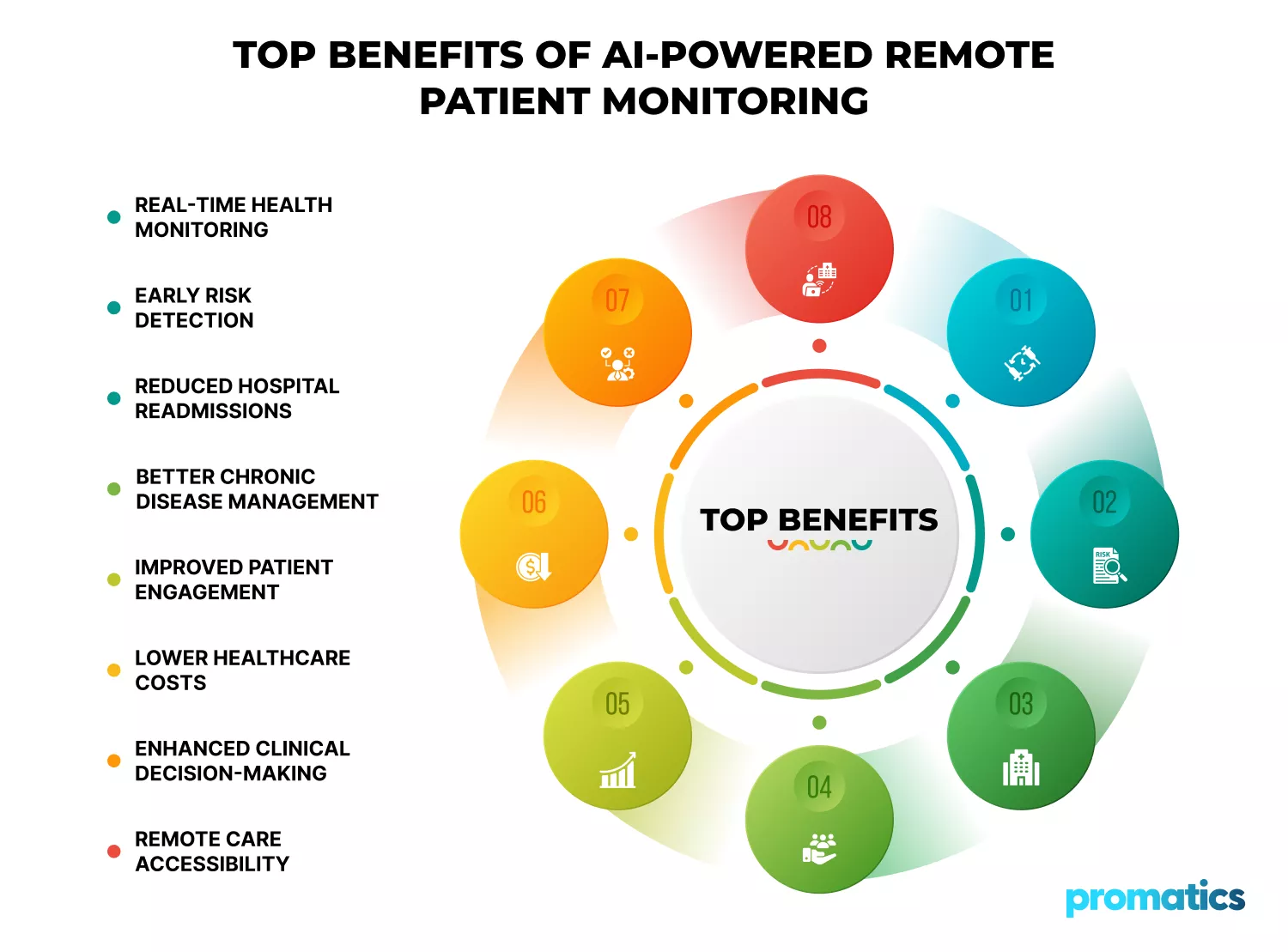
Top Benefits of Remote Patient Monitoring (RPM)
Remote Patient Monitoring (RPM) is transforming modern healthcare by enabling continuous patient care outside traditional clinical settings. With the help of Connected Healthcare Devices, Wearable Technology, and Real-Time Health Data Tracking, healthcare providers can monitor patients remotely and make timely, data-driven decisions. This approach improves patient outcomes, enhances operational efficiency, reduces healthcare costs, and increases access to healthcare services worldwide.
Here are the Top Benefits of Remote Patient Monitoring (RPM):
1. Faster and Smarter Clinical Decisions
Remote Patient Monitoring Solutions provide healthcare professionals with real-time patient health data such as heart rate, blood pressure, glucose levels, and oxygen saturation. This continuous flow of information enables physicians to detect abnormalities early and respond quickly to potential health risks.
Instead of waiting for scheduled visits, healthcare providers can monitor trends and make proactive clinical decisions. This improves treatment effectiveness, reduces complications, and enhances patient safety while enabling AI-driven clinical decision support.
2. Improved Patient Engagement and Self-Management
One of the key advantages of Remote Patient Monitoring Technology is that it empowers patients to actively participate in their healthcare journey. Patients can track their vital signs, monitor progress, and stay informed about their health conditions.
This increased engagement encourages patients to follow treatment plans, take medications on time, and adopt healthier lifestyles. Improved patient involvement leads to better treatment adherence, improved outcomes, and reduced long-term complications.
3. Reduced Healthcare Costs
Remote Patient Monitoring Solutions significantly reduce healthcare costs for both providers and patients. Continuous monitoring helps minimize unnecessary emergency visits, hospital admissions, and readmissions.
Early detection of health issues prevents complications that often require expensive treatments. Additionally, patients save on travel costs, consultation fees, and time spent visiting healthcare facilities, making AI-powered Remote Healthcare more cost-effective.
4. Better Chronic Disease Management
AI-powered Remote Patient Monitoring is highly effective for managing chronic conditions such as diabetes, hypertension, heart disease, asthma, and COPD. Continuous monitoring allows healthcare providers to track patient conditions and adjust treatment plans as needed.
Early intervention reduces complications, improves quality of life, and prevents frequent hospital visits. This results in better long-term health outcomes and improved patient satisfaction.
5. Enhanced Patient Convenience and Comfort
Home Healthcare Monitoring allows patients to receive care from the comfort of their homes. This is particularly beneficial for elderly patients, individuals with mobility challenges, and those living in remote areas.
Patients can share health data remotely and consult doctors virtually, improving convenience and reducing stress while enhancing the overall healthcare experience.
Key Ways AI is Transforming Remote Patient Monitoring
Artificial Intelligence (AI) is significantly transforming Remote Patient Monitoring (RPM) by enabling smarter data analysis, predictive insights, and automated care delivery. By integrating AI-powered Remote Patient Monitoring with Wearable Devices, IoT-enabled Medical Equipment, and Connected Healthcare Platforms, healthcare providers can deliver more proactive, personalized, and efficient patient care across global healthcare environments.
Here are the Key Ways AI is Transforming Remote Patient Monitoring:
1. Predictive Health Analytics
AI-powered Remote Patient Monitoring Systems can analyze large volumes of patient data to identify patterns and predict potential health risks. By evaluating trends in vital signs such as heart rate, blood pressure, and oxygen levels, AI detects early warning signs of patient deterioration.
This Predictive Healthcare Analytics capability allows healthcare providers to intervene early, prevent complications, and improve patient outcomes. Predictive insights also help reduce hospital admissions and enable proactive healthcare management.
2. Real-Time Data Analysis and Monitoring
AI in Remote Patient Monitoring enables real-time analysis of patient data collected from Wearable Devices and Connected Health Tools. Instead of manually reviewing patient data, AI algorithms continuously monitor readings and instantly flag abnormal values.
This Real-Time Remote Patient Monitoring improves response time during emergencies and ensures continuous patient supervision without increasing the workload on healthcare professionals.
3. Automated Alerts and Notifications
AI-driven Remote Patient Monitoring Solutions generate intelligent alerts when patient health metrics fall outside normal ranges. These automated alerts can be sent to Healthcare Providers, Caregivers, or Patients.
Automated notifications reduce delays in care, minimize risks, and improve patient safety. Additionally, AI Healthcare Platforms reduce false alarms by learning patient-specific health patterns over time, improving accuracy and efficiency.
4. Personalized Treatment and Care Plans
Artificial Intelligence in Healthcare analyzes patient history, lifestyle habits, and real-time health data to create Personalized Treatment Plans. This enables healthcare providers to deliver tailored care recommendations based on individual patient needs.
Personalized care improves treatment adherence, enhances patient engagement, and leads to better long-term health outcomes while supporting Patient-Centric Healthcare Delivery.
5. Early Detection of Chronic Disease Complications
AI-powered Remote Patient Monitoring plays a crucial role in managing chronic conditions such as diabetes, heart disease, and hypertension. Continuous monitoring allows AI systems to detect subtle health changes that may indicate worsening conditions.
Early detection helps prevent hospitalizations, reduces complications, and improves Chronic Disease Management. This proactive approach ensures better patient outcomes and more efficient healthcare delivery worldwide.
Patient Monitoring AI and Chronic Disease Management
Chronic conditions such as diabetes, hypertension, heart disease, and respiratory disorders require continuous monitoring rather than occasional clinical visits. Patient Monitoring AI plays a crucial role in Chronic Disease Management by analyzing long-term patient data, identifying health trends, and detecting early signs of disease progression or potential complications.
AI-powered Remote Patient Monitoring uses predictive analytics, machine learning, and real-time health data analysis to detect early warning signs before symptoms worsen. By monitoring vital health parameters such as blood pressure, glucose levels, heart rate, and oxygen saturation, AI helps healthcare providers anticipate flare-ups and intervene proactively.
This enables clinicians to make timely adjustments to treatment plans, deliver personalized care, and improve patient engagement. Patients also benefit from continuous monitoring, which encourages adherence to treatment plans and promotes better self-management of chronic conditions.
This proactive and data-driven healthcare approach improves long-term health outcomes, enhances patients’ quality of life, and reduces hospital admissions. Additionally, AI-powered Chronic Disease Management helps lower healthcare costs, improve care efficiency, and support scalable remote healthcare solutions for patients worldwide.
Importance of Healthcare Analytics Tools in Remote Care
Healthcare Analytics Tools play a vital role in AI-powered Remote Patient Monitoring by transforming raw patient data into actionable insights. While Remote Healthcare Technology generates large volumes of data from Wearable Devices, IoT-enabled Medical Equipment, and Mobile Health Applications, the true value of this data lies in how effectively it is analyzed. Healthcare Analytics Solutions help healthcare providers convert complex data into meaningful information that supports smarter clinical and operational decisions.
These advanced Healthcare Analytics Tools empower healthcare providers to:
- Identify population health trends and detect emerging risks early
- Measure treatment effectiveness and optimize care strategies
- Improve operational efficiency by streamlining workflows and resource allocation
- Enhance clinical decision-making using data-driven insights and predictive analytics
When integrated with AI-powered Remote Patient Monitoring Systems, healthcare analytics tools enable proactive care delivery and personalized treatment plans. This data-driven healthcare approach improves patient outcomes, reduces healthcare costs, and enhances the scalability of Remote Patient Monitoring Solutions for global healthcare providers.
Secure Communication in AI-Powered Remote Patient Care
Secure communication is essential for delivering effective AI-powered Remote Patient Care. It ensures seamless coordination between patients and healthcare providers, enabling timely interventions and improved patient outcomes. AI-powered Remote Patient Monitoring Platforms enhance communication through advanced, secure digital tools that support remote healthcare delivery.
Key Benefits of Secure Communication in AI-Powered Remote Patient Care
Real-Time Communication
AI-powered Remote Patient Monitoring Solutions enable instant communication between patients and healthcare providers, ensuring timely clinical responses and improved care continuity.
Virtual Consultations and Remote Follow-Ups
Secure video conferencing and messaging tools allow healthcare professionals to conduct virtual consultations, reducing the need for in-person visits and improving accessibility.
Improved Care Coordination
AI-enabled Communication Tools support collaboration among multidisciplinary care teams, helping providers share insights and deliver more coordinated patient care.
Secure Access to Patient Data
Healthcare professionals can securely access real-time health metrics, patient records, and treatment plans, enabling faster and more informed decision-making.
Enhanced Patient Engagement
AI-powered Healthcare Platforms keep patients informed through reminders, alerts, and continuous communication, improving adherence to treatment plans.
Data Security and Privacy Protection
AI-powered Remote Patient Monitoring Platforms use end-to-end encryption, secure authentication, and compliance with healthcare regulations such as HIPAA and GDPR.
Reliable and Scalable Remote Care Delivery
Secure communication ensures safe, confidential, and uninterrupted remote healthcare services for patients across global healthcare environments.
Role of Healthcare Software in AI-Powered Remote Patient Monitoring
Healthcare Software plays a critical role in enabling AI-powered Remote Patient Monitoring and accelerating Digital Transformation in Healthcare. Modern Healthcare Software Solutions have evolved far beyond basic record-keeping and administrative tasks. Today, Artificial Intelligence in Healthcare supports patient monitoring, data analytics, virtual care, and clinical decision-making, allowing healthcare providers to deliver more efficient, personalized, and accessible care worldwide.
Modern Remote Patient Monitoring Platforms integrate Artificial Intelligence, Cloud Computing, and IoT-enabled Medical Devices to create seamless, end-to-end healthcare experiences. These AI-powered Healthcare Platforms enable real-time data collection, intelligent analysis, secure communication, and automated workflows that improve care coordination and operational efficiency.
By leveraging AI-powered Healthcare Software, healthcare providers can deliver continuous patient monitoring, improve treatment accuracy, and ensure better patient engagement. This shift toward Smart Healthcare Solutions enhances patient outcomes, reduces healthcare costs, and supports scalable remote care delivery across global healthcare environments.
AI Remote Patient Monitoring and Clinical Decision Support
Artificial Intelligence in Remote Patient Monitoring plays a crucial role in Clinical Decision Support Systems by transforming real-time patient data into actionable medical insights. Through continuous monitoring and intelligent data analysis, AI-powered Remote Patient Monitoring Solutions help clinicians detect subtle health changes that may indicate emerging risks.
With AI-powered Remote Patient Monitoring, healthcare providers can identify early warning signs, prioritize high-risk patients, and make informed treatment decisions. AI-driven insights combine real-time patient data with historical health records, enabling clinicians to optimize care strategies and improve overall clinical efficiency.
Importantly, AI in Healthcare enhances clinical expertise rather than replacing it. By reducing diagnostic errors, supporting evidence-based decision-making, and automating routine analysis, AI-powered Clinical Decision Support allows healthcare professionals to focus on patient-centered care and complex clinical evaluations.
This collaborative approach between AI Healthcare Solutions and healthcare providers strengthens care quality, improves patient outcomes, and enables smarter, more responsive remote healthcare delivery worldwide.
Future Opportunities of AI in Remote Patient Monitoring
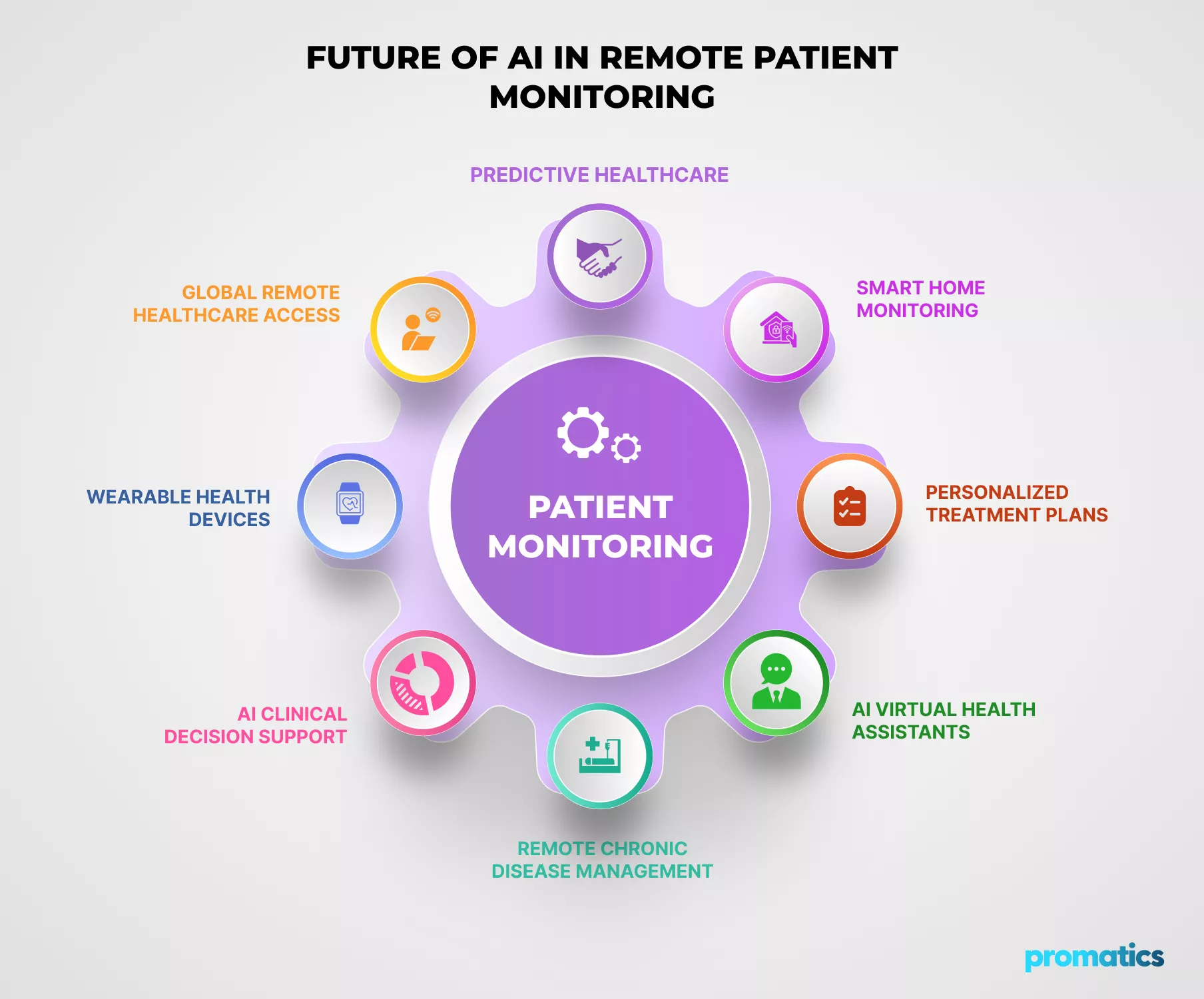
The future of AI in Remote Patient Monitoring is highly promising as Artificial Intelligence in Healthcare continues to evolve in both capability and adoption. AI is expected to play a pivotal role in shifting healthcare from reactive treatment models to proactive and preventive care approaches. With continuous monitoring, predictive insights, and intelligent automation, AI-powered Remote Patient Monitoring Solutions will further enhance healthcare efficiency, accessibility, and long-term sustainability worldwide.
Advanced Predictive Analytics
AI-powered Predictive Analytics will become increasingly accurate in identifying potential health risks before symptoms appear. By analyzing long-term patient data alongside real-time health indicators, AI Remote Patient Monitoring Systems will enable earlier interventions and reduce emergency situations.
This Predictive Healthcare Approach will help clinicians manage chronic conditions more effectively, prevent complications, and improve long-term patient outcomes while supporting preventive healthcare models.
Integration with Smart Homes
The future of Home Healthcare Monitoring will include AI-enabled Smart Home Environments equipped with Connected Sensors and IoT-enabled Medical Devices. These systems will track movement, sleep patterns, medication adherence, and daily activities.
Such insights will help healthcare providers detect early signs of health decline, prevent accidents, and support independent living for patients receiving care at home. This integration will make Remote Patient Monitoring Technology more comprehensive and patient-centric.
AI-Powered Virtual Health Assistants
AI-powered Virtual Health Assistants will play an increasingly important role in Remote Patient Monitoring Solutions. These assistants will guide patients through medication schedules, lifestyle changes, and ongoing health education.
By delivering personalized reminders and real-time support, AI Healthcare Assistants will improve patient engagement, enhance treatment adherence, and contribute to better long-term health outcomes.
Improved Accessibility and Affordability
AI-powered Remote Patient Monitoring will make healthcare more scalable and cost-effective. As adoption increases, healthcare providers will be able to expand Remote Healthcare Services to rural, remote, and underserved populations worldwide.
This improved accessibility will help bridge healthcare gaps, reduce disparities, and promote equitable healthcare delivery, making AI in Healthcare a key driver of global healthcare transformation.
Challenges and Ethical Considerations
While Artificial Intelligence in Remote Patient Monitoring offers significant benefits, it also presents important challenges that must be addressed to ensure safe, ethical, and responsible adoption. As AI-powered Remote Patient Monitoring Solutions handle large volumes of sensitive patient data, concerns around data privacy, algorithm bias, and regulatory compliance become increasingly critical. Addressing these challenges is essential to maintain patient trust and ensure reliable healthcare outcomes.
Key Challenges in AI-Powered Remote Patient Monitoring
- Data Privacy and Security
Protecting sensitive patient information is a top priority. Healthcare organizations must implement data encryption, secure access controls, and multi-layer security frameworks to safeguard patient data. - Regulatory Compliance
AI-powered Healthcare Platforms must comply with global healthcare regulations such as HIPAA, GDPR, and other regional data protection standards to ensure secure and compliant remote care delivery. - Algorithm Bias and Accuracy
AI models must be carefully designed and tested to avoid algorithm bias and ensure accurate healthcare insights. Biased or inaccurate data can impact clinical decisions and patient outcomes. - Explainable and Transparent AI
Explainable AI in Healthcare helps clinicians understand how AI-generated insights are derived. This improves accountability, builds trust, and supports better clinical decision-making. - Human Oversight and Clinical Judgment
Artificial Intelligence in Healthcare is designed to support healthcare professionals, not replace them. Maintaining human oversight ensures that clinical expertise remains central to patient care.
By adopting ethical AI practices, implementing strong governance frameworks, and ensuring regulatory compliance, healthcare organizations can confidently deploy AI-powered Remote Patient Monitoring Solutions and deliver safe, secure, and responsible remote healthcare worldwide.
Why Promatics Technologies Leads in AI-Powered Remote Patient Care
At Promatics Technologies, we deliver AI-powered Remote Patient Monitoring Solutions designed for real-time health tracking, proactive risk detection, and smarter clinical decision-making. Our scalable, cloud-based platforms combine advanced analytics, intuitive interfaces, and connected healthcare technologies to enable efficient and high-quality remote care.
Our solutions leverage Artificial Intelligence, Predictive Analytics, and IoT-enabled Medical Devices to analyze patient health patterns, identify risks early, and support personalized care delivery. This helps healthcare providers improve outcomes while reducing administrative workload.
Security and compliance remain central to our approach. Promatics Technologies ensures encrypted communication, secure authentication, and compliance with global standards such as HIPAA and GDPR. From chronic disease management to home healthcare innovation, we help healthcare organizations deliver smarter, safer, and connected remote patient care worldwide.
Conclusion
Artificial Intelligence in Remote Patient Monitoring is rapidly transforming modern healthcare. By enabling real-time monitoring, predictive insights, and proactive care, AI helps healthcare providers move beyond reactive treatment and deliver continuous, data-driven patient care. This shift improves patient outcomes, enhances operational efficiency, and expands access to quality healthcare worldwide.
At Promatics Technologies, we combine Artificial Intelligence, Advanced Analytics, and Connected Healthcare Technologies to build intelligent Remote Patient Monitoring Solutions. Our platforms deliver real-time insights, proactive alerts, and seamless patient engagement, empowering healthcare organizations to provide efficient, secure, and patient-centric remote care at scale.
The future of healthcare is intelligent, connected, and remote. Organizations that embrace AI-powered Remote Patient Monitoring today will gain a competitive advantage while improving care quality and reducing costs.
Ready to transform your remote patient care strategy? Partner with Promatics Technologies to build smarter, scalable, and future-ready Remote Patient Monitoring Solutions. Connect with us today and take the next step toward efficient, proactive, and patient-focused healthcare delivery.
