Healthcare App Development in 2026: AI, Compliance, and Patient Experience

TL;DR
- AI is transforming healthcare apps with smarter automation and personalized care.
- Security, compliance, and data privacy are essential for every healthcare solution.
- Modern healthcare apps connect patients, providers, and clinical systems seamlessly.
- Predictive analytics helps healthcare organizations improve care and efficiency.
- Cloud-native architecture enables secure, scalable, and future-ready applications.
- AI, interoperability, and patient-centric design are shaping the future of digital healthcare.
- Choosing the right healthcare app development partner helps accelerate innovation and ensure long-term success.
Healthcare is no longer confined to hospitals and clinics. From AI-powered symptom checkers and virtual consultations to remote patient monitoring and personalized treatment recommendations, digital healthcare has transformed how providers deliver care and how patients manage their health.
In 2026, healthcare app development will become a strategic investment rather than a technology initiative. Healthcare organizations are building intelligent digital platforms that improve patient outcomes, streamline clinical workflows, reduce operational costs, and support data-driven decision-making. Artificial intelligence, cloud computing, wearable devices, and interoperability standards are accelerating this transformation while enabling healthcare providers to deliver more connected and personalized experiences.
Building a successful healthcare application requires more than a great user interface. It demands AI capabilities, secure architecture, regulatory compliance, and seamless integration with EHR systems and healthcare platforms.
Whether you’re a hospital, healthcare startup, clinic, insurance provider, or pharmaceutical company, investing in custom healthcare app development can significantly improve operational efficiency, patient engagement, and long-term business growth.
If you’re planning to build a secure, scalable, and AI-enabled healthcare solution, partnering with an experienced healthcare app development company can help you accelerate development while ensuring regulatory compliance and future-ready architecture.
Healthcare App Development in 2026: Market Statistics
The global healthcare technology market is experiencing unprecedented growth as healthcare organizations accelerate digital transformation initiatives.
Some of the biggest trends shaping healthcare app development include:
- More than 85% of healthcare organizations are increasing investments in AI and automation to improve patient care and operational efficiency.
- The global digital health market is projected to exceed $900 billion by the early 2030s, driven by telemedicine, remote patient monitoring, and AI-powered diagnostics.
- AI-assisted clinical workflows can reduce administrative workloads by up to 30%, allowing healthcare professionals to spend more time with patients.
- Nearly 70% of patients prefer digital appointment scheduling, online consultations, and mobile access to their health records.
These trends indicate that healthcare providers are no longer asking whether they should invest in digital healthcare; they’re deciding how quickly they can modernize their healthcare ecosystem.
What is Healthcare App Development?
Healthcare app development is the process of designing, developing, deploying, and maintaining software applications that improve healthcare delivery, patient engagement, medical data management, and clinical operations.
Unlike traditional mobile applications, healthcare applications operate in highly regulated environments where privacy, security, compliance, and reliability are critical.
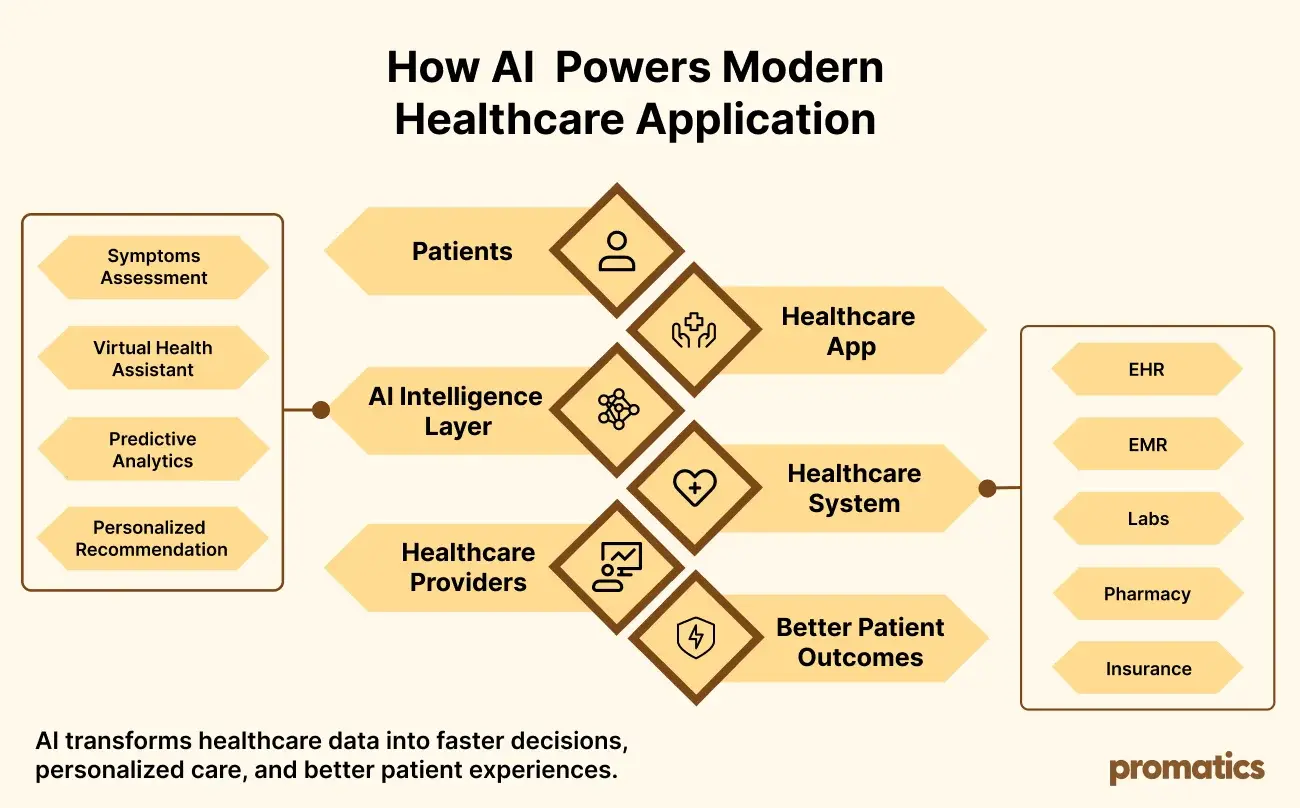
Modern healthcare applications often integrate with:
- Electronic Health Records (EHR)
- Electronic Medical Records (EMR)
- Hospital Information Systems (HIS)
- Laboratory Information Management Systems (LIMS)
- Pharmacy Management Systems
- AI-powered healthcare services
Today, healthcare application development solutions are built using cloud-native architectures, APIs, machine learning models, and secure data-sharing frameworks to enable seamless collaboration across the healthcare ecosystem.
Organizations working with a trusted healthcare software development company can also accelerate interoperability using standards like FHIR and HL7, making it easier to exchange patient data securely between providers.
Why Healthcare Organizations Are Investing in AI-Powered Healthcare Applications
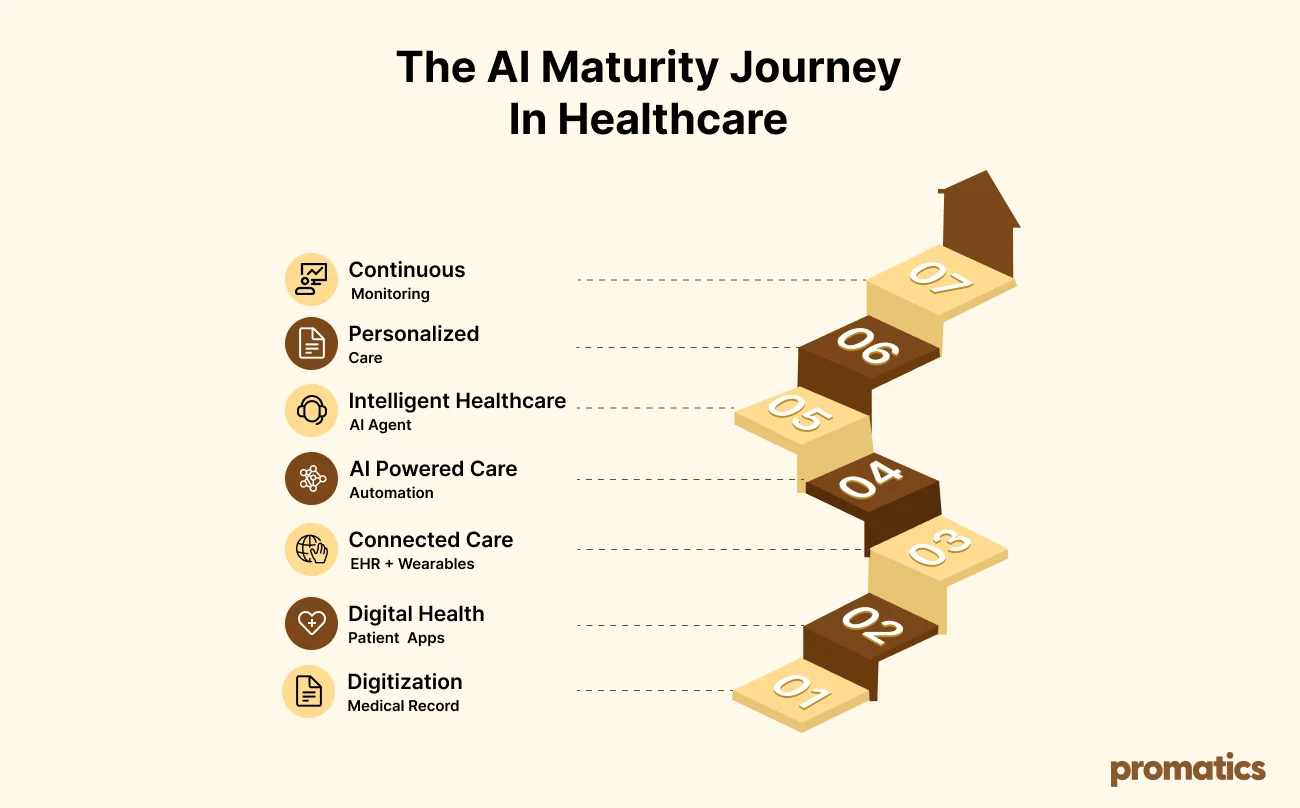
Artificial intelligence has become one of the biggest drivers of healthcare innovation.
Instead of replacing healthcare professionals, AI enhances clinical decision-making, automates repetitive tasks, and enables more personalized patient experiences.
Healthcare organizations are increasingly investing in AI-powered healthcare apps because they help:
- Improve Clinical Decision Making
AI models analyze large volumes of clinical data, medical histories, imaging reports, and laboratory results to assist physicians in identifying potential health risks and recommending evidence-based treatment options.
- Reduce Administrative Work
Administrative processes such as appointment scheduling, medical coding, claims processing, documentation, and patient follow-ups consume significant healthcare resources.
AI-powered workflow automation helps healthcare providers reduce manual effort while improving operational efficiency.
- Deliver Personalized Patient Experiences
AI enables healthcare applications to provide:
- Personalized care plans
- Medication reminders
- Lifestyle recommendations
- Preventive health alerts
- Intelligent health coaching
These capabilities improve patient engagement while encouraging long-term adherence to treatment plans.
- Support Predictive Healthcare
Predictive analytics can identify high-risk patients before conditions worsen.
Healthcare providers can proactively intervene using AI-generated insights, reducing hospital readmissions and improving patient outcomes.
Key Benefits of Healthcare App Development
Healthcare mobile applications create value for every stakeholder within the healthcare ecosystem.
Benefits for Patients
Patients gain convenient access to healthcare services through features such as:
- Online appointment booking
- Telemedicine consultations
- Digital prescriptions
- Health record access
- Medication reminders
- Digital payments
These features improve accessibility while reducing waiting times and enhancing overall patient satisfaction.
Benefits for Healthcare Providers
Doctors, clinics, and hospitals benefit from:
- Faster clinical workflows
- AI-assisted diagnostics
- Better patient communication
- Remote patient monitoring
- Efficient appointment management
Healthcare providers can spend more time delivering quality care instead of managing administrative processes.
Benefits for Healthcare Businesses
Healthcare organizations also experience measurable business benefits:
- Lower operational costs
- Increased patient retention
- Higher appointment attendance
- Improved regulatory compliance
- Scalable digital healthcare infrastructure
This is why many healthcare enterprises are partnering with experienced healthcare app development service providers to modernize legacy systems and build future-ready digital health platforms.
Types of Healthcare Applications in 2026
Healthcare applications are becoming increasingly specialized based on user needs and healthcare delivery models.
1. Patient-Centric Healthcare Apps
Designed to improve accessibility and patient engagement.
Popular features include:
- Appointment scheduling
- Medical history
- Prescription management
- Health tracking
- Teleconsultation
- Lab report access
- Vaccination reminders
- Health education
2. Telemedicine Applications
The demand for telemedicine app development continues to grow as virtual healthcare becomes a standard service.
Common features include:
- Video consultations
- Secure messaging
- Digital prescriptions
- Appointment scheduling
- AI symptom assessment
- Payment integration
- Remote follow-up care
Telemedicine platforms reduce geographical barriers while expanding access to specialized healthcare services.
3. Remote Patient Monitoring Apps
These applications integrate with IoT devices and wearables to monitor:
- Blood pressure
- Heart rate
- Blood glucose
- Oxygen saturation
- ECG
- Sleep quality
- Physical activity
Healthcare providers receive real-time patient data, enabling early intervention and continuous care management.
4. Hospital Management Applications
Enterprise healthcare applications streamline hospital operations through modules for:
- Patient registration
- Bed management
- Billing
- Inventory management
- Staff scheduling
- Laboratory integration
- Pharmacy management
- Clinical workflow automation
5. Mental Health & Wellness Apps
Mental healthcare continues to be one of the fastest-growing digital health segments.
These applications include:
- Mood tracking
- Guided meditation
- Virtual therapy
- AI wellness assistants
- Cognitive behavioral therapy (CBT)
- Stress management programs
6. Chronic Disease Management Apps
Designed for long-term patient care, these applications help manage conditions such as
- Hypertension
- Cardiovascular diseases
- Asthma
- Arthritis
- Cancer recovery
- Obesity management
AI-powered monitoring and predictive analytics help healthcare providers deliver personalized treatment plans while reducing emergency hospital visits.
Essential Features, AI Use Cases, and Compliance for Healthcare App Development in 2026
Healthcare organizations today are expected to deliver secure, intelligent, and patient-centric digital experiences. Whether you’re building a telemedicine platform, a hospital management system, or a remote patient monitoring solution, success depends on choosing the right features, integrating AI effectively, and meeting stringent compliance standards.
In this section, we’ll explore the core capabilities every modern healthcare application should include and how AI is reshaping patient care and clinical workflows.
Must-Have Features of Modern Healthcare Apps
The features of a healthcare application vary depending on its users—patients, healthcare providers, administrators, or insurers. However, certain functionalities have become essential across almost every healthcare platform.
1. Secure Patient Registration and Profile Management
Every healthcare app should provide a secure onboarding experience while protecting sensitive patient information.
Core capabilities include:
- Multi-factor authentication (MFA)
- Biometric login (Face ID/Fingerprint)
- Secure patient profiles
- Family account management
- Identity verification
- Consent management
2. Appointment Scheduling and Calendar Management
Patients increasingly expect self-service scheduling instead of calling healthcare facilities.
An intelligent appointment management system should offer:
- Appointment booking
- Health records
- Teleconsultation
- Prescription management
- Health tracking
Adding AI can further optimize appointment allocation by reducing scheduling conflicts and minimizing no-shows.
3. Telemedicine and Virtual Consultations
Telemedicine has become a core healthcare service rather than an optional feature.
A modern telemedicine app development solution should include:
- HD video consultations
- Secure voice calls
- In-app messaging
- Screen sharing
- Digital prescriptions
- Visit summaries
- Payment integration
- Follow-up consultations
Virtual care improves accessibility while reducing travel time and operational costs for both patients and providers.
4. Electronic Health Records (EHR) Integration
Healthcare providers rely on centralized patient information to deliver informed care.
A healthcare application should seamlessly integrate with:
- Electronic Health Records (EHR)
- Electronic Medical Records (EMR)
- Laboratory systems
- Pharmacy systems
- Radiology platforms
- Insurance systems
Standards like FHIR and HL7 enable secure interoperability, allowing healthcare organizations to exchange patient data efficiently across different systems.
5. Remote Patient Monitoring (RPM)
Remote patient monitoring has become one of the fastest-growing segments in AI-powered healthcare apps.
Healthcare applications can connect with wearable devices and medical sensors to monitor:
- Heart rate
- Blood pressure
- Blood glucose
- Oxygen saturation (SpO₂)
- Body temperature
- ECG
- Sleep quality
- Daily activity
Real-time monitoring helps physicians identify abnormalities early and provide proactive care.
6. Secure Messaging and Communication
Patients want convenient communication without compromising privacy.
Essential communication features include:
- Encrypted messaging
- Doctor-patient chat
- File sharing
- Prescription updates
- Test result notifications
- AI-powered support chatbots
Secure communication improves patient engagement while reducing unnecessary hospital visits.
7. Digital Payments and Insurance Integration
Healthcare applications should simplify billing by supporting:
- Online payments
- Insurance verification
- Digital invoices
- Payment history
- Claims management
- Flexible payment options
Integrated payment workflows improve both patient convenience and administrative efficiency.
How AI Is Transforming Healthcare Applications
Artificial intelligence has evolved from a supporting technology to a core component of healthcare innovation. Modern healthcare applications leverage AI to improve diagnostics, automate routine tasks, personalize patient care, and assist healthcare professionals in making informed decisions.
Below are some of the most impactful AI use cases in healthcare app development.
1. AI-Powered Symptom Checkers
AI-powered symptom checkers help patients assess their health before scheduling a consultation.
These systems can:
- Analyze reported symptoms
- Suggest possible conditions
- Recommend urgency levels
- Guide patients to the appropriate specialist
- Reduce unnecessary emergency visits
While these tools don’t replace clinical diagnosis, they improve patient triage and healthcare accessibility.
2. Clinical Decision Support Systems (CDSS)
Healthcare professionals generate and review vast amounts of clinical data daily.
AI-driven clinical decision support systems assist physicians by:
- Identifying potential diagnoses
- Flagging medication interactions
- Recommending evidence-based treatments
- Highlighting abnormal lab results
- Supporting risk assessments
These insights help clinicians make faster and more informed decisions while reducing the likelihood of medical errors.
3. Predictive Healthcare Analytics
Predictive analytics enables healthcare providers to identify risks before they become critical.
AI models can predict:
- Hospital readmissions
- Disease progression
- High-risk patients
- ICU requirements
- Patient deterioration
- Resource demand
By acting on these insights, healthcare organizations can improve outcomes and optimize resource allocation.
4. AI Medical Imaging
AI is increasingly used to support radiologists by analyzing medical images such as
- X-rays
- CT scans
- MRI scans
- Ultrasounds
- Mammograms
AI models can highlight abnormalities, prioritize urgent cases, and assist clinicians in identifying patterns that may otherwise be difficult to detect.
5. AI Virtual Health Assistants
Healthcare apps are incorporating AI assistants that provide patients with continuous support.
Common use cases include:
- Medication reminders
- Appointment scheduling
- Post-treatment guidance
- Frequently asked questions
These assistants improve patient engagement while reducing administrative workload for healthcare staff.
6. Personalized Treatment Recommendations
Machine learning algorithms analyze patient data—including medical history, lifestyle factors, laboratory reports, and treatment responses—to recommend personalized care plans.
Examples include:
- Customized medication schedules
- Chronic disease management plans
- Nutrition recommendations
- Preventive care reminders
- Recovery tracking
This level of personalization helps improve adherence and long-term patient outcomes.
7. AI for Healthcare Workflow Automation
Administrative tasks continue to consume a significant portion of healthcare resources.
AI can automate:
- Medical documentation
- Appointment scheduling
- Insurance verification
- Claims processing
- Medical coding
- Patient follow-ups
Automation reduces operational costs while allowing healthcare professionals to focus on patient care.
Compliance Requirements for Healthcare App Development
Healthcare applications manage highly sensitive personal and medical information. Failure to comply with healthcare regulations can result in legal penalties, financial losses, and reputational damage.
Compliance should be integrated into every stage of the development lifecycle rather than added after deployment.
HIPAA Compliance
For organizations operating in the United States, HIPAA (Health Insurance Portability and Accountability Act) establishes strict standards for protecting patient health information.
A HIPAA-compliant healthcare app should include:
- End-to-end encryption
- Role-based access control
- Audit logs
- Secure authentication
- Data backup and recovery
- Automatic session timeout
- Secure cloud infrastructure
- Business Associate Agreements (BAAs) were required
GDPR Compliance
Healthcare providers serving patients in the European Union must comply with the General Data Protection Regulation (GDPR).
Key GDPR requirements include:
- Explicit patient consent
- Right to access personal data
- Right to delete data
- Data portability
- Privacy by design
- Data breach notification procedures
HITECH Compliance
The HITECH Act strengthens HIPAA by encouraging the secure adoption of electronic health records and increasing accountability for protecting electronic health information.
Healthcare apps should ensure:
- Secure EHR management
- Breach reporting procedures
- Risk assessments
- Strong cybersecurity controls
FHIR and HL7 Standards
Interoperability is essential for modern healthcare ecosystems.
Using FHIR (Fast Healthcare Interoperability Resources) and HL7 standards enables secure and standardized exchange of healthcare data between:
- Hospitals
- Clinics
- Laboratories
- Pharmacies
- Insurance providers
- Government healthcare systems
Supporting these standards makes healthcare applications more scalable and integration-friendly.
Healthcare App Security Best Practices
Security is a continuous process rather than a one-time implementation. Every healthcare application should incorporate a security-first architecture.
Recommended Best Practices
- Encrypt data both in transit and at rest
- Implement multi-factor authentication (MFA)
- Use role-based access control (RBAC)
- Conduct regular vulnerability assessments
- Perform penetration testing before deployment
- Monitor APIs for suspicious activity
- Maintain detailed audit trails
- Secure third-party integrations
- Enable automatic backup and disaster recovery
- Keep software dependencies up to date
Organizations that prioritize security from the beginning are better positioned to protect patient trust and maintain compliance.
Future Trends Shaping Healthcare App Development
The next generation of healthcare applications will go beyond digitizing existing processes. They will become intelligent assistants that help patients, clinicians, and healthcare organizations make faster, more informed decisions.
1. AI Agents for Clinical Workflows
Healthcare providers are moving from AI assistants to autonomous AI agents capable of completing multi-step clinical and administrative tasks with minimal human intervention.
AI agents can:
- Schedule appointments based on physician availability
- Summarize patient histories before consultations
- Automate insurance verification
- Coordinate referrals between specialists
- Generate clinical documentation
- Recommend follow-up care
- Monitor chronic disease progression
Rather than replacing healthcare professionals, these agents reduce administrative burden and allow clinicians to focus more on patient care.
2. Generative AI for Personalized Healthcare
Generative AI is transforming how healthcare organizations create and deliver personalized experiences.
Potential applications include:
- Patient-friendly summaries of medical reports
- Personalized discharge instructions
- Treatment plan explanations
- Clinical documentation assistance
- Health education content
- Multilingual patient communication
- AI-assisted care coordination
When implemented responsibly with human oversight, generative AI can improve communication while saving valuable clinical time.
3. Digital Therapeutics (DTx)
Digital therapeutics combine evidence-based software with clinical care to help manage chronic diseases and behavioral health conditions.
Healthcare applications increasingly include:
- Diabetes management programs
- Cardiac rehabilitation support
- Sleep improvement programs
- Weight management coaching
These tools complement traditional treatments by supporting patients between clinical visits.
4. Internet of Medical Things (IoMT)
Connected medical devices continue to reshape patient monitoring.
Healthcare applications now integrate with:
- Smartwatches
- Blood glucose monitors
- ECG devices
- Blood pressure monitors
- Pulse oximeters
- Smart inhalers
- Connected insulin pumps
Continuous data collection enables healthcare providers to identify potential issues earlier and intervene before conditions worsen.
5. Predictive and Preventive Healthcare
Healthcare is shifting from reactive treatment to preventive care.
AI-powered analytics can help identify:
- Patients at risk of hospital readmission
- Early signs of chronic disease progression
- Medication adherence issues
- High-risk populations
- Preventable complications
This proactive approach improves outcomes while reducing long-term healthcare costs.
6. Interoperable Healthcare Ecosystems
Healthcare organizations increasingly rely on connected systems rather than isolated applications.
Future healthcare platforms will seamlessly integrate with:
- Electronic Health Records (EHR)
- Electronic Medical Records (EMR)
- Laboratory systems
- Pharmacy platforms
- Insurance providers
- Wearable devices
- National health information exchanges
Standards such as FHIR and HL7 will continue to drive secure and standardized data exchange across the healthcare ecosystem.
7. Voice AI and Ambient Clinical Intelligence
Voice-enabled AI is reducing documentation burdens by capturing and organizing clinical conversations in real time.
Healthcare providers can use voice AI to:
- Record consultation notes
- Generate visit summaries
- Update patient records
- Retrieve medical information hands-free
- Reduce administrative workload
This technology enables clinicians to spend more time engaging with patients instead of manually documenting encounters.
Healthcare App Development Checklist
Before launching your healthcare application, ensure it meets the following requirements:
Business Strategy
- Define clear business objectives
- Identify target users
- Validate market demand
- Prioritize core features
Compliance
- HIPAA compliance (where applicable)
- GDPR compliance
- HITECH requirements
- Data retention policies
- Patient consent management
Security
- End-to-end encryption
- Multi-factor authentication
- Role-based access control
- Secure cloud infrastructure
- Regular security audits
- Disaster recovery planning
AI Readiness
- Clearly defined AI use cases
- Human oversight for AI recommendations
- Model performance monitoring
- Bias testing and validation
- Transparent AI decision-making
Technical Architecture
- Cloud-native infrastructure
- API-first development
- FHIR and HL7 integration
- Scalable backend architecture
- High availability and redundancy
User Experience
- Accessible design
- Intuitive navigation
- Fast onboarding
- Mobile responsiveness
- Performance optimization
Why Choose Promatics Technologies for Healthcare App Development?
Healthcare technology demands more than software engineering—it requires deep domain expertise, regulatory awareness, and the ability to build scalable, secure, and intelligent digital solutions.
At Promatics Technologies, we help healthcare organizations transform ideas into robust digital healthcare platforms that improve patient care and operational efficiency.
Our healthcare development services include:
- Custom healthcare app development
- AI-powered healthcare application development
- Telemedicine platform development
- Patient engagement solutions
- Remote patient monitoring applications
- Healthcare software modernization
- EHR and EMR integration
- FHIR and HL7 implementation
- Healthcare cloud migration
- AI consulting and implementation
- Mobile and web application development
- Ongoing support and maintenance
Whether you’re building an MVP for a digital health startup or modernizing enterprise healthcare systems, our team focuses on delivering secure, compliant, and scalable solutions aligned with your business goals.
Explore our:
- Healthcare App Development Services
- AI Development Services
- Generative AI Development
- Custom Software Development
- Mobile App Development Services
- Healthcare Case Studies
- AI Case Studies
Final Thoughts
Healthcare is becoming increasingly connected and AI-powered, transforming how patients receive care and how providers operate. From telemedicine and remote monitoring to predictive analytics and personalized patient engagement, healthcare apps are driving better outcomes and greater efficiency.
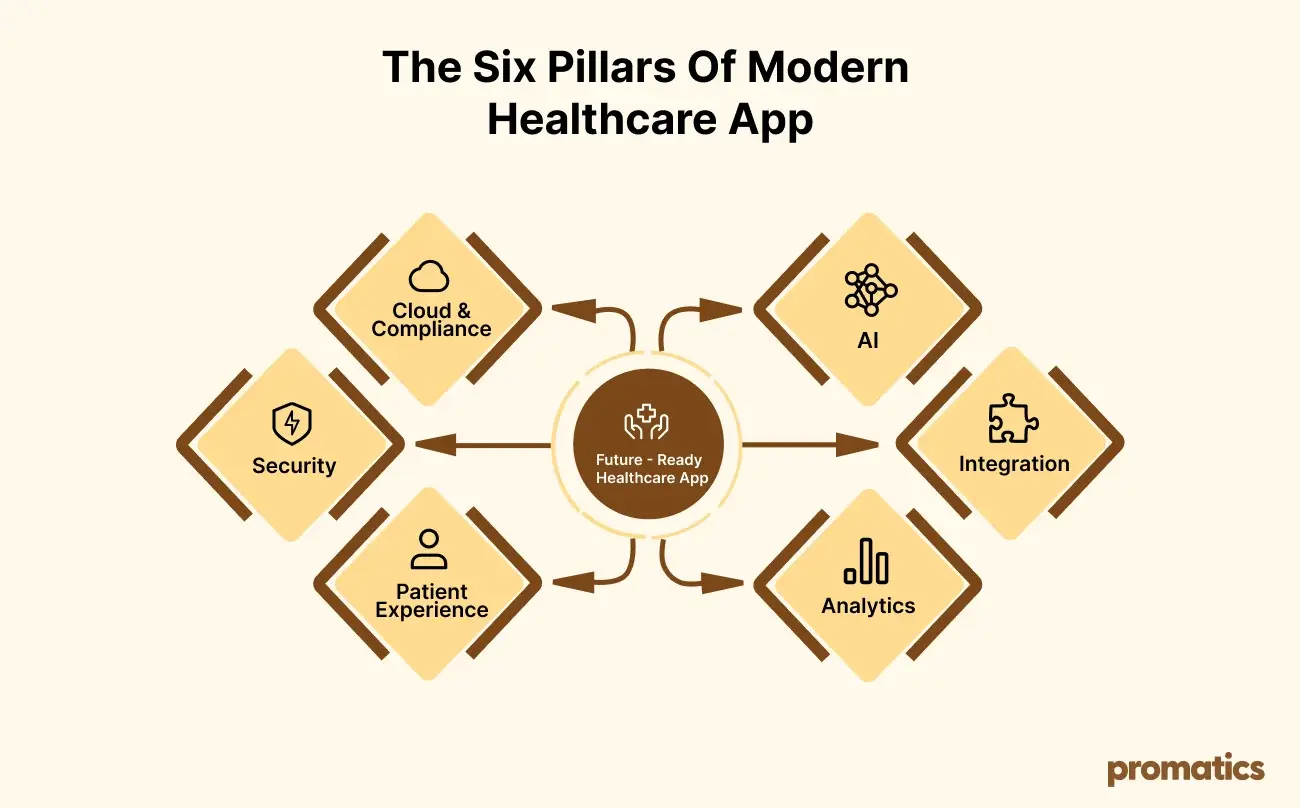
Building a successful healthcare app requires the right balance of innovation, security, compliance, and scalability. By leveraging AI, cloud technologies, and standards like HIPAA, FHIR, and HL7, organizations can create secure, future-ready digital health solutions.
At Promatics Technologies, we help healthcare organizations build custom healthcare software, telemedicine platforms, patient apps, and AI-powered solutions designed for long-term growth.
Ready to build a secure, scalable healthcare application? Contact Promatics Technologies today and turn your healthcare vision into a high-impact digital solution.
