Mobile App Development Company in India: Why Global Startups Prefer Indian Developers

TL;DR
- India offers skilled mobile app developers and specialized tech talent.
- Startups build MVPs faster and reach the market sooner.
- Flexible teams make it easier to scale as products grow.
- Strong expertise in security, APIs, cloud, and AI supports long-term growth.
- Indian app development companies deliver quality, speed, and cost efficiency.
Why are startups from the US, UK, Europe, Australia, and emerging markets increasingly choosing India to build mobile applications?
The answer goes far beyond cost savings. Over the last decade, India has transformed into one of the world’s most influential technology hubs. India’s mobile app ecosystem has expanded rapidly alongside its digital economy. Industry research shows that app revenue growth in India exceeded 33% in both 2018 and 2019, highlighting the country’s growing influence in the global mobile technology market. This sustained growth has encouraged startups worldwide to partner with Indian app development companies for product innovation and digital transformation initiatives.
For startups, speed and adaptability often determine success. The ability to launch quickly, gather user feedback, iterate rapidly, and conserve resources can significantly impact a company’s growth trajectory. This is where Indian development teams continue to create exceptional value.
India’s growing dominance in software and mobile app development is closely tied to its thriving startup and technology ecosystem. As of 2025, more than 207,000 startups have been officially recognized under the Startup India initiative, making India one of the world’s largest startup ecosystems. This rapid growth has fueled demand for skilled engineering talent and accelerated the evolution of Indian development companies into global technology partners.
Whether a business is building its first MVP, launching a consumer-facing mobile application, developing a fintech platform, or creating an enterprise-grade solution, India offers the expertise, scalability, and flexibility required to turn ideas into successful digital products.
In this guide, we’ll explore why global startups continue to choose India, what differentiates Indian development companies from competitors worldwide, and how to select the right Mobile App Development Company for long-term growth.
Why India Has Become the Preferred Destination for Startup App Development
Startups operate in highly competitive environments where every decision impacts growth, funding, and market positioning. They need technology partners that can move quickly, adapt to changing requirements, and deliver high-quality solutions without excessive overhead.
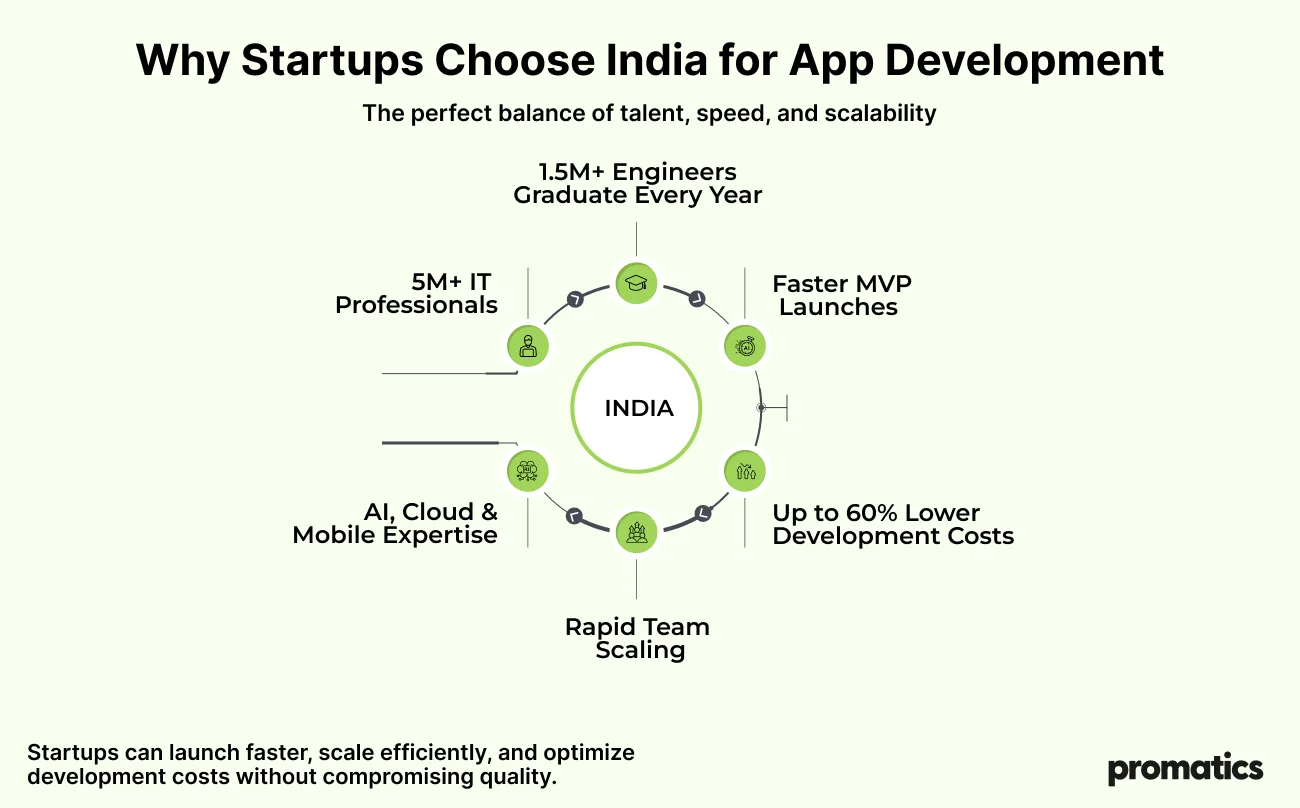
India’s technology industry benefits from one of the world’s largest engineering workforces. Research indicates that more than 5 million professionals are directly employed by India’s IT industry, creating a deep talent pool that supports startups across mobile app development, cloud computing, AI, and enterprise software engineering.
Indian mobile app development companies have become a preferred choice because they combine technical expertise, cost efficiency, and scalability in a way that aligns perfectly with startup needs.
Faster Time to Market Helps Startups Compete
For startups, speed is often the difference between leading a market and missing an opportunity.
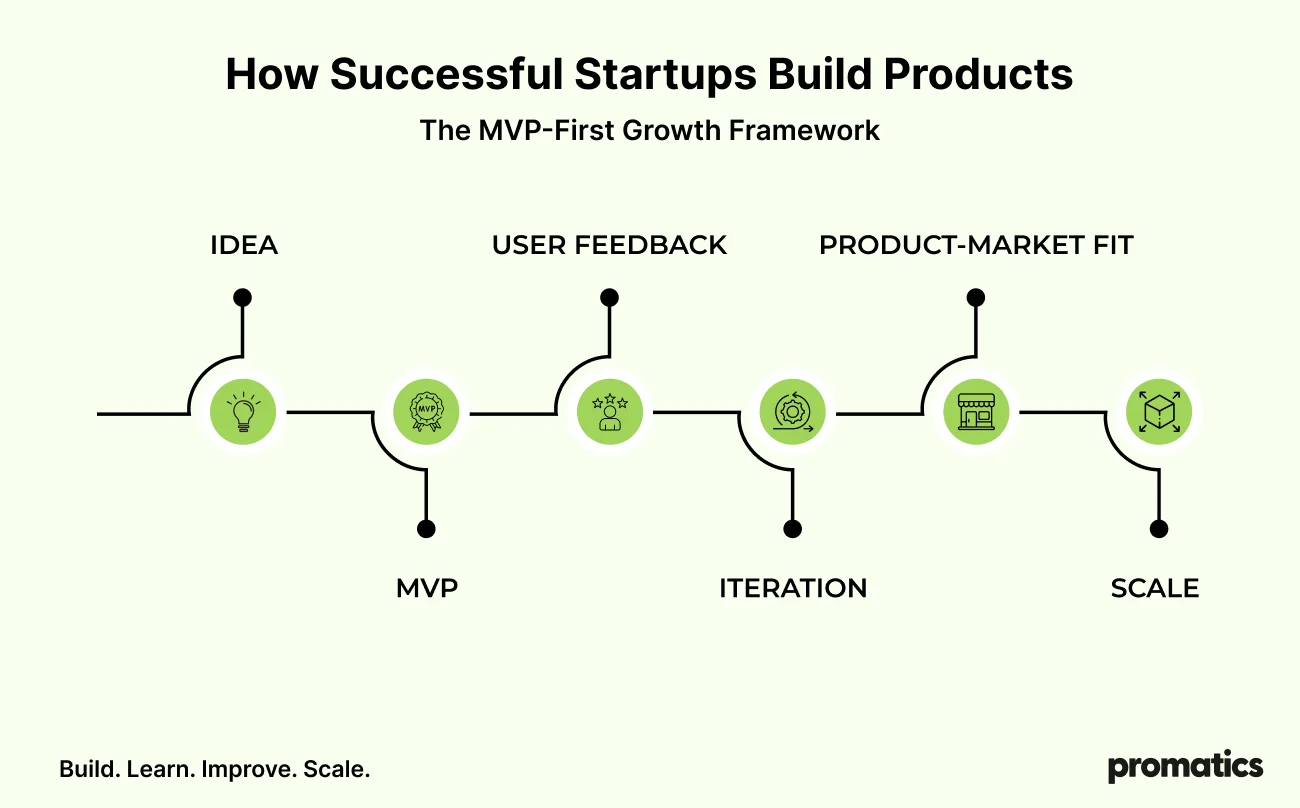
The faster a company can launch a product, gather feedback, and improve its offering, the sooner it can achieve product-market fit. Indian development teams commonly leverage Agile methodologies, sprint-based execution, rapid prototyping, and continuous delivery processes to accelerate development cycles.
Instead of spending months building feature-heavy products, startups can launch lean versions faster, validate assumptions, and continuously improve based on real user feedback. This approach reduces development risk and allows businesses to respond more effectively to changing market demands.
Access to Specialized Technology Talent
Finding experienced developers remains a challenge in many global markets. Long hiring cycles, limited talent pools, and rising salaries often slow product development.
India’s talent advantage is supported by scale. The country produces more than 1.5 million engineering graduates annually, creating one of the world’s largest pools of software and mobile app development professionals.
This allows startups to access specialized developers across mobile development, cloud engineering, artificial intelligence, DevOps, and product design without facing prolonged recruitment cycles.
- Mobile app developers
- Backend engineers
- Cloud architects
- DevOps specialists
- AI and machine learning experts
- UI/UX designers
- QA engineers
- Product strategists
This access enables startups to assemble highly skilled teams without spending months recruiting internally.
Cost-Efficient Development Without Compromising Quality
While cost savings remain attractive, modern startups increasingly focus on value rather than hourly rates. For early-stage startups, development efficiency directly impacts survival. Industry estimates suggest that hiring experienced mobile developers in India can cost significantly less than hiring equivalent talent in major technology hubs such as San Francisco, London, or New York.
Cost efficiency remains one of India’s strongest advantages. Industry comparisons show that mobile app development rates in India can start at approximately $20 – $40 per hour, compared to around $50 per hour in the United States and Australia and up to $70 per hour in parts of the UK. This cost advantage allows startups to allocate more resources toward product growth, marketing, and customer acquisition while maintaining development quality.
Leading development companies follow mature development practices such as:
- Automated testing
- CI/CD pipelines
- Agile workflows
- Security-first development
- Structured quality assurance
The result is not simply reduced spending but stronger capital efficiency and improved return on investment.
Flexible Teams That Scale Alongside Growth
Startup requirements change constantly.
A company may need a small team during product discovery and a larger engineering team during growth phases. Indian development companies typically offer flexible engagement models that allow startups to scale resources up or down as needed.
Common engagement options include:
- Dedicated development teams
- Staff augmentation
- Project-based delivery
- Hybrid engagement models
This flexibility enables startups to adapt quickly without the challenges of continuously hiring and restructuring internal teams.
Why Global Startups Choose India Over Other Outsourcing Destinations
Choosing a development location is no longer solely about reducing costs. It directly affects product quality, development speed, scalability, communication, and long-term business success.
India’s position as a global technology destination is reinforced by its rapidly expanding digital ecosystem. The country is home to one of the world’s largest startup communities and continues to benefit from initiatives such as Startup India and Digital India, which have accelerated innovation, entrepreneurship, and technology adoption across sectors.
Access to a Vast and Specialized Talent Pool
One of India’s biggest advantages is the sheer scale of its engineering ecosystem.
Startups often struggle to find specialized talent quickly in local markets. Indian development companies provide immediate access to professionals with expertise in:
- Mobile app development
- Backend systems
- Cloud infrastructure
- Artificial intelligence
- Data engineering
- DevOps
- Product design
This reduces hiring bottlenecks and accelerates product development.
Better Value Compared to Traditional Development Markets
Building an in-house engineering team in North America or Western Europe often requires significant investment in recruitment, salaries, benefits, infrastructure, and operations.
Indian development companies help startups access high-quality engineering capabilities while optimizing budgets and improving capital efficiency.
The goal is not simply lower costs. The goal is achieving greater value from every development dollar invested.
Faster Team Scaling and Greater Flexibility
Startup growth rarely follows a predictable path.
One month may require a small product team, while the next may require rapid expansion to support a product launch or funding milestone.
Indian development companies offer the flexibility to:
- Expand teams quickly
- Add specialized expertise
- Accelerate delivery timelines
- Scale engineering capacity efficiently
This adaptability is particularly valuable for fast-growing startups navigating changing market conditions.
India vs Other Global Outsourcing Destinations
When comparing outsourcing destinations, startups often evaluate several critical factors including talent availability, scalability, expertise, flexibility, and cost efficiency.
India consistently ranks among the strongest options because it combines:
- Large engineering talent pools
- Competitive development costs
- Rapid team expansion capabilities
- Deep expertise across emerging technologies
- Mature development processes
For many startups, India has become far more than an outsourcing destination. It has become a strategic product development partner capable of supporting businesses from idea validation to global scale.
Why Startups Build MVPs with Indian Development Teams
Most successful startups do not begin with fully featured products.
They begin with Minimum Viable Products (MVPs).
An MVP allows founders to validate ideas, gather user feedback, reduce uncertainty, and test market demand before making significant investments in full-scale product development.
A structured MVP development approach helps startups validate ideas before investing in full-scale product development
Faster Validation and Reduced Business Risk
One of the most common reasons startups fail is building products customers do not actually want.
MVP development helps businesses validate assumptions quickly and identify what users truly value before investing heavily in additional features.
Benefits include:
- Faster product-market fit validation
- Earlier user feedback
- Reduced development risk
- Better decision-making based on real-world usage
This learning process allows startups to make smarter product investments and avoid costly mistakes.
Extending Runway Through Lean Development
Building a complete product too early can consume valuable capital.
MVP development allows founders to invest strategically, validate demand, and allocate resources more efficiently.
By focusing only on essential features, startups can:
- Lower initial development costs
- Preserve financial runway
- Reduce operational risk
- Improve resource allocation
For many founders, extending runway can be just as important as building the product itself.
Continuous Iteration and Product Improvement
Launching a product is only the beginning of the startup journey. Long-term success depends on how quickly a company can learn from users and improve its offering.
Indian development teams commonly follow Agile and sprint-based methodologies that support rapid iteration. This allows startups to release features faster, test improvements continuously, and respond quickly to user feedback.
Key benefits include:
- Faster feature releases
- Continuous product optimization
- Improved customer retention
- Better alignment with user expectations
This iterative approach enables startups to evolve their products based on real market demand rather than assumptions.
Seamless Scaling After Market Validation
An MVP is not the final destination. It is the foundation for future growth.
Once startups validate demand and secure traction, they need infrastructure, architecture, and engineering support capable of handling growth.
Working with development teams that understand the product from the beginning simplifies scaling efforts significantly. Teams already familiar with the product vision, architecture, and business objectives can expand functionality faster while maintaining consistency and performance.
For founders focused on reducing risk and accelerating growth, MVP-first development with the right technology partner remains one of the most effective strategies for building scalable digital products.
The Technical Foundations Behind Successful Mobile Applications
Choosing a mobile app development company involves more than evaluating portfolios and pricing. The technical decisions made during development directly influence scalability, security, performance, maintenance costs, and long-term business growth.
While many startups focus primarily on launch timelines, experienced founders understand that the underlying technology foundation often determines future success. Poor technical decisions may create performance bottlenecks, security vulnerabilities, and expensive redevelopment requirements later.
Successful mobile applications are built on a combination of strong architecture, robust security practices, scalable infrastructure, and future-ready integration strategies.
Understanding these fundamentals helps startups make informed decisions when evaluating development partners and planning product roadmaps.
Mobile App Architecture Patterns and Technology Choices
As mobile applications become increasingly complex, scalable architecture has become a business necessity rather than a technical preference. Many startups choose hybrid app development to reduce costs and accelerate time-to-market while maintaining a consistent user experience
Poor architecture often results in:
- Technical debt
- Slower feature releases
- Higher maintenance costs
- Performance limitations
- Increased operational complexity
The ideal architecture depends on business goals, expected traffic, product complexity, and long-term growth plans.
Native Development
Native development remains the preferred choice for applications that require maximum performance, superior user experiences, and deep integration with device capabilities.
Best suited for:
- High-performance applications
- Gaming platforms
- Fintech solutions
- Feature-rich consumer apps
Advantages:
- Excellent performance
- Superior user experience
- Better platform optimization
Challenges:
- Higher development costs
- Separate development efforts for iOS and Android
Cross-Platform Development
Cross-platform frameworks have become increasingly popular among startups because they allow businesses to launch faster while maintaining a shared codebase.
Best suited for:
- MVP development
- Startup products
- Budget-conscious projects
Advantages:
- Faster development cycles
- Reduced costs
- Shared codebase
Challenges:
- Performance trade-offs for highly complex applications
Microservices Architecture
As startups grow, monolithic systems often become difficult to maintain and scale.
Microservices architecture enables applications to scale individual components independently while improving flexibility and resilience.
Benefits include:
- Better scalability
- Improved reliability
- Faster deployment cycles
- Easier maintenance
For startups planning significant growth, architecture decisions made early can have a lasting impact on product success.
Security, Compliance, and Data Protection Requirements
As mobile applications handle increasing amounts of user data, security has become a critical business requirement rather than a technical afterthought.
Customers, investors, enterprise clients, and regulators increasingly expect organizations to implement strong security and compliance practices from the beginning.
Data Privacy and User Protection
Modern mobile applications should incorporate privacy and security principles throughout the development lifecycle.
Core requirements include:
- End-to-end encryption
- Access control systems
- Secure authentication
- Consent management
- Privacy-by-design principles
Strong privacy practices help build trust while supporting compliance with evolving global regulations.
Enterprise Compliance Readiness
As startups grow and begin serving larger customers, compliance requirements become increasingly important.
Many organizations prepare for frameworks such as:
- SOC 2 readiness
- ISO-aligned processes
- Risk management programs
- Incident response planning
- Business continuity strategies
Building compliance awareness early often simplifies future enterprise sales and partnership opportunities.
Essential Application Security Practices
Strong mobile security typically includes:
- OAuth authentication
- Secure API management
- Vulnerability assessments
- Dependency monitoring
- Penetration testing
- Continuous security reviews
Security should remain integrated throughout the development process rather than being treated as a final-stage activity.
API Strategy and Third-Party Integrations for Future Growth
Modern applications rarely operate in isolation.
Most mobile products depend on multiple external systems and services, including payment providers, analytics tools, CRM platforms, communication systems, authentication services, and AI-powered solutions.
A well-planned API strategy improves scalability, flexibility, and future product expansion.
Why API-First Development Matters
API-first development allows teams to design systems that support future growth from the outset.
Benefits include:
- Faster development cycles
- Improved scalability
- Easier platform expansion
- Better maintainability
- Greater flexibility for future integrations
By separating frontend and backend development, teams can move faster while reducing long-term complexity.
Choosing Between REST, GraphQL, and gRPC
Different products require different integration approaches.
REST APIs
Ideal for:
- Ecommerce applications
- SaaS products
- Standard mobile applications
GraphQL
Ideal for:
- Complex user interfaces
- Applications with multiple data sources
- Dynamic frontend experiences
gRPC
Ideal for:
- High-performance systems
- Real-time applications
- Microservices environments
Selecting the right API architecture depends on business requirements, scalability goals, and performance expectations.
Common Integrations Modern Apps Require
Most startups integrate services such as:
- Payment gateways
- Authentication platforms
- Analytics solutions
- CRM systems
- Communication tools
- AI and automation services
Thoughtful integration planning helps reduce technical debt while supporting future growth.
Understanding Mobile App Development Pricing Models
Pricing models influence development flexibility, budgeting, and project execution. Choosing the right engagement model depends on project scope, business goals, and product maturity.
Fixed Price Engagements
Best suited for:
- Clearly defined requirements
- Predictable timelines
- Limited scope changes
Advantages:
- Budget predictability
- Defined deliverables
Challenges:
- Lower flexibility
- Additional costs for scope changes
Time and Materials Model
Best suited for:
- MVP development
- Product discovery
- Agile projects
- Evolving requirements
Advantages:
- Greater flexibility
- Faster adjustments
- Better alignment with startup environments
Outcome-Based Development Partnerships
Some organizations increasingly explore outcome-focused engagement models tied to specific business objectives.
Benefits may include:
- Shared accountability
- Business-focused outcomes
- Stronger strategic alignment
However, these models require clearly measurable goals and well-defined success metrics.
Looking Beyond Cost: Total Ownership and Time-to-Market Considerations
Many startups make the mistake of evaluating development partners based solely on project costs. While budget considerations are important, development expenses represent only one part of the overall investment.
A more meaningful question is:
How much business value will this investment create over time?
The true cost of building a mobile application includes far more than development. Startups must also account for:
- Infrastructure and hosting expenses
- Maintenance and updates
- Security investments
- Third-party integrations
- Monitoring and support
- Future scaling requirements
This broader perspective is commonly referred to as the Total Cost of Ownership (TCO).
Equally important is Time-to-Market. The faster a startup can move from idea to launch, the faster it can validate assumptions, generate revenue, attract customers, and gather feedback.
Delays in product launches can result in missed opportunities, slower growth, and increased competition. This is why many startups prioritize development partners that can accelerate execution while maintaining quality.
Ultimately, the best development decision is rarely the cheapest option. It is the one that delivers the strongest balance between quality, speed, scalability, and long-term value.
What Makes Indian Development Teams a Strategic Growth Partner
Application development and maintenance services account for approximately 38% of the total revenue generated by Indian IT services companies. This reflects the maturity of India’s software development ecosystem and demonstrates why businesses increasingly rely on Indian development partners for long-term product engineering and digital innovation initiatives.
Today’s development teams frequently help startups:
- Validate product ideas
- Define technical roadmaps
- Build scalable architectures
- Accelerate product launches
- Optimize development costs
- Support growth and expansion
Rather than functioning solely as execution teams, many Indian development companies now operate as long-term technology partners that contribute throughout the product lifecycle.
This strategic approach helps startups move faster while reducing operational and technical risks.
Key Competitive Advantages of Indian Mobile App Development Companies
India’s reputation as a global technology hub has been built on more than cost efficiency. Several factors continue to make Indian development companies highly attractive for startups worldwide.
Large Engineering Ecosystems
Talent availability remains one of India’s strongest advantages.
Startups frequently struggle with:
- Long recruitment cycles
- Limited specialized talent
- Rising hiring costs
- Scaling challenges
Indian development ecosystems provide access to expertise across mobile development, cloud computing, AI, DevOps, backend engineering, product design, and emerging technologies.
This breadth of talent enables startups to build multidisciplinary teams quickly and efficiently.
Mature Development Processes
Leading Indian development companies increasingly follow mature engineering practices that support predictable outcomes and faster delivery.
These commonly include:
- Agile methodologies
- Sprint-based development
- Continuous integration and deployment
- Automated testing
- Dedicated quality assurance processes
Such frameworks help reduce development risks while improving product quality.
Greater Scalability for Growing Products
Startup requirements evolve rapidly.
As products gain traction, development teams must often expand to support new features, larger user bases, and more complex infrastructure.
Indian development companies typically offer the flexibility to scale resources efficiently while maintaining development momentum.
Product Thinking Beyond Development
Successful products require more than technical execution.
Many Indian development partners contribute to:
- Product strategy
- User experience design
- Performance optimization
- Scalability planning
- Technology selection
This shift toward product-focused collaboration creates stronger long-term partnerships and better business outcomes.
Industries Driving Demand for Mobile App Development in India
India’s mobile-first economy continues to create opportunities across multiple sectors. Recent industry reports indicate that India generated approximately 35 billion app installs in a single year, making it one of the world’s largest mobile app markets. This growth is driving increased investment in fintech, healthcare, ecommerce, education, and enterprise mobility solutions.
Fintech and Financial Services
Fintech continues to be one of the fastest-growing mobile app categories.
Popular use cases include:
- Digital banking
- Mobile payments
- Investment platforms
- Digital wallets
- Personal finance applications
These products require strong security, compliance, and scalability capabilities.
Healthcare and Digital Health
Healthcare organizations increasingly use mobile applications to improve accessibility and patient engagement.
Common applications include:
- Telemedicine platforms
- Appointment scheduling systems
- Remote patient monitoring
- Electronic health records
- Wearable integrations
As healthcare data becomes increasingly sensitive, security and compliance remain top priorities.
Ecommerce and Retail
Retail businesses rely heavily on mobile applications to deliver personalized customer experiences.
Common features include:
- Mobile commerce
- Loyalty programs
- Personalized recommendations
- Inventory management
- Customer engagement tools
Fast iteration and continuous optimization are critical in this highly competitive sector.
SaaS and Enterprise Platforms
Many software companies now build mobile experiences alongside web platforms.
Examples include:
- Collaboration tools
- Analytics dashboards
- Workflow management platforms
- Notification systems
- Remote productivity solutions
These applications require scalable infrastructure and robust backend systems.
Education and Logistics
Educational organizations increasingly use mobile applications for:
- Virtual classrooms
- Learning management systems
- Assessments
- Personalized learning experiences
Meanwhile, logistics companies leverage mobile technology for:
- Fleet management
- Route optimization
- Real-time tracking
- Delivery monitoring
Each industry presents unique technical and operational requirements, making domain expertise an important consideration when selecting a development partner.
Common Mistakes Startups Make When Selecting a Development Partner
Choosing the wrong development partner can lead to delays, budget overruns, technical debt, and missed growth opportunities.
Some of the most common mistakes include:
Choosing Based Solely on Price
Lower development costs may appear attractive initially, but they often create hidden expenses later through:
- Poor architecture decisions
- Technical debt
- Delayed releases
- Higher maintenance costs
Cost matters, but value matters more.
Ignoring Communication Processes
Strong communication is one of the most important indicators of project success.
Poor communication frequently leads to:
- Misaligned expectations
- Delays
- Rework
- Scope confusion
Evaluating communication practices early can prevent many future challenges.
Failing to Assess Technical Expertise
Many startups focus heavily on portfolios while overlooking technical capabilities.
Before hiring a development partner, evaluate:
- Development methodologies
- Security practices
- Architecture expertise
- Quality assurance processes
- Scalability experience
A small pilot project often provides valuable insight into a team’s capabilities.
Essential Questions to Ask Before Hiring a Mobile App Development Company in India
Selecting the right development partner requires more than reviewing case studies and testimonials.
The following questions can help identify whether a company is capable of supporting long-term business growth.
1. Have You Built Similar Products Before?
Ask for:
- Relevant case studies
- Industry experience
- Product examples
- Technical challenges solved
Relevant experience often reduces development risks significantly.
2. What Technologies Do You Specialize In?
Discuss:
- Mobile frameworks
- Backend technologies
- Cloud infrastructure
- Security practices
- Scalability strategies
Technology choices should align with business objectives.
3. How Do You Manage Communication?
Clarify:
- Meeting frequency
- Reporting processes
- Project management tools
- Primary points of contact
Clear communication frameworks often lead to smoother project execution.
4. How Will You Support Future Growth?
A development partner should think beyond launch.
Discuss:
- Scalability planning
- Team expansion
- Infrastructure growth
- Long-term support
5. Who Owns the Source Code and Intellectual Property?
Always clarify:
- Source code ownership
- Repository access
- Documentation ownership
- Licensing agreements
These details should be finalized before development begins.
Conclusion
India has established itself as one of the world’s leading destinations for mobile app development, not simply because of cost advantages but because of its ability to deliver innovation, scalability, and technical excellence throughout the product lifecycle.
For startups, the right development partner can influence how quickly an idea reaches the market, how efficiently resources are utilized, and how effectively a product scales as demand grows. From MVP development and architecture planning to security, integrations, and long-term product evolution, Indian development companies increasingly serve as strategic technology partners rather than traditional outsourcing providers.
Whether you’re building a new startup product, modernizing an existing application, or expanding into new markets, selecting a development team with strong technical expertise and product-focused thinking can create a significant competitive advantage.
At Promatics Technologies, we help startups and enterprises build secure, scalable, and future-ready mobile applications that drive measurable business outcomes. With expertise across mobile development, cloud technologies, AI integration, and digital product engineering, our team helps businesses transform ideas into successful digital products.Ready to build your next mobile application? Connect with Promatics Technologies and discover how the right development partner can accelerate your journey from concept to scale.