What Factors Affect Hybrid App Development Costs in India?

TL;DR
- Hybrid app development services using Flutter and React Native.
- Benefits of cross-platform development for faster deployment.
- Cost optimization and scalability advantages of hybrid apps.
- Important factors when hiring a hybrid app development company.
- User experience and performance considerations for hybrid applications.
As consumers are using mobile apps, more companies are investing in building their own mobile apps. Since hybrid apps offer both the convenience of native apps and the features of web apps, more businesses are planning to hire a hybrid app development company in India to enjoy affordable development and maintenance costs.
But exactly how much does building a hybrid app cost? And which factors will affect the overall cost of building the app? Are there any options to minimize the overall development costs?
In this blog, we will answer all these questions. But before that, let’s see what hybrid app development is.
What is Hybrid App Development?
A hybrid mobile app is a combination of regular native mobile apps and web applications. The core framework of a hybrid app is similar to a web app, developed using HTML, CSS, and JavaScript.
But the entire application is designed to look like native apps of a specific mobile platform, such as Android and iOS.
It means that although you can run the hybrid apps on web browsers or access the WWW, it still contains several features that make it look like a native app, such as push notifications, GPS, working on mobile OS, getting access to native mobile device features, etc.
So, the process of building native mobile apps with a codecase written in web tech, such as HTML, CSS, and JS, is called hybrid app development.
Now that you know what hybrid mobile app development is, it’s time for you to uncover the cost of hiring a hybrid mobile app development company in India.
How Much Does It Cost to Develop a Hybrid App in India?
The average cost of hiring a hybrid mobile app development company in India and getting a quality hybrid app is usually between $10,000 and $25,000.
These hybrid apps are a viable solution for startups, mid-size companies, and other businesses that are looking to get their own mobile app without pouring too much money into native apps.
However, we can’t give you the exact cost for developing a hybrid app for you without understanding your needs and expectations for the app.
The actual cost depends on several factors, including the team’s expertise, the complexity of the app, your desired app features, UI, location, API integration, and more.
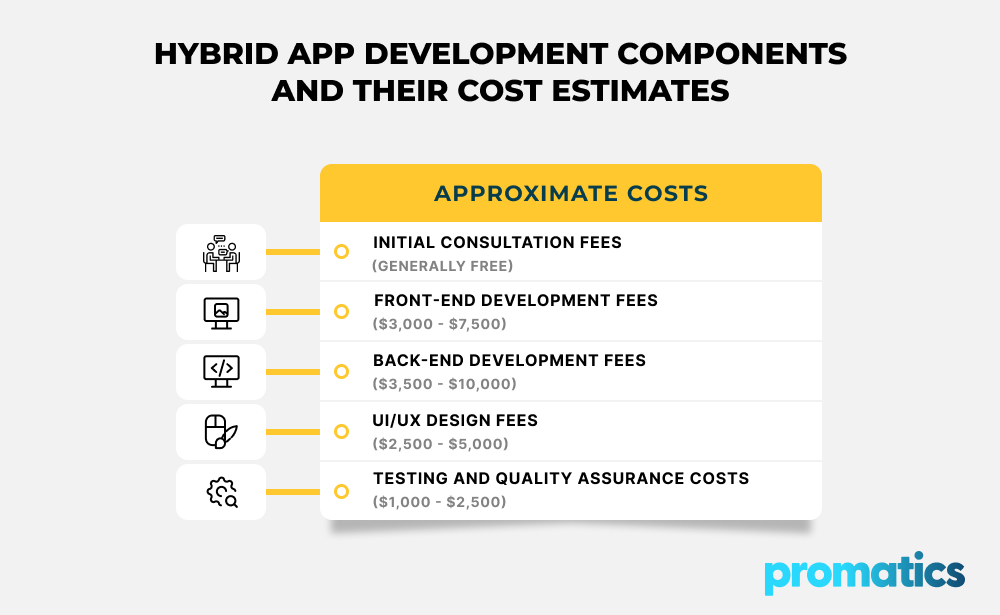
Here is a list of different components of a hybrid mobile app development and their approximate costs:
- Initial Consultation Fees: Generally free
- Front-end Development Fees: $3,000 – $7,500
- Back-end Development Fees: $3,500 – $10,000
- UI/UX Design Fees: $2,500 – $5,000
- Testing and Quality Assurance Costs: $1,000 – $2,500
Key Factors That Affect the Cost of Hybrid App Development in India
Multiple factors affect the overall cost of a hybrid app development process, including the app features, platform compatibility, finding the right hybrid app development company in India, and more.
1. The Complexity of the App
The complexity of your desired hybrid app will determine the exact cost of app development. For example, if you’re looking for a minimalist app that only focuses on a few key features, the development cost will be on the lower side.
However, if you need a complex, cross-platform, enterprise-level hybrid app with tons of high-end features, the app-building cost will immediately shoot through the roof.
In a nutshell, the more complex your app and its required features are, the more money you will need to pay.
2. Platform Compatibility
What platform do you want your hybrid app to be compatible with? Is it Android and iOS, or both? Please note that the choice of a compatible platform can significantly affect the cost of building a hybrid app.
Each platform comes with its own complexities, development needs, tech stack, and user expectations. Evaluate all these factors carefully to decide in which platform(s) you would like to release your app once it’s built.
These factors can greatly influence the overall app-building costs.
3. Third-Party Services and API Integrations
If you want to add third-party services and integrate advanced APIs to your hybrid app, the cost to build the app will surely increase.
For example, if you want your company’s app to have payment gateways, location-based services, media features, and other third-party integrations, the development cost will go up.
4. App Design and User Experience
An intuitive, user-friendly, and feature-rich user interface and design are necessary for any mobile app to succeed in this ever-demanding market.
Still, developing complex UI/UX designs and customizations will increase the difficulty of the app development process.
As a result, the price for building the hybrid app will also increase by an appropriate margin.
5. Security and Compliance Needs
Adding robust security features, setups to prevent data breaches, and APIs or features that can help with various regulatory compliance needs can further complicate the app development process.
This will ultimately make the cost of building your custom hybrid app go up.
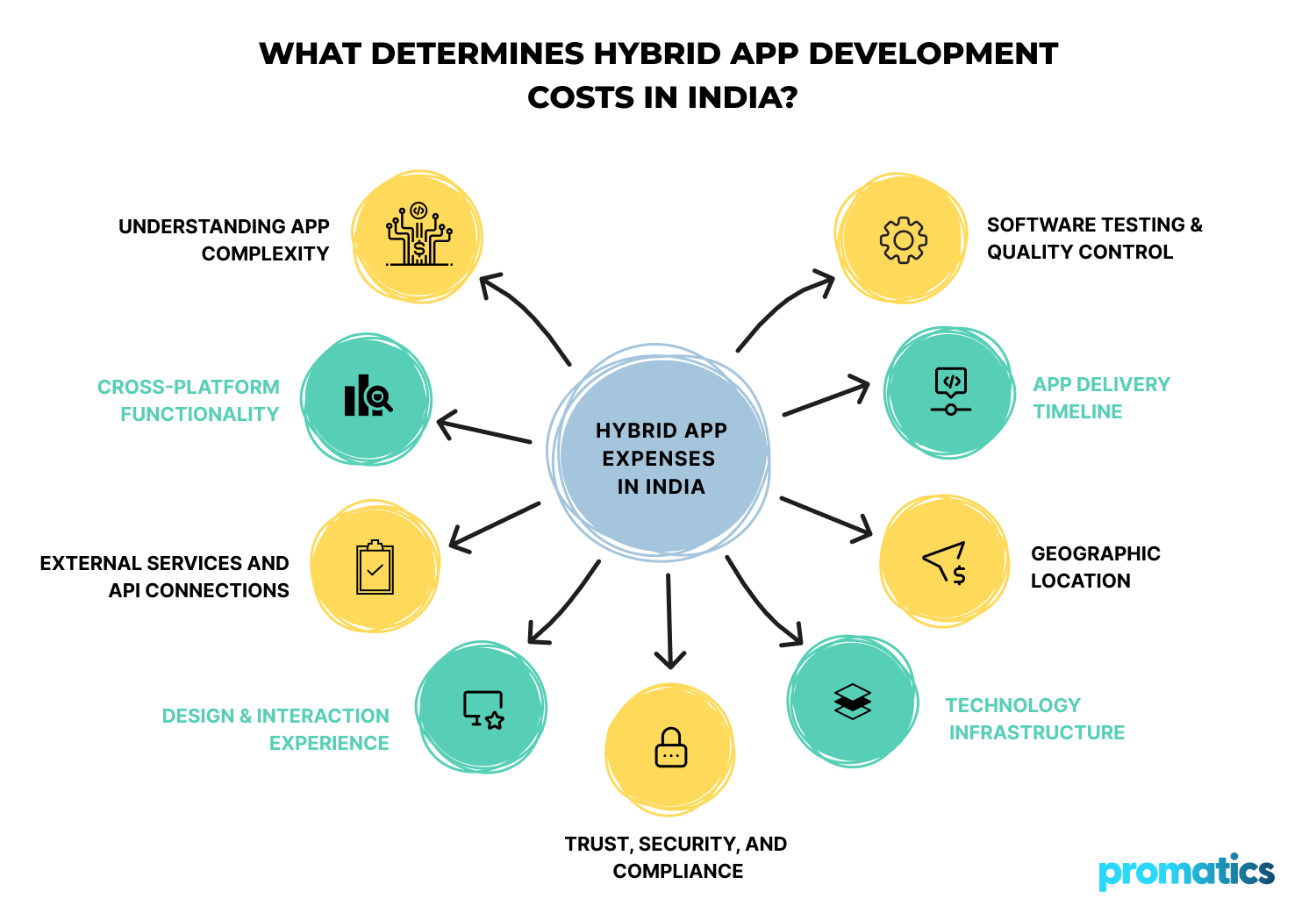
6. Tech Stack
Google Play and the App Store have a wide range of mobile apps. So, if you want your application to survive in this cut-throat market, it must be feature-rich, smooth, captivating, and very easy to use.
That’s why you must choose a hybrid app development company in India that uses the latest technologies and app-building tools to create a custom app that fits your needs.
Yes, opting for agencies with the latest technology stack may increase the overall development cost. However, apps developed with such a tech stack also have the potential to provide higher ROI in the long run.
7. Location
The location of the app development company or the developers can greatly affect the cost of hybrid app development. For example, most developers in the US will charge you $120 – $200 per hour.
On the other hand, an Indian hybrid app developer will probably charge you anywhere from $20 per hour to $80 per hour, depending on the developer’s expertise and the complexity of the app.
That’s why many businesses often choose a hybrid app development company in India, as they offer more affordable prices compared to companies from the USA, Canada, or the UK.
8. App Development Timeline
How fast you want your app to hit the mainstream market will definitely affect the cost of building a hybrid mobile app.
For example, if you want your app to hit the market faster, the companies will need to distribute more human resources to finish your project in time.
In this case, you will also have to pay more to cover this expense, leading the development cost to hike.
9. Testing and Quality Assurance
Before you launch your app in the mainstream market, you need to put it through multiple testing phases to make sure the app is working just the way you want.
In this phase, developers often detect multiple bugs and defects in the app. The more complex the app is, the higher the number of defects will be. And to fix them, the QA team will need to spend additional time on the app.
Additionally, the development agency often provides three to six months of constant support and maintenance to ensure the app is functioning well.
All these testing, QA, bug fixing, app support, and maintenance cost money. The more complex the app is, the more money you will need to pay for its testing and post-launch support.
The Cost Breakdown of Hybrid App Development
A proper cost breakdown will help you get a granular perspective on the overall cost of building a hybrid mobile app. This way, you will be able to choose the right hybrid app development company in India with ease.
1. App Development Costs
These expenses cover all major development costs, including coding and programming the app architecture. App development by itself accounts for a large share of the total cost to develop a hybrid app.
After all, this phase is affected by multiple major factors that influence the overall development costs, such as complexity, the number of features, and the development platform.
2. UI/UX Design Costs
Designing the UI/UX features of the app takes up a sizable portion of the overall development cost. This money is used to develop an intuitive UI, eye-catching graphics, animations, and other related features.
The more visually appealing and design-rich you want your app to be, the more this phase will cost you.
3. Testing and QA Costs
To make sure your app and its features are working well on different platforms and devices, the QA team often puts the app through multiple testing and bug fixing phases.
The repeated testing and quality checks also contribute to the overall app-building costs.
4. Deployment and Maintenance Costs
You need to deploy your hybrid app on different platforms, including App Store and Google Play. And this results in additional cost.
Additionally, you must continue to incur expenses for post-launch maintenance, including bug fixes, patchwork, and updates, which will drive the overall cost up.
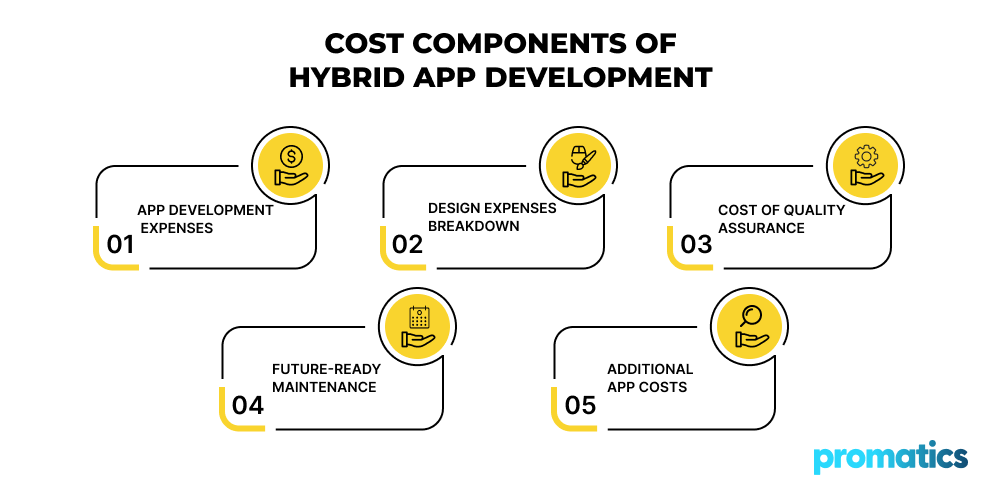
5. Miscellaneous Expenses
Additional factors, such as licensing, hosting, or progressive updates, will incur extra costs, contributing to the overall cost of hybrid app development.
How to Optimize Hybrid App Development Costs in India?
With a proper plan and a solid development plan, you can optimize or reduce the overall cost of developing a hybrid app in India. Here’s how you can do it:
1. Prioritize Essential Features First
By prioritizing the important app features, you can reduce the overall complexity of the app-building process and reduce the development cost. First, you can focus on creating a minimum viable product or MVP.
After that, you can slowly add new features to the MVP according to customer feedback and your company’s business objectives.
2. Choose the Right Framework
Choosing a framework that has a vast library and widgets compatible with your app’s requirements can reduce both the development time and cost.
Try to look for frameworks that provide cross-platform compatibility and reusable code to reduce the app-building expenses.
3. Outsource to Experienced Indian Firms
Outsourcing the hybrid app development to a competent app development company, especially one that is located in an area with lower development costs, can minimize the expenses.
A hybrid app development company in India, such as Promatics India, often offers feature-rich custom apps for competitive prices. So, if you want to reduce the cost of developing a hybrid app, an experienced Indian firm will be a good choice.
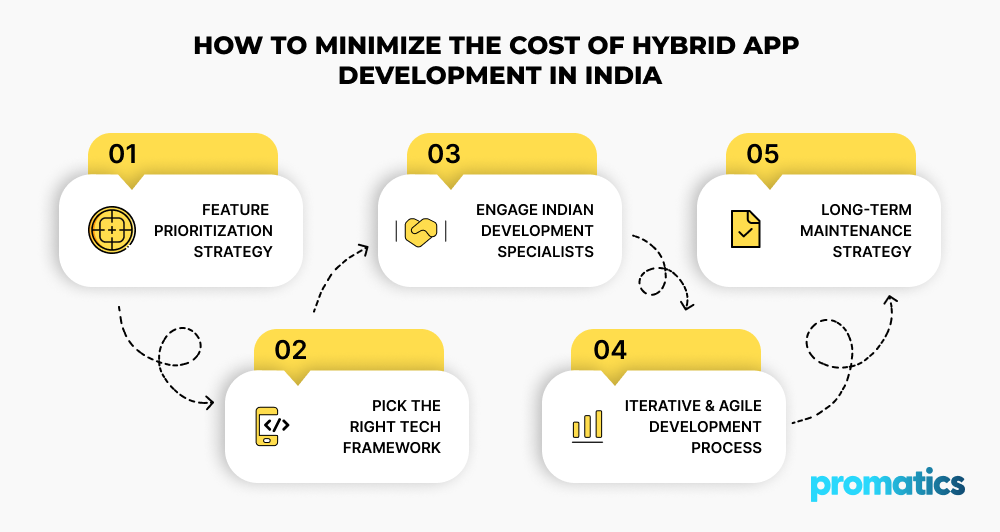
4. Adopt An Agile and Iterative Development Approach
When you adopt an agile and iterative development approach, you can make slight adjustments to the app on the go to improve it. Doing this doesn’t disrupt the entire app from functioning at once, but only the part that you are adjusting at that moment.
This approach will help you prevent overly expensive and time-consuming complete rework, ensuring a smoother app development.
5. Plan for Long-term Maintenance
By planning for the app development and maintenance early on, you can make the right decisions to minimize the overall app development expenses.
Planning ahead always helps the developers and business leaders get a glimpse into the latest trends and predict future outcomes.
This way, you can integrate several future-ready features and APIs into your app to reduce the maintenance costs by a large margin.
Conclusion
The cost of developing a hybrid app depends on various factors, including app complexity, UX/UI design, platform, location, tech stack, and many others.
However, by choosing the right hybrid app development company in India, you can significantly lower the development and long-term maintenance costs.
By partnering with Promatics India, one of the best app development firms in India, you can get a feature-rich, custom, cross-platform hybrid app for your company at competitive prices.
As a leading figure in the app development market, Promatics India has developed hybrid and native apps for many multinational companies and organizations, including Airtel, P&G, HP, Johnson & Johnson, Aditya Birla Group, and Alstom, to name a few.
Contact our software experts at Promatics India today to see how we can create a custom hybrid app that will help you fulfill your objectives and maximize ROI.
