SaaS Development Cost in 2026: Complete Breakdown for Startups

TL;DR
- SaaS development costs vary widely based on your product's complexity, feature requirements, and scalability goals.
- Starting with a focused MVP helps validate your idea faster, reducing risk and preventing unnecessary investment.
- Team location and expertise play a major role in determining both development efficiency and long-term product quality.
- Cloud infrastructure, security, maintenance, and third-party integrations are ongoing expenses that should be planned from the beginning.
Building a SaaS product in 2026 presents both a tremendous opportunity and a difficult challenge. The opportunity is clear. The global SaaS market is projected to reach $435.41 billion in 2026, growing at nearly 19.4% annually through 2029, while businesses now use an average of 106 SaaS applications to run their daily operations. Cloud software has moved from being a competitive advantage to a business necessity.
The challenge lies in building products that can meet modern expectations without exhausting budgets. Today’s users expect AI-powered capabilities, seamless integrations, intuitive experiences, enterprise-grade security, and continuous innovation. Startups are under pressure to launch faster, validate ideas quickly, and scale efficiently in an increasingly competitive market.
This has made one question more important than ever: How much does it cost to build a SaaS product in 2026?
The answer isn’t as straightforward as assigning a fixed price tag.
Modern SaaS products are far more sophisticated than traditional web applications. Development costs are influenced by a range of factors, including feature complexity, architecture choices, cloud infrastructure, security requirements, third-party integrations, and long-term scalability goals.
Understanding the true SaaS development cost isn’t just about estimating a budget. It’s about making informed decisions that help you prioritize the right features, avoid unnecessary expenses, accelerate time-to-market, and build a product positioned for sustainable growth.
In this blog, we’ll break down everything you need to know about SaaS software development costs in 2026 from cost estimates and key cost drivers to cloud expenses, hidden costs, and practical strategies to maximize ROI while building a SaaS product that scales.
How Much Does It Cost to Build a SaaS in 2026?
If there is one question that every founder, startup team, and product leader asks before beginning their SaaS journey, it’s this: How much does it cost to build a SaaS product?
The honest answer is that there is no fixed price tag.
In 2026, the SaaS software development cost can vary dramatically depending on what you’re building, who you’re building it for, and how you plan to scale it. A lightweight project management tool designed to validate an idea will require a very different investment than an AI-powered enterprise platform serving thousands of users across multiple geographies.
Several factors influence the final budget, including the scope of features, integrations, user volume, architectural choices, security requirements, and the expertise of your development team. Even two SaaS products operating within the same industry can have vastly different development costs based on their business goals and technical complexity.
Rather than asking, “How much does it cost to build a SaaS?” a better question is:
“What level of investment does my product need at its current stage of growth?”
Understanding this distinction helps founders allocate resources wisely, avoid unnecessary spending, and focus on building features that deliver measurable business value.
SaaS Development Cost Breakdown by Product Complexity
While every SaaS product is unique, most projects fall into one of four broad categories:
| SaaS Type | Estimated Cost | Timeline |
| Basic MVP | $30,000 – $60,000 | 2–4 months |
| Mid-Level SaaS Platform | $60,000 – $150,000 | 4–8 months |
| Advanced SaaS Solution | $150,000 – $300,000 | 8–12 months |
| Enterprise SaaS Platform | $300,000 – $500,000+ | 12+ months |
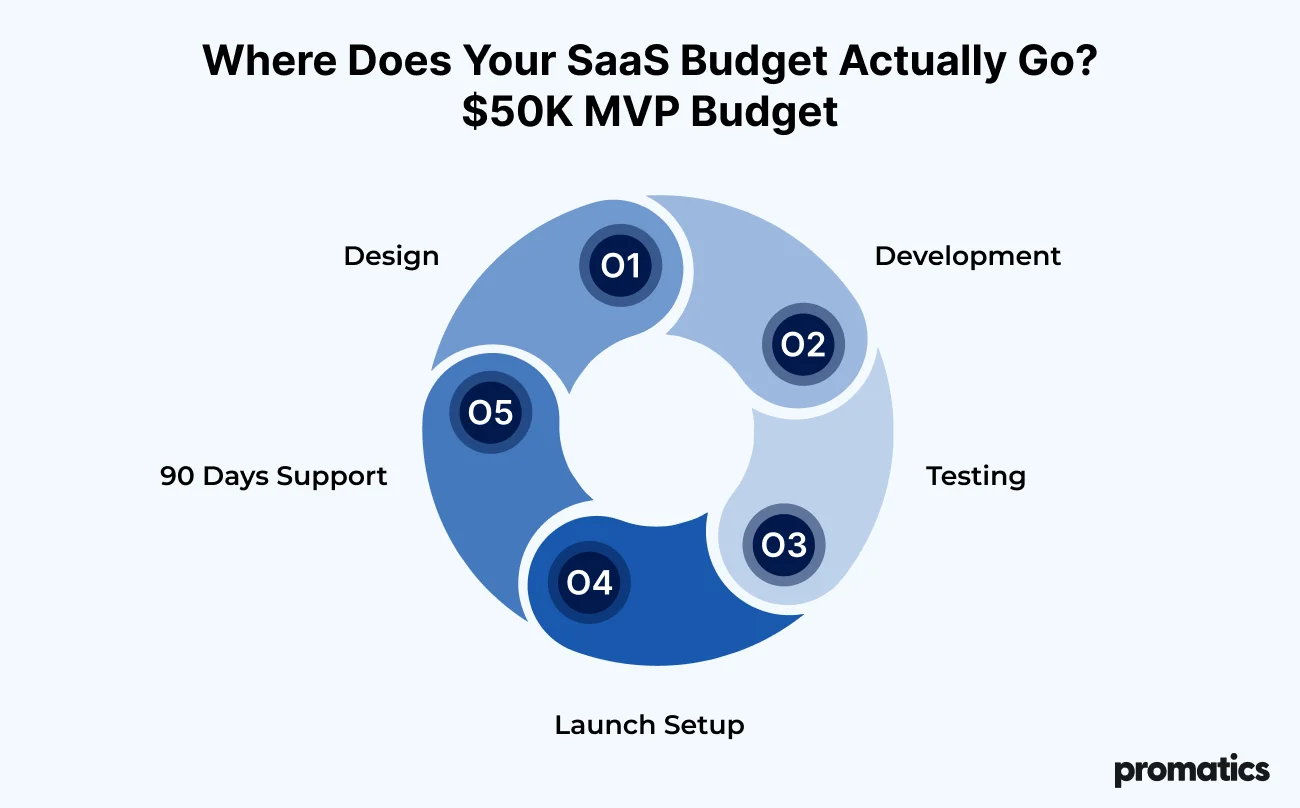
Basic MVP: Validate Before You Scale
For early-stage startups, speed and validation matter more than feature abundance.
A Minimum Viable Product (MVP) focuses on solving a single problem exceptionally well. Instead of investing heavily in capabilities users may never adopt, founders launch with essential functionality, collect feedback, and iterate based on real market demand.
A typical SaaS MVP often includes:
- User registration and authentication
- Subscription management
- Admin dashboard
- Basic reporting and analytics
- User profile settings
- Email notifications
This lean approach minimizes risk and accelerates time-to-market. Many successful SaaS companies started with a simple version of their product before evolving into the platforms we know today. Partnering with experienced MVP development services teams can further streamline this process by helping businesses prioritize features without compromising product quality.
Mid-Level SaaS Platforms: Building for Growth
Once a product begins gaining traction, customer expectations naturally evolve. Mid-level SaaS platforms introduce more sophisticated functionality designed to improve user experience, operational efficiency, and retention.
These products often include:
- Role-based permissions
- Workflow automation
- Third-party integrations
- Custom reporting dashboards
- Team collaboration capabilities
- Mobile responsiveness
Common examples include CRM software, HR management tools, marketing automation platforms, and learning management systems.
At this stage, investing in specialized SaaS application development services becomes increasingly important, as the underlying architecture must support future expansion without sacrificing performance.
Advanced SaaS Solutions: Creating Competitive Differentiation
As competition intensifies, SaaS businesses often turn to advanced capabilities to stand out in crowded markets.
These platforms move beyond basic functionality and focus on delivering smarter, more personalized experiences through innovation.
Advanced SaaS solutions may feature:
- AI-powered recommendations
- Predictive analytics
- Real-time collaboration
- Extensive API integrations
- Intelligent workflow builders
- Multi-level access controls
Building these capabilities requires deeper technical expertise, stronger quality assurance processes, and robust planning. Organizations frequently rely on software product engineering services to transform complex ideas into scalable, market-ready products.
Enterprise SaaS Platforms: Designed for Scale
Enterprise software presents an entirely different level of complexity.
These products must accommodate large user bases, strict security standards, extensive integrations, and demanding performance expectations.
Enterprise SaaS platforms often include:
- Multi-tenant or hybrid architectures
- Enterprise system integrations
- Compliance-ready frameworks
- Advanced security controls
- High-availability infrastructure
- Custom reporting engines
- Global deployment capabilities
Rather than being developed as one-time initiatives, enterprise platforms evolve continuously through multiple release cycles and ongoing optimization efforts.
The Smartest SaaS Strategy Isn’t Building More. It’s Building Smarter.
One of the most common mistakes startups make is attempting to build an enterprise-grade product from day one.
The assumption is understandable: more features should mean more value.
In reality, the opposite is often true.
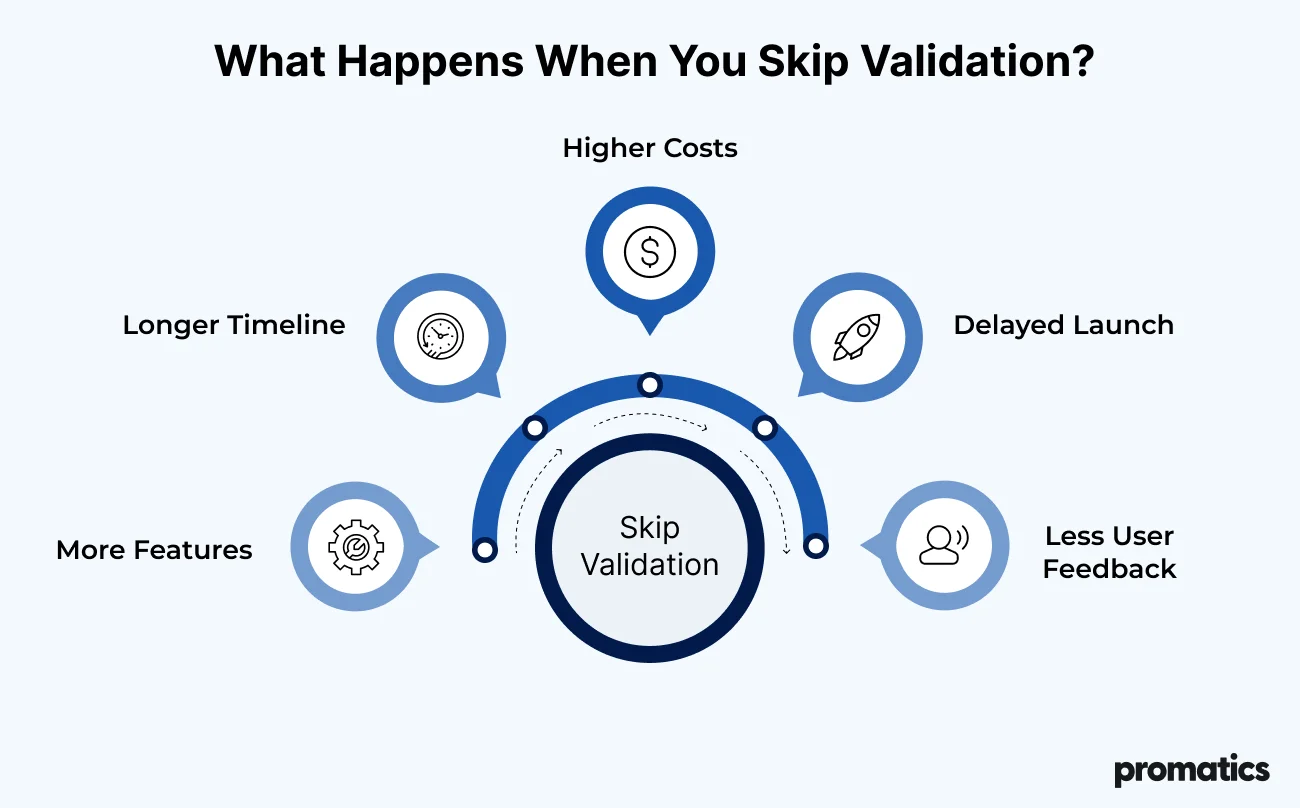
Overbuilding increases development costs, delays launch timelines, and introduces unnecessary complexity before customer demand has been validated. Every additional feature requires design, development, testing, maintenance, and future updates.
The most successful SaaS companies take a more strategic approach. They launch with a focused MVP, learn from user behavior, prioritize improvements based on feedback, and scale gradually as demand grows.
When evaluating how much does it cost to build a SaaS, remember that the goal isn’t to build everything at once. The goal is to invest wisely at each stage of growth, ensuring every decision contributes to a product that is scalable, sustainable, and capable of delivering long-term business value.
What Is Driving SaaS Development Costs in 2026?
If SaaS development estimates seem higher today than they did a few years ago, you’re not imagining it. The economics of building software have fundamentally changed.
In the past, launching a SaaS product often meant building a core set of features, deploying the application, and releasing occasional updates. Today, businesses are expected to deliver intelligent experiences, enterprise-grade security, seamless performance, and continuous innovation from day one.
As a result, SaaS development costs are influenced not only by what you build, but also by how you build and scale it.
Feature Complexity Is Increasing
The biggest driver of SaaS software development cost remains product complexity. A basic SaaS MVP designed to validate an idea may only require essential functionality such as:
- User registration and authentication
- Subscription billing
- Admin dashboards
- Basic reporting
- Email notifications
However, customer expectations have evolved. Modern SaaS platforms increasingly include capabilities such as:
- Workflow automation
- AI-powered recommendations
- Real-time collaboration
- Advanced analytics dashboards
- Multi-role access controls
- Custom reporting engines
- API integrations and developer portals
The more interconnected these features become, the greater the development, testing, and maintenance effort required. This is why successful startups often launch with a focused MVP and expand based on validated user feedback.
AI Is Becoming a Standard Expectation
Artificial intelligence is rapidly shifting from a competitive advantage to a customer expectation. Features such as intelligent search, predictive insights, conversational assistants, and automated workflows can significantly enhance user experiences. However, they also introduce additional costs related to API consumption, data preparation, implementation, testing, and ongoing optimization.
It’s also important to distinguish between integrating third-party AI services and building custom machine learning models. While API-based enhancements can be implemented relatively quickly, custom AI initiatives require specialized expertise and significantly larger investments.
Team Structure and Technology Choices Matter
The team you choose and the technologies you adopt can dramatically influence both development costs and long-term maintainability.
Startups can choose between in-house teams, freelancers, agencies, or dedicated development partners, each offering different trade-offs in terms of expertise, flexibility, and cost. Similarly, using proven technologies such as React, Node.js, Python, and managed cloud services often results in faster development cycles and more predictable budgets.
On the other hand, overly complex architectures or niche technologies can increase development timelines and create unnecessary technical debt, particularly during the MVP stage.
Security and Compliance Are No Longer Optional
As SaaS platforms handle increasing volumes of sensitive customer and business data, security has become a business requirement rather than an afterthought.
Businesses operating in regulated industries may need to comply with frameworks such as GDPR, HIPAA, SOC 2, or PCI-DSS. Achieving compliance often involves implementing encryption, audit trails, access controls, penetration testing, and ongoing monitoring.
Addressing these requirements early in the development process is typically far more cost-effective than retrofitting them later.
Faster Releases Require Mature DevOps Practices
Customers expect software to improve continuously. Frequent updates, bug fixes, and feature enhancements have become the norm.
To support this pace, SaaS companies invest in DevOps capabilities such as:
- CI/CD pipelines
- Automated testing
- Deployment automation
- Infrastructure monitoring
- Observability tools
While these practices add to the development budget, they improve reliability, accelerate releases, and reduce long-term operational risks.
The Biggest Hidden Cost: Scope Creep
Even with the best planning, one factor consistently pushes SaaS projects beyond their original budgets: scope creep.
Unplanned features, evolving stakeholder expectations, and shifting priorities can quickly increase timelines and costs. Many SaaS projects exceed their initial estimates because teams continue adding functionality without reassessing priorities.
A structured discovery phase, clear requirements, and a well-defined roadmap can help prevent unnecessary spending and keep development efforts aligned with business goals.
SaaS Development Is an Ongoing Investment
Perhaps the most important shift in 2026 is recognizing that SaaS development doesn’t end at launch. Successful products evolve continuously through customer feedback, security updates, performance improvements, and emerging technologies.
The companies that thrive are those that treat development as an ongoing investment in innovation and customer value rather than a one-time expense.
Understanding these cost drivers allows founders to make smarter decisions, allocate budgets more effectively, and build products that are designed to scale sustainably over the long term.
Multi-Tenant SaaS Architecture Trends 2026
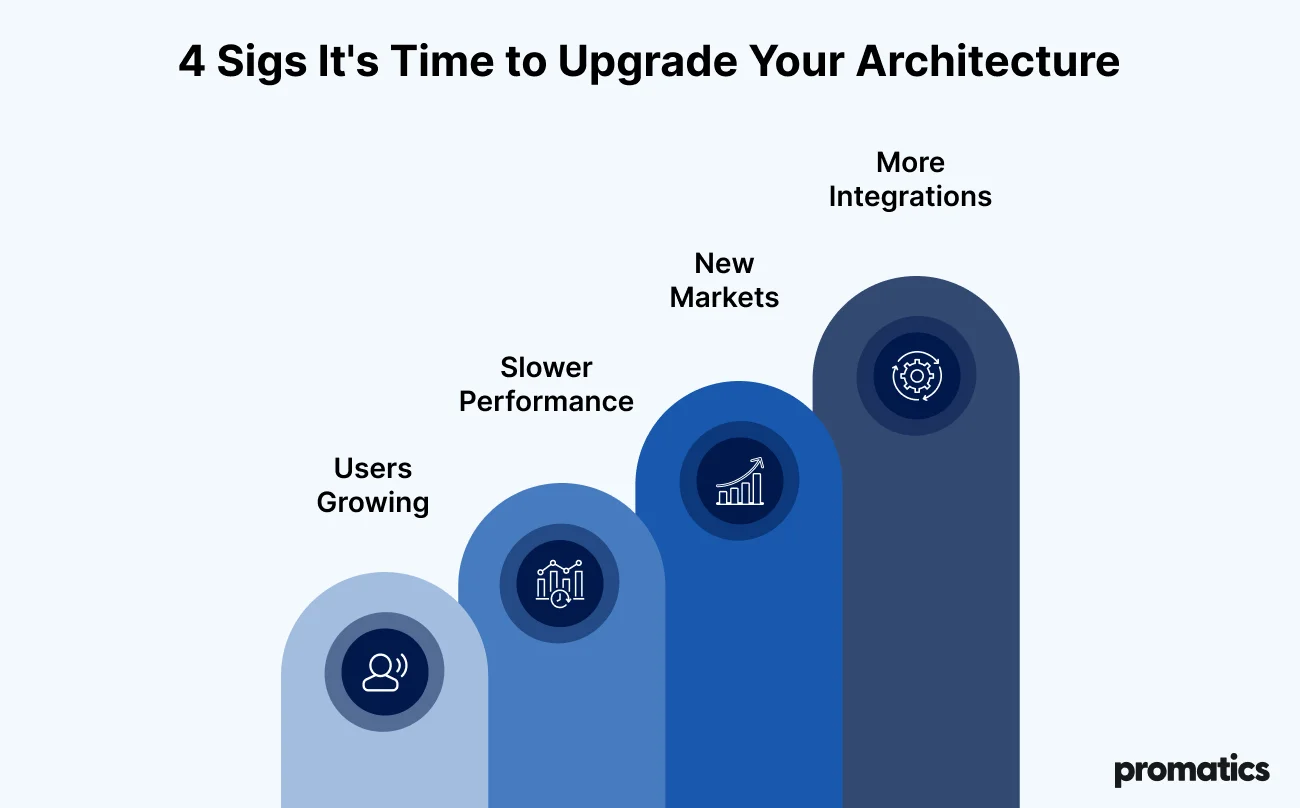
One of the most important decisions affecting SaaS development cost is architecture.
What Is Multi-Tenant SaaS Architecture?
Multi-tenancy allows multiple customers to share the same application infrastructure while keeping their data isolated. Instead of deploying separate instances for each client, organizations centralize resources.
Why Startups Prefer It
Benefits include:
- Lower infrastructure expenses
- Faster updates
- Easier maintenance
- Better scalability
- Improved resource utilization
Multi-Tenant SaaS Architecture Trends 2026
Emerging trends include:
Container-First Deployments
Kubernetes-powered environments improve scalability and deployment flexibility.
AI-Based Resource Optimization
Machine learning models dynamically allocate computing resources based on usage patterns.
Tenant-Level Customization
Companies increasingly balance shared infrastructure with personalized experiences.
Enhanced Security Isolation
Architectures now emphasize stronger data segregation mechanisms.
Serverless Components
Organizations adopt serverless services for unpredictable workloads to improve efficiency.
For startups expecting rapid growth, multi-tenant architectures provide long-term operational advantages.
Cloud Infrastructure Cost in 2026
Another major contributor is cloud infrastructure cost.
Many founders underestimate the ongoing expenses associated with hosting SaaS applications.
Typical Cloud Infrastructure Expenses
| Component | Monthly Cost |
| Compute Resources | $300 – $5,000+ |
| Databases | $200 – $3,000 |
| Storage | $50 – $1,000 |
| CDN Services | $50 – $800 |
| Monitoring Tools | $100 – $1,000 |
| Backup Solutions | $100 – $700 |
| Security Services | $100 – $2,000 |
Actual costs depend on user activity and geographic distribution.
What Drives Cloud Infrastructure Cost?
Traffic Growth
As user numbers increase, compute demands expand.
Data Storage Requirements
Applications processing media files or large datasets incur higher storage expenses.
Availability Expectations
High uptime requirements require redundancy.
Compliance Standards
Industries such as healthcare and finance often require enhanced security measures.
Global Expansion
Serving international audiences necessitates geographically distributed infrastructure.
Cloud spending should therefore be viewed as an operational investment that scales alongside revenue.
AI Features and Their Impact on SaaS Software Development Cost
In 2026, AI functionality has become a competitive differentiator.
Examples include:
- Intelligent search
- Recommendation engines
- Conversational assistants
- Predictive analytics
- Automated workflows
- Document summarization
While these capabilities increase customer value, they also affect costs through:
- AI model integration
- API consumption fees
- Data preparation
- Monitoring requirements
- Governance frameworks
Founders should prioritize AI initiatives aligned directly with measurable business outcomes.
SaaS Pricing Model Considerations
Selecting the right SaaS pricing model is equally important. Pricing influences user acquisition, retention, and profitability.
Freemium
Users access limited features before upgrading.
Best for: High-volume acquisition strategies.
Tier-Based Pricing
Different plans serve different customer segments.
Best for: Most B2B SaaS businesses.
Usage-Based Pricing
Customers pay according to consumption.
Best for: API-first platforms.
Per-User Pricing
Charges scale with team size.
Best for: Collaboration software.
Hybrid Pricing
Combines multiple approaches.
Best for: Mature SaaS businesses with diverse customer needs.
Your pricing strategy should reflect infrastructure economics and customer value perception.
Hidden Costs Founders Often Overlook
When estimating how much it costs to build a SaaS, many startups focus only on development.
However, hidden costs frequently emerge.
Security Audits
Penetration testing and vulnerability assessments.
Compliance
GDPR, SOC 2, HIPAA, and industry certifications.
Customer Support
Help desk systems and support teams.
Marketing Technology
CRM and automation platforms.
Ongoing Maintenance
Bug fixes and updates.
Infrastructure Optimization
Performance tuning and scaling.
Feature Enhancements
Continuous product evolution based on user feedback.
Ignoring these expenses can disrupt growth trajectories.
Strategies to Reduce SaaS Development Cost
Start with an MVP
Validate assumptions before scaling investments.
Prioritize Core Features
Focus on solving one problem exceptionally well.
Adopt Agile Development
Iterative releases minimize waste.
Use Proven Frameworks
Accelerate development with mature technologies.
Build for Scalability Early
Avoid costly architectural rewrites.
Choose Experienced Development Partners
Specialized teams reduce execution risks.
A disciplined approach often delivers better outcomes than aggressive feature expansion.
Is Building a SaaS Product Worth the Investment in 2026?
With rising development costs, increasing competition, and AI transforming the software landscape, many founders are asking a difficult but important question:
Is building a SaaS product still worth it in 2026?
The answer is yes.
But the reasons why it’s worth building have evolved.
A decade ago, launching a SaaS product often meant identifying a gap in the market, building a solution, and relying on the novelty of cloud software to gain traction. Today, the market is far more mature. Customers have more choices, expectations are higher, and generic products struggle to stand out.
Yet despite these challenges, the opportunity has never been bigger.
According to market projections, the global SaaS market is expected to grow from $375.57 billion in 2026 to nearly $1.5 trillion by 2034, expanding at a CAGR of 18.7%. This sustained growth signals one thing: businesses across industries continue to invest heavily in software that improves efficiency, automates workflows, and delivers measurable outcomes.
The SaaS Opportunity Has Changed, Not Disappeared
If there’s one misconception surrounding SaaS in 2026, it’s the belief that AI has eliminated the need for software businesses.
In reality, AI has simply raised the bar.
According to Ideaproof’s analysis of emerging SaaS opportunities, the next generation of successful companies won’t be built around feature-heavy products designed for everyone. Instead, they’ll focus on solving specific problems exceptionally well through AI-native experiences, vertical specialization, and outcome-driven solutions.
The strongest opportunities now lie in building products such as:
- Vertical SaaS solutions tailored to niche industries
- AI-powered workflow automation tools
- Compliance and regulatory platforms
- Industry-specific analytics products
- Productivity applications with embedded intelligence
- Software that integrates seamlessly into existing ecosystems
In other words, the era of “another generic CRM” may be fading, but the demand for specialized, high-value software is accelerating.
Recurring Revenue Still Makes SaaS One of the Most Attractive Business Models
Beyond market growth, SaaS continues to offer one of the strongest business models available to entrepreneurs.
Unlike traditional software businesses that depend on one-time purchases, SaaS generates recurring revenue through subscriptions, creating predictable cash flow and long-term customer relationships.
This model provides several advantages:
- Predictable monthly and annual revenue
- Higher customer lifetime value
- Better forecasting capabilities
- Opportunities for expansion and upselling
- Stronger business valuations
- Greater scalability with relatively lower distribution costs
When combined with strong retention, these advantages create a compounding effect that few business models can replicate.
AI Is Creating New Categories of SaaS
Much of the conversation around AI focuses on disruption. However, for founders, AI is also creating entirely new opportunities.
Businesses no longer want software that simply stores data or digitizes processes. They want platforms that help them make smarter decisions, automate repetitive tasks, and improve productivity.
This shift is giving rise to a new generation of SaaS products built around:
- Intelligent copilots
- Automated workflows
- Predictive insights
- Natural language interfaces
- Agent-assisted decision-making
The winners won’t necessarily be companies with the largest feature lists. They’ll be the ones that combine domain expertise with AI to solve real business problems better than anyone else.
The Biggest Risk Isn’t Building SaaS. It’s Building Without Validation.
If 2026 has taught founders anything, it’s that speed without direction can be expensive.
Many startups fail not because the market opportunity doesn’t exist, but because they invest heavily before confirming that customers actually need what they’re building.
Launching with dozens of features, hiring large teams prematurely, or chasing every emerging trend often leads to bloated products and wasted resources.
The most successful SaaS companies take a different approach:
- Start with a focused MVP
- Validate assumptions with real users
- Gather customer feedback early
- Prioritize features based on demand
- Scale gradually as adoption grows
This approach reduces risk, preserves capital, and significantly improves the chances of achieving product-market fit.
So, Is SaaS Still Worth Building in 2026?
Absolutely Yes, The market remains enormous.
Businesses continue accelerating their digital transformation initiatives. AI is unlocking entirely new categories of software. And organizations are willing to invest in solutions that deliver tangible business outcomes.
But building a successful SaaS company today requires more than a good idea.
It demands strategic execution, deep customer understanding, and the discipline to solve meaningful problems rather than chasing trends.
The future of SaaS doesn’t belong to companies building the most software. It belongs to those building the most valuable software.
For founders willing to validate quickly, adapt continuously, and focus relentlessly on customer outcomes, SaaS remains one of the most compelling opportunities to build scalable, resilient, and high-growth businesses in 2026 and beyond.
How Promatics Technologies Can Support Your SaaS Journey
Estimating the cost of building a SaaS product is only one part of the process. Turning an idea into a scalable, market-ready solution requires the right technical expertise, development approach, and execution strategy.
At Promatics Technologies, we work with startups, growing businesses, and enterprises to build SaaS products that align with their business goals and growth plans. From validating an idea with an MVP to developing feature-rich platforms, our team helps businesses navigate every stage of the product lifecycle.
Our capabilities include:
- SaaS application development
- MVP development and prototyping
- UI/UX design services
- Cloud architecture and consulting
- AI-powered feature integration
- DevOps implementation and automation
- Quality assurance and testing
- Ongoing support and product enhancements
Whether you’re launching a new SaaS product or scaling an existing one, the focus is on building solutions that are secure, scalable, and designed for long-term success. With a combination of technical expertise and product thinking, Promatics helps businesses bring ideas to market faster while making informed technology decisions along the way.
Conclusion
Building a SaaS product isn’t about launching with every possible feature or chasing the latest trend. It’s about making the right decisions at the right time. The choices you make around feature prioritization, architecture, security, infrastructure, and scalability will shape not only your development costs but also your product’s ability to grow and succeed.
The most successful SaaS companies don’t try to do everything from day one. They start with a clear problem to solve, launch with purpose, learn from real users, and evolve based on what truly creates value. This disciplined approach helps control costs, reduce risk, and improve the chances of achieving lasting product-market fit.
Whether you’re validating an idea with an MVP or planning a feature-rich SaaS platform, thoughtful execution matters more than aggressive expansion. Building smarter often delivers better outcomes than building bigger.
At Promatics Technologies, we help businesses transform ideas into scalable SaaS products through strategic planning, user-focused development, and future-ready technology solutions. From defining the right roadmap to launching and scaling with confidence, our team works alongside you at every stage of the journey.
Have an idea you’d like to bring to life? Let’s turn it into a SaaS product your users will love and your business can grow with. Get in touch with our experts to discuss your goals and discover the smartest path from concept to launch.
