Mobile App Development: How to Build Apps That Scale to Millions of Users
TL;DR
- Scalable apps handle millions of users without performance issues
- Built using cloud, microservices, and distributed architecture
- Ensures high performance, uptime, and seamless user experience
- Handles traffic spikes and growing data efficiently
- Drives long-term growth with future-ready app architecture
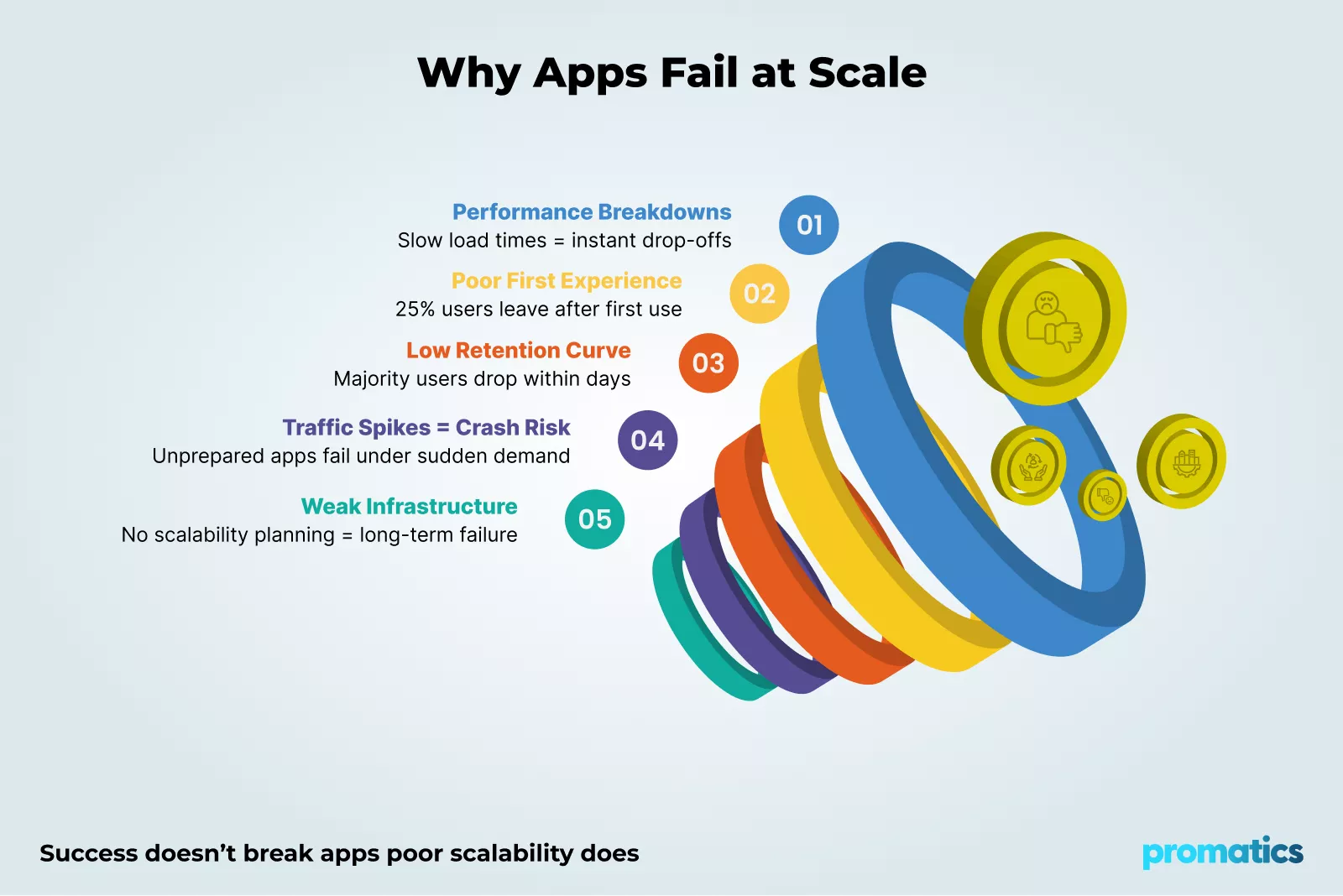
What if your app suddenly went viral tomorrow? Thousands, maybe millions of users sign up overnight. Traffic spikes. Servers struggle. The app slows down… and within minutes, users start dropping off.
This is not a rare scenario. In fact, nearly 25% of users abandon an app after just one use, and performance issues are one of the biggest reasons behind it. At the same time, users spend over 90% of their mobile time on apps, which means expectations are higher than ever. One glitch, one delay, or one crash can cost you not just users, but long-term growth.
In today’s competitive digital landscape, building a mobile app is no longer the challenge. Building an app that can handle success is.
Businesses rely heavily on mobile applications to engage customers, streamline operations, and stay ahead in competitive markets. But an app that works for 1,000 users may fail at 100,000 if it is not designed to scale. That’s why scalability is no longer optional, it is a core requirement for any modern mobile app.
This is where scalable mobile app development comes into play. It ensures your app can grow in users, features, and data without compromising performance or user experience. Instead of reacting to growth, scalable apps are built to embrace it.
In this blog, we will break down everything you need to know about building mobile apps that are ready to scale to millions of users, from core concepts and key features to best practices and real-world examples.
What is Scalable Mobile App Development?
Scalable mobile app development is the process of designing and building applications that can efficiently handle growing demands without compromising performance, stability, or user experience. As your user base expands, data increases, and new features are introduced, a scalable app continues to perform smoothly without requiring major rework or system overhauls.
In simple terms, scalability means your app is built to grow with your business. Whether you are moving from a few thousand users to millions, expanding into new markets, or adding advanced functionalities, a scalable app adapts seamlessly without slowing down or breaking under pressure.
To achieve this, developers rely on two key types of scaling:
- Vertical Scaling: This involves increasing the capacity of existing servers by adding more power such as CPU, memory, or storage. It is useful for handling increased workloads without changing the system structure.
- Horizontal Scaling: This involves adding more servers or instances to distribute traffic and workload efficiently. It is a more flexible and long-term approach, especially for apps expecting rapid growth and high user volumes.
A well-built scalable mobile app ensures that your business is always prepared for growth. It minimizes downtime, prevents performance bottlenecks, and delivers a consistent experience to users, even during peak traffic or unexpected demand spikes.
Why is Scalable Mobile App Development Crucial?
Let’s explore why mobile app scalability is vital for long-term success:
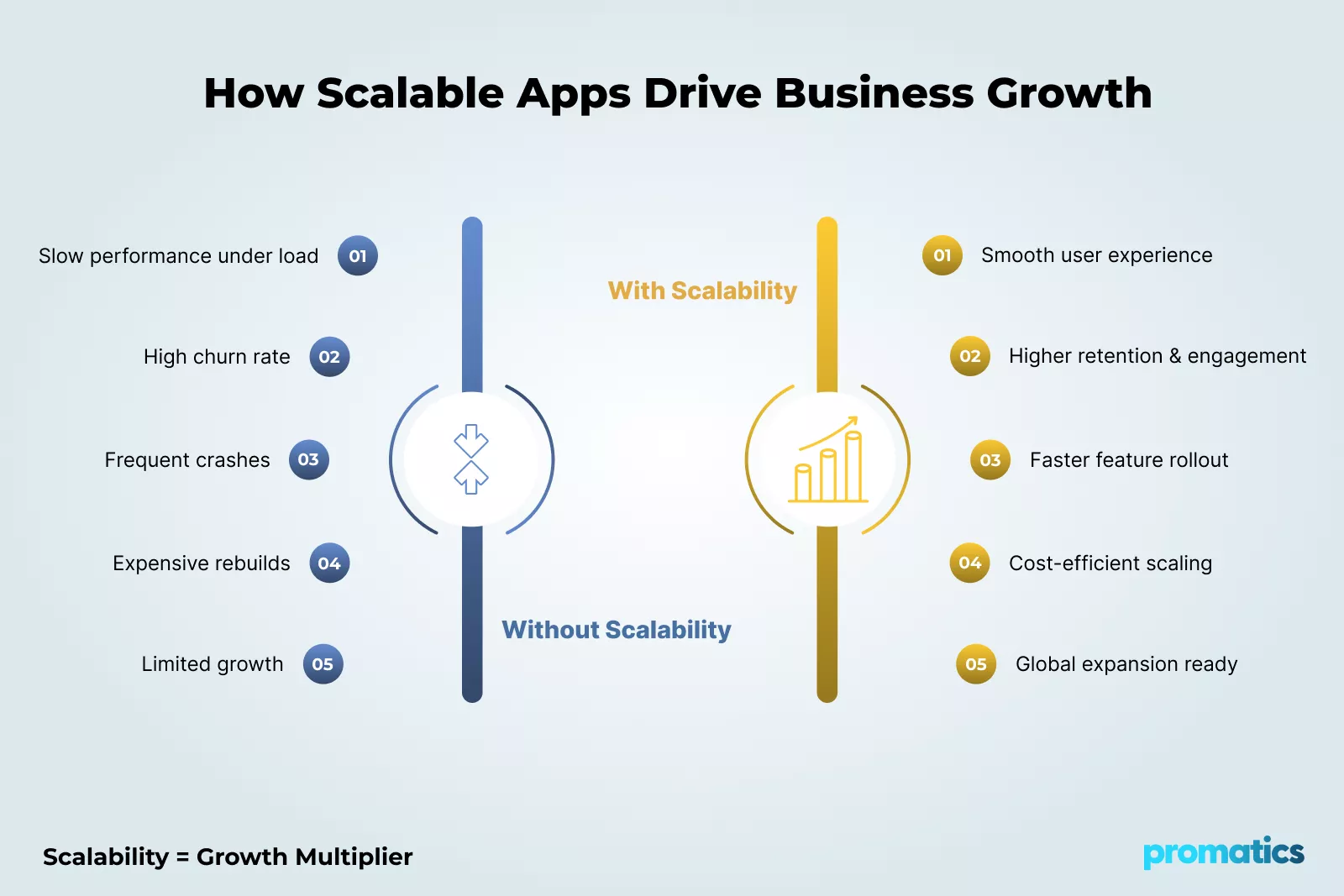
- Future-Proof Your Investment : Mobile app development requires substantial capital, and technical debt can be costly; rebuilding an application often runs 2–3x the price of initial development. With mobile usage hitting 3.6 hours per day, which is a 3.8% year-over-year increase, the stakes for getting it right are higher than ever.
- Support Growing User Base : If your app goes viral or gains popularity quickly, a nom-scalable app might crash or lag. Scalable apps handle traffic surges without breaking down.
- Faster Feature Expansion : Want to add new features or integrate with third-party tools? A scalable app makes it easier to add new functionalities without disrupting existing systems.
- Improve User Retention : Users expect smooth, fast, uninterrupted app experiences. Scalable apps ensure uptime and performance, boosting user retention and satisfaction.
- Enable Global Reach : Planning to expand internationally? A scalable app can adapt to global audiences, languages, and compliance standards.
Key Features of a Scalable Mobile App
Building a scalable mobile app is not just about handling more users, it’s about creating a system that grows smoothly, securely and sustainably without breaking under pressure in 2026. Scalability is deeply tied to architecture, performance, and adaptability. Below are the key features that define a truly scalable mobile applications:
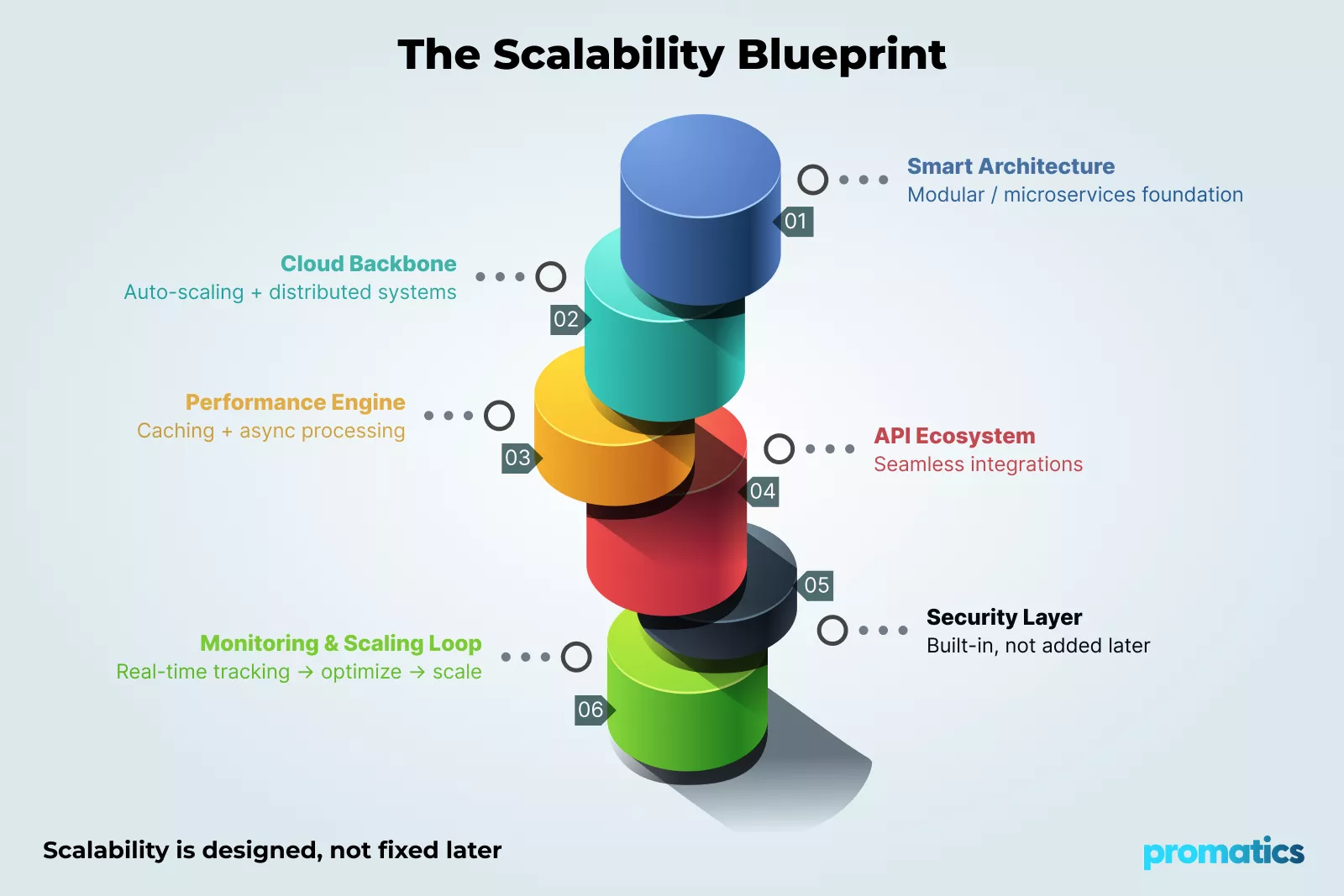
1. Scalable Architecture
At the core of every scalable mobile app lies a well-structured architecture. A modular or microservices-based architecture ensures that different components of the app operate independently. This prevents a single failure from affecting the entire system and allows teams to scale specific parts based on demand.
A scalable architecture also enables faster feature releases, easier maintenance, and long-term cost efficiency. Without it, apps often suffer from tightly coupled systems and monolithic designs that become difficult to update or expand over time.
2. Cloud-Native Infrastructure
Scalable apps are built on cloud-native environments that support elasticity. This means the app can automatically scale up during high traffic and scale down during low usage without manual intervention.
Technologies like auto-scaling, load balancing, and distributed databases ensure that performance remains stable even during sudden spikes, such as viral campaigns or seasonal demand. This reduces downtime and ensures uninterrupted user experiences.
3. High Performance & Speed Optimization
Performance is a non-negotiable factor in scalability. As user traffic grows, apps must maintain fast load times and smooth interactions.
Scalable apps achieve this through:
- Efficient API handling
- Smart caching mechanisms
- Asynchronous processing
- Optimized database queries
Poor performance can lead to user drop-offs and negative reviews. A performance-first approach ensures that the app remains responsive even under heavy load.
4. Robust Security Framework
As an app scales, so does its exposure to security threats. A scalable mobile app must have strong security measures built into its core, not added later.
Key elements include:
- End-to-end data encryption
- Secure authentication (MFA, OAuth)
- Role-based access control
- Secure API gateways
- Continuous monitoring and threat detection
A single vulnerability at scale can impact millions of users, making security a critical pillar of scalability.
5. API – First Development Approach
APIs are the backbone of scalable ecosystems. An API-first approach allows seamless integration with third-party services such as payment gateways, CRMs, analytics tools, and IoT devices.
This flexibility ensures that as business needs evolve, new functionalities can be added without disrupting the core system. It also supports omnichannel experiences and future expansion into new platforms.
Best Practices for Scalable Mobile App Development
Mobile app development is a complex journey made up of multiple smaller stages, each requiring careful planning and critical decision-making. While some choices may seem harmless at first, they can significantly impact the app’s performance, scalability, and user experience over time. Let’s explore some essential best practices for successful mobile app development:
1. Start with In-Depth Research & Strategic Planning
Every successful mobile app begins with a clear understanding of the problem it aims to solve. Conducting thorough market research helps identify user needs, industry gaps, and competitor strategies.
This step lays the foundation for building a product that is not only relevant but also scalable in the long run. Strategic planning involves defining your app’s core features, scalability roadmap, monetization strategy, and target audience.
It also includes planning for future enhancements, integrations, and user growth. Businesses offering mobile app development services in India, the US, or global markets must focus on research-driven strategies to ensure long-term success.
2. Choose the Right Technology Stack & Platform
Selecting the appropriate technology stack is one of the most important decisions in scalable mobile app development. The choice between native, hybrid, or cross-platform development should depend on your performance needs, budget, and scalability goals.
Using modern frameworks and tools enables the creation of high-performance mobile applications that can handle increasing traffic and complex functionalities. For example, scalable backend technologies, efficient databases, and robust APIs ensure seamless performance as your user base grows.
This is especially important for businesses building enterprise mobile applications, SaaS platforms, or scalable startup apps, where future expansion is inevitable. A well-chosen tech stack also simplifies maintenance, supports faster updates, and enables integration with emerging technologies like AI and IoT.
3. Focus on UI/UX from the Early Stages
User experience plays a critical role in determining whether your app can scale successfully. A poorly designed interface can lead to high uninstall rates, even if the app has strong functionality.
By prioritizing user-friendly mobile app design and development, businesses can create intuitive navigation, visually appealing layouts, and seamless user journeys. Starting with wireframes and prototypes allows teams to test ideas early and refine them based on user feedback.
As the app scales, maintaining consistency in design becomes even more important. Features should be easy to discover, interactions should feel natural, and performance should remain smooth.
4. Prioritize Testing, Debugging & Continuous Feedback
Testing is a continuous process that ensures your app performs reliably across different devices, platforms, and usage conditions. A scalable app must undergo rigorous testing, including functional testing, performance testing, security testing, and usability testing.
Implementing automated testing alongside manual testing helps identify issues early and maintain quality as new features are added. Collecting user feedback through reviews, analytics, and beta testing provides valuable insights into real-world usage.
This helps businesses refine their app and deliver reliable, scalable mobile applications that meet evolving user expectations. Continuous improvement based on feedback is key to sustaining long-term growth.
5. Ensure Strong Security & Plan for Continuous Updates
Security is a fundamental aspect of scalable mobile app development. As your app grows, it becomes more vulnerable to cyber threats, making it essential to implement secure mobile app development practices from the start.
This includes data encryption, secure authentication methods, API protection, and compliance with global standards such as GDPR and regional data protection regulations. Strong security measures are especially important for fintech apps, healthcare applications, and enterprise mobile solutions, where sensitive user data is involved.
In addition to security, planning for continuous updates is crucial. Regular updates help fix bugs, improve performance, and introduce new features. Using agile methodologies and CI/CD pipelines ensures faster and smoother deployments.
5 Real-World Scalable Apps That Handle Millions of Users Seamlessly
Scalability is best understood through real-world applications that successfully manage massive user bases, high data volumes, and real-time interactions. Modern scalable apps are built on big data architectures, cloud infrastructure, and distributed systems that allow them to grow without compromising performance. Below are five detailed examples inspired by scalable, data-driven applications:
1. Netflix – Personalization at Global Scale
Netflix is one of the most well-known examples of a scalable application that leverages big data and cloud computing. The platform processes enormous volumes of user data, including watch history, search behavior, preferences, and engagement patterns, to deliver highly personalized content recommendations.
Its scalable architecture is built on microservices, allowing different components such as recommendation engines, streaming services, and user management systems to function independently. This ensures that even if one service experiences issues, the rest of the platform continues to operate smoothly.
Netflix also uses distributed cloud infrastructure to handle millions of concurrent users across different regions. Whether it is a new show launch or peak viewing hours, the platform maintains high performance and minimal buffering. This makes Netflix a strong example of scalable OTT app development and big data-driven personalization systems.
2. Amazon – Scalable eCommerce & Recommendation Engine
Amazon’s success is deeply rooted in its ability to scale efficiently while managing massive amounts of transactional and behavioral data. The platform handles millions of product listings, user interactions, and transactions every day.
Its recommendation engine uses big data analytics to suggest products based on browsing history, purchase behavior, and user preferences. This not only enhances user experience but also significantly boosts conversions and sales.
Amazon’s infrastructure is designed to handle extreme traffic spikes during events like festive sales and global shopping days. With its scalable backend systems and cloud-powered operations, Amazon sets a benchmark for scalable eCommerce mobile app development and enterprise-level application scaling.
3. Uber – Real-Time Data Processing & Dynamic Scaling
Uber operates in a highly dynamic environment where real-time data processing is critical. The app continuously analyzes data such as driver availability, ride requests, traffic conditions, and location tracking.
Its scalable system ensures that millions of users can book rides simultaneously without delays. One of its most notable features is dynamic pricing, which adjusts fares based on supply and demand using real-time analytics.
Uber’s architecture is designed to scale instantly during peak hours, special events, or high-demand situations. This makes it a strong example of real-time scalable mobile app development and location-based service applications that rely heavily on big data and distributed systems.
4. Google Maps – Real-Time Navigation & Data Integration
Google Maps is a powerful example of a scalable application that processes vast amounts of geospatial and real-time data. It collects and analyzes data from millions of users, GPS signals, and traffic sensors to provide accurate navigation and route optimization.
The platform’s ability to deliver real-time traffic updates, estimated arrival times, and alternative routes depends on its highly scalable backend systems. These systems continuously process incoming data and update outputs within seconds.
Google Maps also integrates multiple data sources, including satellite imagery, user reports, and business listings, making it a comprehensive solution. It showcases how scalable mobile apps can handle real-time data processing and global user demand efficiently.
5. Spotify – Scalable Content Delivery & Personalization
Spotify uses big data and machine learning to create a personalized music experience for millions of users worldwide. It analyzes listening behavior, user preferences, and interaction patterns to curate playlists such as Discover Weekly and Daily Mix.
Its microservices-based architecture allows Spotify to scale different components independently, including music streaming, recommendations, and search functionality. This ensures consistent performance even during high user activity.
Additionally, Spotify’s content delivery system is optimized for speed and reliability, enabling smooth streaming across devices and network conditions. It stands as a strong example of scalable media streaming apps and AI-powered recommendation systems.
How Scalable Apps Drive Business Growth
In today’s digital-first landscape, scalability is not just a technical advantage, it is a direct driver of business growth. A scalable mobile app allows businesses to expand their user base, enter new markets, and introduce new features without compromising performance or user experience. Below are the key ways scalable apps contribute to long-term business success:
1. Supports Rapid User Growth
One of the biggest advantages of a scalable app is its ability to handle increasing traffic seamlessly. As your business grows and attracts more users, the app continues to perform efficiently without crashes or slowdowns.
This ensures a consistent user experience, which is critical for retaining customers and building trust. Businesses investing in scalable mobile app development solutions can confidently run marketing campaigns, launch new features, or expand globally without worrying about system limitations.
2. Enhances Customer Experience
A fast, reliable, and responsive app directly impacts user satisfaction. Scalable apps maintain performance even during peak usage, ensuring smooth navigation, quick load times, and uninterrupted services.
This leads to higher engagement and better retention rates. For industries like eCommerce, fintech, and on-demand apps, delivering a seamless user experience is essential for driving repeat usage and long-term customer loyalty.
3. Enables Faster Feature Expansion
Scalable apps are built with flexible architectures that allow businesses to introduce new features quickly. Whether it’s integrating AI capabilities, adding payment options, or expanding into new services, scalability makes innovation easier and faster.
This agility helps businesses stay competitive in rapidly evolving markets. Companies focusing on future-ready mobile app development can continuously adapt to changing user needs without rebuilding their entire system.
4. Reduces Operational Costs
While scalable apps may require a higher initial investment, they significantly reduce long-term operational costs. Efficient resource utilization, cloud-based scaling, and optimized infrastructure minimize the need for constant system overhauls.
Businesses can scale resources up or down based on demand, avoiding unnecessary expenses. This makes scalable solutions ideal for startups and enterprises looking for cost-effective mobile app development strategies.
5. Supports Global Expansion
A scalable app makes it easier for businesses to expand into new regions and markets. With the ability to handle diverse user bases, multiple languages, and varying traffic loads, businesses can grow beyond geographical boundaries.
For companies targeting global mobile app users or regional markets like India, the US, and the Middle East, scalability ensures smooth expansion without technical barriers.
6. Improves Data Handling
As businesses grow, so does the volume of data they generate. Scalable apps are designed to handle large datasets efficiently, enabling real-time analytics and better decision-making.
By leveraging data-driven mobile app solutions, businesses can gain insights into user behavior, preferences, and trends. This helps in optimizing marketing strategies, improving products, and increasing revenue opportunities.
7. Strengthens Business Reliability
Frequent crashes or downtime can damage a brand’s reputation. Scalable apps ensure high availability and reliability, even during peak usage or unexpected traffic spikes.
A stable and dependable app builds trust among users and strengthens brand credibility. This is especially important for enterprise mobile applications and high-traffic platforms, where reliability directly impacts business success.
Promatics Technologies: Powering Mobile Apps That Scale Effortlessly
When it comes to building mobile applications that are not only high-performing but also future-ready, Promatics Technologies stands out as a trusted technology partner for startups, enterprises, and global brands. With a strong focus on scalability, innovation, and user-centric design, Promatics enables businesses to create mobile apps that grow seamlessly with their users and market demands.
End-to-End Scalable App Development
Promatics offers comprehensive mobile app development services, covering everything from ideation and strategy to deployment and post-launch support. Their structured approach ensures that every app is built with scalability in mind from day one.
By combining business analysis, UI/UX design, development, and quality assurance, they deliver end-to-end scalable mobile app solutions that align with long-term business goals.
Cloud-Native & Future-Ready Architecture
A key strength of Promatics lies in its ability to design cloud-native mobile app architectures that support seamless scaling. Leveraging modern cloud infrastructure and DevOps practices, they ensure apps can handle increasing user loads without compromising performance.
Their expertise in cloud migration, automation, and scalable environments allows businesses to expand globally while maintaining stability and speed.
Expertise Across Advanced Technologies
Promatics goes beyond traditional app development by integrating cutting-edge technologies such as AI, IoT, blockchain, and data analytics. These capabilities help businesses build intelligent, scalable, and future-ready mobile applications.
From AI-driven automation to predictive analytics, their solutions empower businesses to enhance user experiences and make data-driven decisions at scale.
Agile Development & Faster Time-to-Market
Speed and adaptability are critical for scalable apps. Promatics follows agile methodologies and uses optimized development frameworks to accelerate delivery without compromising quality.
Their development process enables businesses to launch faster, iterate continuously, and scale efficiently as user demands evolve. This approach is especially beneficial for startups and SaaS-based mobile applications aiming for rapid growth.
Proven Experience Across Industries
With over a decade of experience and a global client base, Promatics has successfully delivered mobile applications across industries such as healthcare, eCommerce, fintech, logistics, and more.
Their ability to work with startups, SMEs, and Fortune 500 companies highlights their versatility and expertise in building scalable enterprise-grade mobile applications.
Customer-Centric Approach & Long-Term Partnership
What truly sets Promatics apart is its commitment to being more than just a development vendor. They act as a strategic partner, guiding businesses at every stage of the app lifecycle.
By focusing on user needs, market trends, and continuous improvement, they help businesses create apps that not only scale technically but also succeed commercially.
Conclusion
In a world where user expectations evolve faster than technology itself, scalability is what separates apps that fade away from those that lead the market. It is not just about handling growth, it is about enabling it with confidence. A truly scalable mobile app becomes a business asset that adapts, improves, and expands without friction.
The real advantage lies in building systems that are ready for what’s next, not just what’s now. Whether it’s entering new markets, launching new features, or handling sudden spikes in demand, scalable apps give businesses the freedom to move faster and think bigger. They create a foundation where innovation is continuous and growth is sustainable.
That is where choosing the right technology partner makes all the difference. With deep expertise in building high-performance, future-ready applications, Promatics Technologies helps businesses turn ambitious ideas into scalable digital products that perform at every stage of growth.
Let’s Build Something That Grows With You If you are looking to create a mobile app that is not just functional but built to evolve, scale, and succeed in a competitive market, now is the time to take the next step. Partner with Promatics Technologies to build a mobile app that is designed for scale, speed, and long-term success.