Insights
Discover the latest trends, insights, and best practices in web and mobile app development
Clutch Recognizes Promatics Technologies as a Top Developer for 2019

A premier web and mobile app development company, Promatics Technologies is made up of a seasoned team of 100+ developers. We’ve created successful and efficient web and mobile app development processes, serving a number of startups, entrepreneurs, SMEs, and Fortune 500 companies. We are pleased to share that we are featured on Clutch as … Continue reading
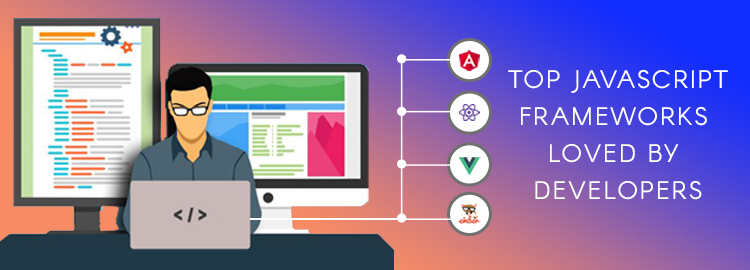
Here are the top 4 Javascript frameworks for frontend development

Troubled by the complexities of syntax and value functions in app building, most developers have to write difficult workarounds to solve problems in the language. JavaScript frameworks are a ready-made solution to such problems of the syntax and semantics. App world is flooded with a wide range of JavaScript app frameworks. These frontend JS frameworks … Continue reading

A Beginners Guide to Understanding Web Push Notifications
What is a Web Push Notification? Imagine a customer who enters a store but doesn’t purchase a thing, because nothing of his interest is presented to him in the shop. This can be a massive loss for a business. Similarly, letting a website visitor leave the web page without converting it into a sale … Continue reading
All you need to know about Single Page Applications. When and why you should build them?
A single page application (SPA) is a website or a web application which dynamically rewrites the content on the current page instead of loading another page. Whenever you click a link on a single page application, it does not make a request to the server to send new HTML code. The HTML, CSS, and JavaScript … Continue reading
Google I/O 2018 announced a lot of things on many fronts: Why Android Developers should be excited?
The year’s Google I/O conference took place from 8th May to 10th May at Shoreline Amphitheatre in Mountain View with a keynote speech by Google CEO Sundar Pichai. Google has already rolled out the developer preview of Android P with some exciting features and functionalities. Google also made announcements around ARCore, Google Assistant, Chromebooks, Android … Continue reading
Node.JS vs PHP: Which one to choose for your project?

Every day, some new technologies are emerging that change to focus the mobile landscape. Different technologies were used for front-end and back-end development. The scenario has changed with the launch of different programming languages. There is a huge competition between C, Java, Perl, and Node.JS. Now, the question is how to select the right … Continue reading

Promatics Technologies has been awarded as the "Most Promising IT Company in Punjab"
We have some good news to share. Promatics Technologies has been delighting clients and demonstrated its ability to fabricate the most amazing and user-centric software and apps. We take pride in creating unique software experiences for our clients worldwide. The efforts were recognized when we were awarded as “The Most Promising IT Company in … Continue reading
Promatics Technologies Named a Top Mobile App Developer on Clutch!
At Promatics Technologies, we are dedicated to our clients, consistently producing award-winning, aesthetically pleasing, and functional websites and mobile applications. We are committed to delivering services that surpass excellence and that are tailored to cater the needs of an ever-evolving digital landscape. We pride ourselves on our high-quality work, which is why we are excited … Continue reading