The Future-Ready Features Every Real Estate App Should Have

TL;DR
- Compares JAMstack and traditional web architectures for modern apps
- JAMstack offers faster performance and better security for static sites
- Traditional development suits complex, dynamic, and scalable applications
- Choice depends on project needs, scalability, and functionality
- Hybrid approaches combine speed, flexibility, and long-term growth
The way people search for properties has changed dramatically. Today’s buyers expect more than listings filled with photos and prices. They want personalized recommendations, virtual property tours, instant communication, and the convenience of making informed decisions from anywhere.
This shift is reshaping the future of real estate technology. According to NASSCOM, one of the biggest trends defining real estate apps in 2026 is AI-driven hyper-personalization, with users increasingly expecting platforms to understand their preferences and deliver tailored experiences in real time. Features powered by AI, automation, and smart analytics are rapidly becoming the new standard rather than a competitive advantage.
The most successful real estate apps don’t just help users browse properties. They simplify decision-making, build trust, and remove friction from one of life’s biggest financial commitments.
For businesses looking to bring these capabilities to life, partnering with an experienced real estate app development company can make all the difference. From AI-powered recommendations to immersive property experiences, the right technology partner can help transform innovative ideas into scalable, user-centric solutions.
Curious about what separates ordinary property apps from those users genuinely rely on? Read on as we explore the innovative features redefining digital property experiences and shaping the future of real estate technology.
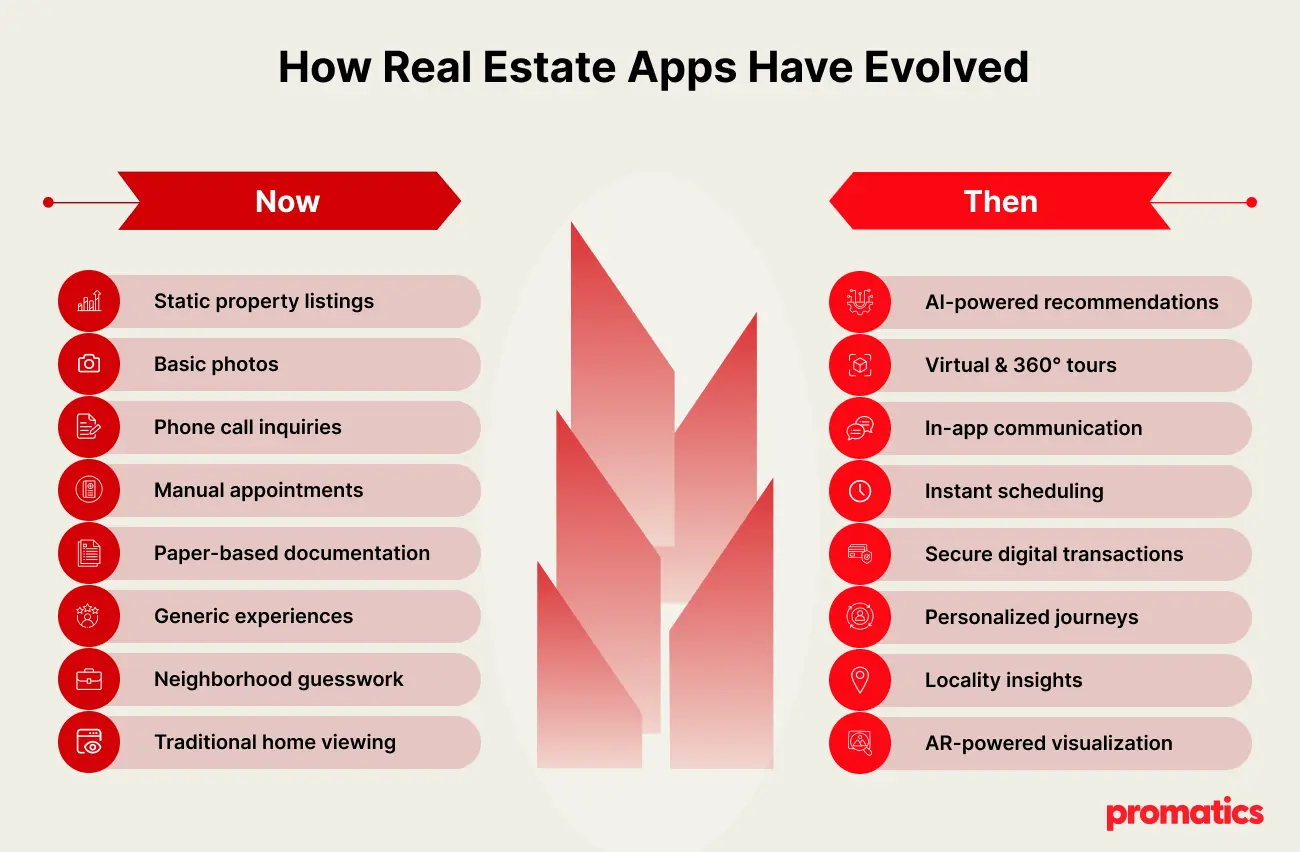
8 Must-Have Features for Modern Real Estate Apps
The real estate industry is no longer competing solely on the number of listings it offers. Today’s buyers and renters expect experiences that are personalized, intuitive, and convenient. They want more than static property photos. They want tools that help them discover the right homes faster, evaluate options confidently, and navigate the buying journey with ease.
The real estate apps that stand out are those that remove friction at every stage, from property discovery and communication to transactions and decision-making. These innovative features not only enhance the user experience but also build trust, increase engagement, and drive conversions.
So, what separates a good real estate app from one users genuinely rely on? Let’s explore the eight game-changing features redefining the future of real estate experiences.
1. AI-Powered Property Recommendations
One of the biggest frustrations for property seekers is having to sift through hundreds of irrelevant listings before finding options that actually match their needs.
Artificial Intelligence changes this experience completely. Rather than treating every user the same, AI analyzes behavioral patterns and preferences to deliver highly personalized recommendations. It learns from how users interact with the app and continuously improves its suggestions over time.
AI can analyze factors such as:
- Browsing history
- Saved properties
- Search queries
- Budget preferences
- Preferred neighborhoods
- Property types
- Viewing duration
- User engagement patterns
For example, if a user consistently searches for three-bedroom apartments in family-friendly neighborhoods near schools, the app can prioritize similar listings automatically.
Benefits of AI Recommendations
- Faster property discovery
- Reduced search fatigue
- Improved customer satisfaction
- Increased engagement rates
- Higher lead conversion
- More relevant property matches
By helping users find what they’re looking for before they explicitly ask for it, AI creates a seamless and intuitive experience that keeps them coming back.
Implementing intelligent recommendation engines requires expertise in machine learning, behavioral analytics, and mobile architecture. Businesses investing in AI-powered real estate app development can leverage these technologies to deliver highly personalized experiences that improve engagement and conversions.
2. Virtual Tours and 360° Property Experiences
Buying a property is one of the most significant financial decisions people make. Yet traditional photos often fail to capture the true feel of a space.
This is where immersive virtual experiences become invaluable.
Virtual Reality (VR) and 360-degree tours allow users to explore properties from the comfort of their homes. Instead of scrolling through static images, they can navigate rooms, inspect layouts, and gain a realistic understanding of the property’s flow.
Users can:
- Walk through every room virtually
- Zoom in on important details
- Understand room proportions
- Explore multiple properties in less time
- Compare homes side by side
- Shortlist serious options before scheduling visits
Why It Matters
Virtual tours are especially beneficial for:
- Out-of-town buyers
- International investors
- NRIs looking to invest in India
- Busy professionals
- Buyers relocating to a new city
By minimizing unnecessary site visits, virtual experiences save time and help users make more informed decisions.
3. Property Listings Built for Better Decisions
A listing is often the first interaction a buyer has with a property. If it lacks detail, transparency, or usability, users quickly lose interest.
Modern property listings should function as mini-information hubs rather than digital brochures.
They should provide everything a buyer needs to evaluate a property confidently.
Essential Listing Features
- High-quality images
- HD videos
- Floor plans
- Detailed descriptions
- Property specifications
- Interactive maps
- Price breakdowns
- Availability status
- Developer information
- Nearby landmark details
- Mortgage estimates
- Inquiry options
- Save and compare functionality
Advanced filtering capabilities further improve the experience by enabling users to search based on specific criteria.
Filters can include:
- Budget
- Property type
- Number of bedrooms
- Furnishing status
- Possession timeline
- Amenities
- Project status
- Location radius
The easier it is for users to narrow down choices, the more likely they are to stay engaged with your app.
4. Neighborhood Intelligence
People don’t just invest in properties they invest in communities, lifestyles, and future possibilities.
Even the perfect house may lose its appeal if the surrounding neighborhood doesn’t meet a buyer’s expectations.
Providing locality insights helps users understand what life around the property actually looks like.
Information Buyers Want to Know
- Nearby schools and colleges
- Hospitals and healthcare facilities
- Grocery stores and supermarkets
- Shopping destinations
- Public transportation options
- Restaurants and cafés
- Parks and recreational spaces
- Traffic conditions
- Safety ratings
- Pollution levels
- Future infrastructure developments
- Community reviews
These insights allow users to evaluate properties based on practical, day-to-day considerations rather than relying solely on marketing descriptions.
It also positions your app as a trusted advisor instead of just another listing platform.
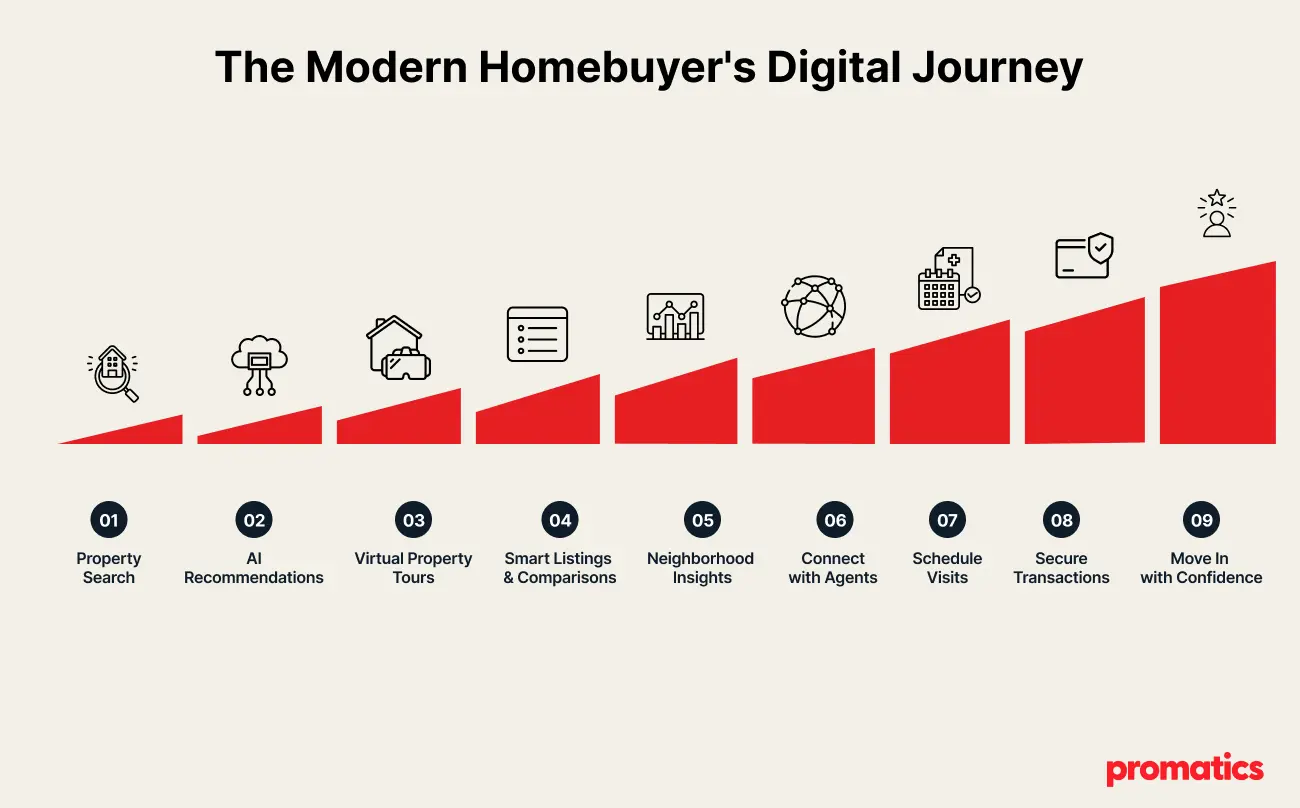
5. Integrated Communication Tools
One of the most overlooked pain points in real estate is fragmented communication.
Buyers often have to switch between multiple channels: phone calls, emails, messaging apps, and calendars to coordinate with agents and property owners.
Integrating communication directly into the app streamlines this process.
Features That Improve Connectivity
- Instant messaging
- Voice calling
- Video consultations
- Inquiry forms
- Automated chat responses
- Agent availability indicators
- Appointment scheduling
- Calendar synchronization
- Visit reminders
- Follow-up notifications
When users can communicate and schedule visits without leaving the app, the overall experience becomes faster, simpler, and more efficient.
For agents, this translates into quicker responses and improved lead management.
6. CRM and Productivity Tools
While most discussions focus on buyer experiences, real estate apps also need to empower the professionals using them behind the scenes.
A built-in Customer Relationship Management (CRM) system enables agents and brokers to manage leads effectively.
CRM Capabilities May Include
- Lead tracking
- Customer profiles
- Inquiry management
- Automated follow-ups
- Pipeline monitoring
- Appointment history
- Task reminders
- Team collaboration
- Sales analytics
- Performance reporting
These tools reduce administrative burden and allow agents to spend more time building relationships with prospective buyers.
For businesses, better operational efficiency often translates into higher revenue and improved customer satisfaction.
7.Secure Digital Transactions
Trust is the foundation of every real estate transaction.
Unfortunately, property purchases often involve extensive paperwork, lengthy approval processes, and concerns around fraud.
Digital transaction capabilities can simplify and secure this traditionally complex process.
Features That Enhance Trust
- Digital document uploads
- Secure cloud storage
- E-signatures
- Identity verification
- Payment gateway integrations
- Transaction status tracking
- Audit trails
- Ownership documentation
- Regulatory compliance support
Some platforms are also exploring blockchain technology to improve transparency and create tamper-resistant ownership records.
By reducing friction and improving security, digital transaction systems create a smoother experience for everyone involved.
8. Augmented Reality for Home Visualization
Buying a property isn’t just about what exists today. Buyers also want to imagine what a space could become.
Augmented Reality (AR) bridges this gap. Using AR technology, users can visualize how furniture, décor, and renovations would look inside a property before making a purchase decision.
AR Experiences Can Include
- Furniture placement previews
- Interior design simulations
- Wall color experimentation
- Renovation visualizations
- Space optimization ideas
- Layout modifications
- Decorative customization
These interactive experiences help users emotionally connect with a property.
Instead of wondering whether their dining table will fit or how a renovated kitchen might look, they can see it instantly through their smartphone.
This level of engagement not only enhances the user experience but can also accelerate decision-making.
The Future of Real Estate Apps Is Experience-Driven
Building a future-ready property platform requires more than adding new features. It demands a deep understanding of user behavior, emerging technologies, and scalable development practices.
Whether you’re launching a new property marketplace or modernizing an existing platform, partnering with a trusted real estate app development company can help you create experiences that users genuinely rely on.
Real estate apps are no longer defined by the number of listings they host. Their success depends on how effectively they simplify the property journey and address the evolving expectations of modern consumers.
Users expect convenience, personalization, transparency, and confidence throughout the buying process. Businesses that continue relying on outdated, listing-only experiences risk losing customers to more innovative competitors.
By incorporating features such as AI-powered recommendations, immersive virtual tours, intelligent listings, neighborhood insights, integrated communication, CRM capabilities, secure digital transactions, and augmented reality experiences, real estate companies can create platforms that users genuinely rely on.
The future belongs to apps that don’t just help people search for properties they help them make smarter decisions, build trust, and turn one of life’s biggest investments into a seamless digital experience.
As consumer expectations continue to evolve, one thing is clear: the most successful real estate apps won’t simply be used occasionally. They’ll become indispensable companions throughout every stage of the property journey.
Conclusion
The future of real estate apps isn’t about offering more listings. It’s about delivering smarter, faster, and more meaningful experiences that help users make confident decisions. From AI-powered recommendations and immersive virtual tours to secure digital transactions and AR-driven visualization, the features discussed above are reshaping how people discover, evaluate, and invest in properties.
For businesses, adopting these innovations is no longer just an opportunity to stand out. It’s becoming essential to meeting evolving customer expectations and staying competitive in an increasingly digital market.
At Promatics Technologies, we help real estate businesses build future-ready applications that combine cutting-edge technology with intuitive user experiences. Whether you’re launching a new property platform, upgrading an existing app, or integrating advanced capabilities like AI and immersive experiences, our team can help you turn your vision into a scalable, high-performing solution.
Ready to build a real estate app that users genuinely rely on? Get in touch with Promatics Technologies and discover how we can help you create digital experiences that drive engagement, build trust, and accelerate business growth.
