Revolutionary App Development Ideas for Restaurants and the Food Industry
TL;DR
- Explores innovative restaurant app development ideas.
- Covers online ordering, reservations, loyalty, and delivery features.
- Highlights customer engagement and revenue opportunities.
- Discusses emerging technology trends in food service apps.
- Helps restaurants accelerate digital transformation.
Introduction
The food industry has always been at the forefront of societal evolution, reflecting changes in culture, technology, and consumer preferences. In recent years, technology adoption in this sector has accelerated, driven by the need for efficiency, innovation, and enhanced customer experiences. From online ordering systems to sophisticated point-of-sale solutions, the integration of technology in restaurants and the broader food industry is transforming operations and redefining the dining experience. As we look to the future, the potential for further technological advancements promises even more exciting developments. This transformation is not just about improving service efficiency but also about enhancing the overall customer experience, ensuring sustainability, and leveraging data for better decision-making. It is safe to say we are entering a new FoodTech era that will redefine the way we look at this industry.
10 Revolutionary App Ideas for Restaurants and the Food Industry
1. Hyper-Personalized Menu App
Imagine an app that uses AI and machine learning to analyze customer preferences, dietary restrictions, and past orders to create a hyper-personalized menu. This app could suggest dishes based on individual taste profiles, offer recommendations for meal customization, and even suggest pairings for drinks and desserts. Such personalized experiences can lead to higher customer satisfaction and loyalty. For example, consider a customer who frequently orders vegan dishes; the app could highlight new vegan options or special deals on plant-based meals. Similar apps in the market include food delivery giants like Uber Eats and DoorDash, which use recommendation algorithms to suggest dishes. However, this app would take personalization to the next level, making each dining experience unique. By leveraging detailed customer data, restaurants can create a more engaging and satisfying dining experience, leading to increased repeat business and customer loyalty.
2. Augmented Reality Dining Experience
Augmented Reality (AR) can bring a whole new level of interaction to the dining experience. An AR app can allow customers to see 3D models of menu items on their tables before ordering. This visual representation can help in making informed decisions and enhance the overall dining experience. For instance, a diner can use their smartphone to see a virtual steak on their plate, complete with cooking instructions and ingredient details. Popular examples include AR menus offered by some upscale restaurants, but a dedicated app that integrates AR with detailed nutritional information, ingredient sourcing, and preparation videos would stand out. This app could also offer gamified dining experiences, making it a hit among younger demographics. Additionally, AR can be used for virtual tours of restaurant kitchens, allowing customers to see how their food is prepared, thereby increasing transparency and trust.
3. Zero Waste Management App
Waste management is a significant concern in the food industry. An app focused on zero waste management can help restaurants track their waste, suggest ways to reduce it, and connect with local charities and food banks to donate excess food. This app can use data analytics to provide insights on waste patterns and offer actionable recommendations. For example, it could alert managers when certain ingredients are nearing their expiration dates, suggesting recipes to use them up or opportunities to donate. Apps like Too Good To Go and Olio have gained popularity by addressing food waste, but a comprehensive solution integrated into restaurant operations can make a bigger impact. Such an app can also help restaurants earn sustainability certifications, attract eco-conscious customers, and reduce costs associated with waste disposal.
4. Virtual Cooking Classes with Restaurant Chefs
In the era of digital learning, an app offering virtual cooking classes with renowned restaurant chefs can be a game-changer. Users can subscribe to live or pre-recorded cooking sessions, learn signature dishes, and get tips directly from professional chefs. This app can also feature interactive Q&A sessions, ingredient delivery services, and community forums. For instance, users could participate in a live session where a Michelin-starred chef demonstrates how to prepare a complex dish, followed by a Q&A where participants can ask about techniques and substitutions. While platforms like MasterClass offer cooking classes, an app specifically tailored for restaurant experiences can create a more immersive and engaging learning environment. This app can also offer exclusive content from celebrity chefs and integrate with social media for sharing user-created dishes and feedback.
5. Blockchain Food Supply Chain Tracker
Transparency in the food supply chain is becoming increasingly important to consumers. A blockchain-based app can provide end-to-end visibility of the food supply chain, from farm to table. Users can scan QR codes on menu items to trace the origin of ingredients, ensuring they are ethically sourced and sustainable. For example, a customer could scan a QR code on a seafood dish to see information about the fishing practices and the journey of the fish from ocean to plate. Blockchain technology ensures data integrity and transparency, addressing concerns about food safety and fraud. While some companies are exploring blockchain for supply chain management, a dedicated app for restaurants can enhance customer trust and satisfaction. This technology can also help restaurants ensure compliance with food safety regulations and quickly address recalls or contamination issues.
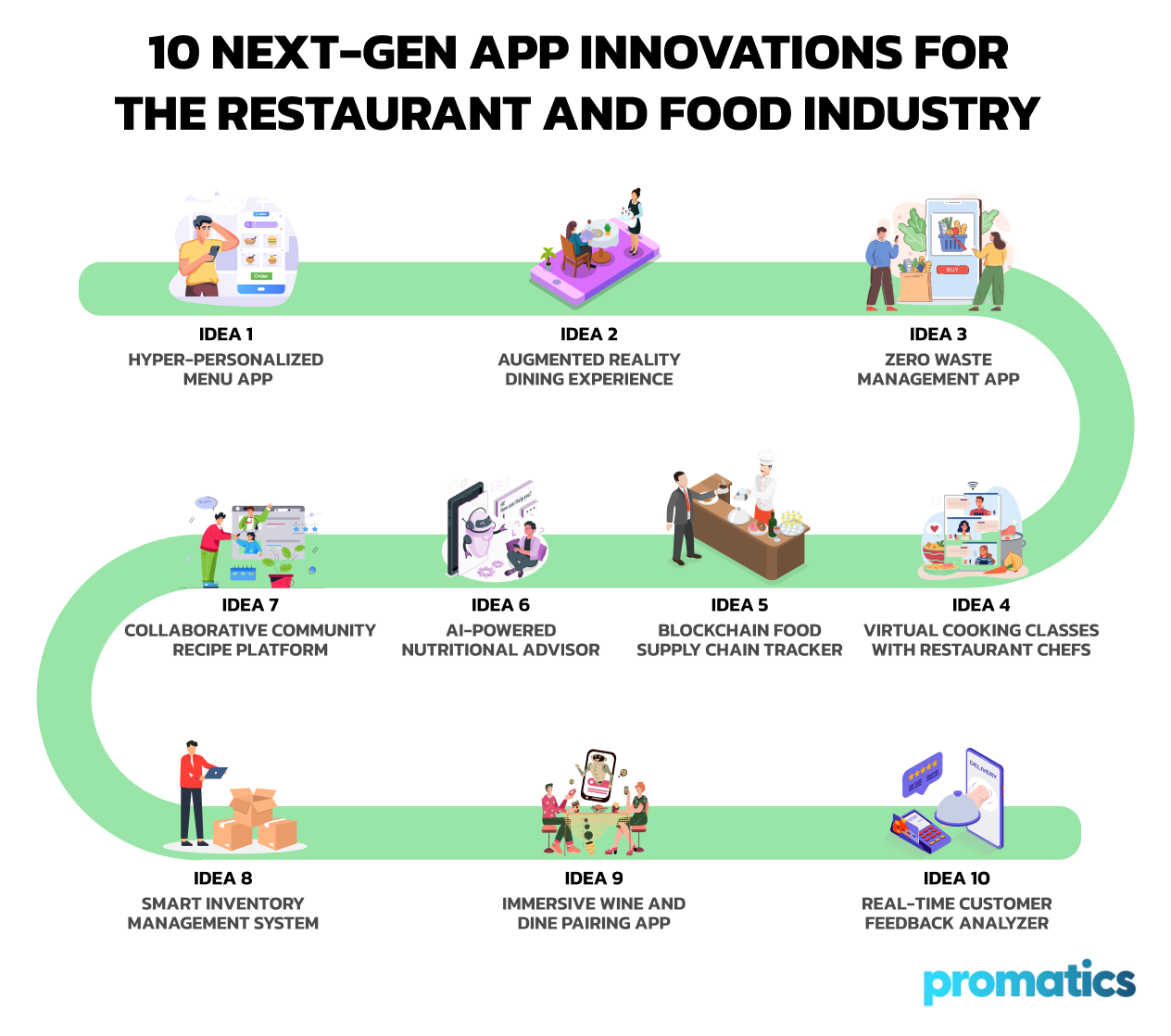
6. AI-Powered Nutritional Advisor
An AI-powered app that offers personalized nutritional advice based on individual health goals, dietary restrictions, and lifestyle can be highly beneficial. Users can input their preferences and health data to receive tailored meal recommendations when dining out. For example, someone following a keto diet could get suggestions for low-carb menu items, while a person with a nut allergy could receive alerts about potential allergens. This app can integrate with fitness trackers and health apps to provide comprehensive wellness solutions. Similar apps exist in the fitness industry, such as MyFitnessPal, but an app specifically designed for dining out can help users make healthier choices without compromising on taste and experience. This app can also offer features like calorie tracking, meal planning, and integration with wearable devices for a holistic approach to health and nutrition.
7. Collaborative Community Recipe Platform
A community-driven recipe app where users can share, rate, and discuss recipes can foster a sense of community and engagement. This app can feature user-generated content, expert reviews, and collaboration tools for virtual cooking parties. Users can follow their favorite chefs and home cooks, participate in challenges, and earn rewards. For example, the app could host monthly cooking challenges where users submit their versions of a specific dish, with winners chosen by popular vote. Platforms like Allrecipes offer community recipes, but a more interactive and socially engaging app can stand out by emphasizing collaboration and community building. This app can also integrate with social media, allowing users to share their culinary creations and connect with other food enthusiasts worldwide.
8. Smart Inventory Management System
Restaurants often struggle with inventory management, leading to wastage and inefficiencies. An app that uses IoT sensors and data analytics to monitor inventory levels in real-time can help restaurants optimize their stock. This app can predict demand, suggest reorder points, and reduce spoilage by tracking expiration dates. For example, smart sensors in storage areas can send alerts when stock levels are low or when items are about to expire, helping managers make timely decisions. While there are inventory management systems available, an app that integrates seamlessly with existing restaurant operations and offers predictive analytics can significantly enhance operational efficiency. This system can also provide detailed reports on inventory usage patterns, helping restaurants optimize their purchasing decisions and reduce costs.
9. Immersive Wine and Dine Pairing App
An app that offers expert wine and dine pairings can elevate the dining experience. Users can scan menu items to receive wine recommendations based on flavor profiles, regional preferences, and personal taste. For example, a diner could scan a lamb dish and receive recommendations for red wines that complement its flavors, along with detailed tasting notes. This app can also feature virtual sommelier services, wine education resources, and a community for wine enthusiasts. Apps like Vivino offer wine recommendations, but a dedicated pairing app for restaurants can provide a more comprehensive and tailored experience. This app can also offer features like virtual wine tastings, personalized wine collections, and integration with online wine retailers for easy purchasing.
10. Real-Time Customer Feedback Analyzer
Understanding customer feedback in real-time can help restaurants improve their services and address issues promptly. An app that uses AI and sentiment analysis to monitor customer reviews, social media mentions, and feedback forms can provide actionable insights. For example, the app can analyze feedback from multiple platforms, highlighting common complaints or praises and suggesting areas for improvement. This app can alert restaurant managers to negative feedback, suggest improvements, and track the impact of changes over time. Similar tools exist for general customer feedback, but an app tailored for the food industry can offer more relevant and specific insights. This app can also integrate with customer relationship management (CRM) systems to provide a holistic view of customer satisfaction and loyalty.
Future of Technology in the Restaurant Business and Food Industry
The integration of technology in the restaurant business and the food industry is set to revolutionize the way we dine and manage food-related operations. In the near future, we can expect more widespread adoption of AI and machine learning to enhance customer experiences through personalization and predictive analytics. Automation and robotics will streamline kitchen operations, reduce labor costs, and improve consistency and speed. For example, robots can be used for tasks like chopping vegetables, flipping burgers, or even serving dishes, freeing up staff to focus on more complex tasks.
Technology will provide greater transparency and traceability in the food supply chain, ensuring food safety and ethical sourcing. Customers will be able to trace the journey of their food from farm to table, gaining insights into its origins and production methods. This transparency can build trust and loyalty, as consumers increasingly demand information about the sustainability and ethics of their food choices.
Moreover, advancements in augmented reality and virtual reality will create immersive dining experiences, allowing customers to explore menus and restaurant environments like never before. Imagine using AR glasses to see a virtual representation of a dish or taking a virtual tour of a vineyard while dining. These technologies can enhance the dining experience, making it more interactive and engaging.
Sustainability will also play a crucial role, with technology-driven solutions aimed at reducing food waste, optimizing resource use, and promoting eco-friendly practices. For example, smart inventory management systems can help restaurants minimize waste, while apps that connect surplus food with local charities can ensure that excess food is put to good use. Overall, the restaurant business and food industry are poised for a technological transformation that will enhance efficiency, customer satisfaction, and sustainability.
How Promatics Can Help You with Your Food App Idea?
Promatics, a leading app development company based in India, specializes in creating innovative and customized solutions for the food industry. Whether you have a unique app idea or need assistance in refining your concept, Promatics can help bring your vision to life. With a team of experienced developers, designers, and industry experts, Promatics offers end-to-end services, from ideation and design to development and deployment.
For example, a client approached Promatics with an idea for a zero waste management app for restaurants. The client envisioned an app that could track food waste, suggest ways to reduce it, and facilitate donations of surplus food to local charities. Promatics worked closely with the client to understand their vision, conducted market research to identify existing solutions and gaps, and developed a comprehensive app that integrated real-time waste tracking, analytics, and donation features.
The app used IoT sensors to monitor waste levels in real-time and provided actionable insights through data analytics. It alerted restaurant managers when waste levels were high and suggested recipes to use up surplus ingredients. The app also connected with local food banks and charities, making it easy for restaurants to donate excess food. The app not only helped the client reduce waste but also garnered positive feedback from users and increased their brand’s reputation for sustainability.
By leveraging Promatics’ expertise and innovative approach, you can turn your food app idea into a successful and impactful solution that meets the needs of the modern food industry. Promatics’ commitment to quality and customer satisfaction ensures that your app will not only meet but exceed your expectations.
Frequently Asked Questions (FAQs)
1. What makes an app idea unique for the food industry?
A unique app idea for the food industry addresses specific challenges or enhances the dining experience in ways that existing solutions do not. It leverages advanced technologies such as AI, AR, blockchain, and IoT to create innovative features and provide value to users and businesses. A unique app idea is also tailored to the specific needs and preferences of its target audience, offering personalized and engaging experiences that set it apart from the competition.
2. How can technology improve sustainability in the food industry?
Technology can improve sustainability in the food industry by optimizing resource use, reducing waste, and promoting eco-friendly practices. For example, apps that track and manage inventory in real-time can minimize food spoilage, while blockchain technology can ensure transparency and ethical sourcing in the supply chain. Additionally, AI-powered analytics can provide insights into consumption patterns, helping restaurants make more informed decisions about purchasing and menu planning. Technology can also facilitate the donation of surplus food, ensuring that excess food is put to good use rather than going to waste.
3. How does Promatics ensure the success of a food app development project?
Promatics ensures the success of a food app development project by following a comprehensive and collaborative approach. This includes understanding the client’s vision, conducting market research, designing user-friendly interfaces, developing robust features, and providing ongoing support and maintenance. Their expertise and dedication to quality help deliver successful and impactful apps. Promatics also uses agile development methodologies, allowing for flexibility and iterative improvements based on client feedback and market trends. By maintaining open communication and focusing on the end-user experience, Promatics ensures that each app is not only functional but also engaging and user-friendly.
In conclusion, the future of the restaurant business and food industry is bright, with technology playing a pivotal role in shaping new and innovative experiences. From hyper-personalized menus and AR dining experiences to AI-powered nutritional advisors and blockchain supply chain trackers, the possibilities are endless. Promatics is well-equipped to help you navigate this technological landscape, turning your unique app ideas into reality and driving success in the competitive food industry.
