Navigating Success: 15 Crucial Features for a Winning E-Commerce Mobile App
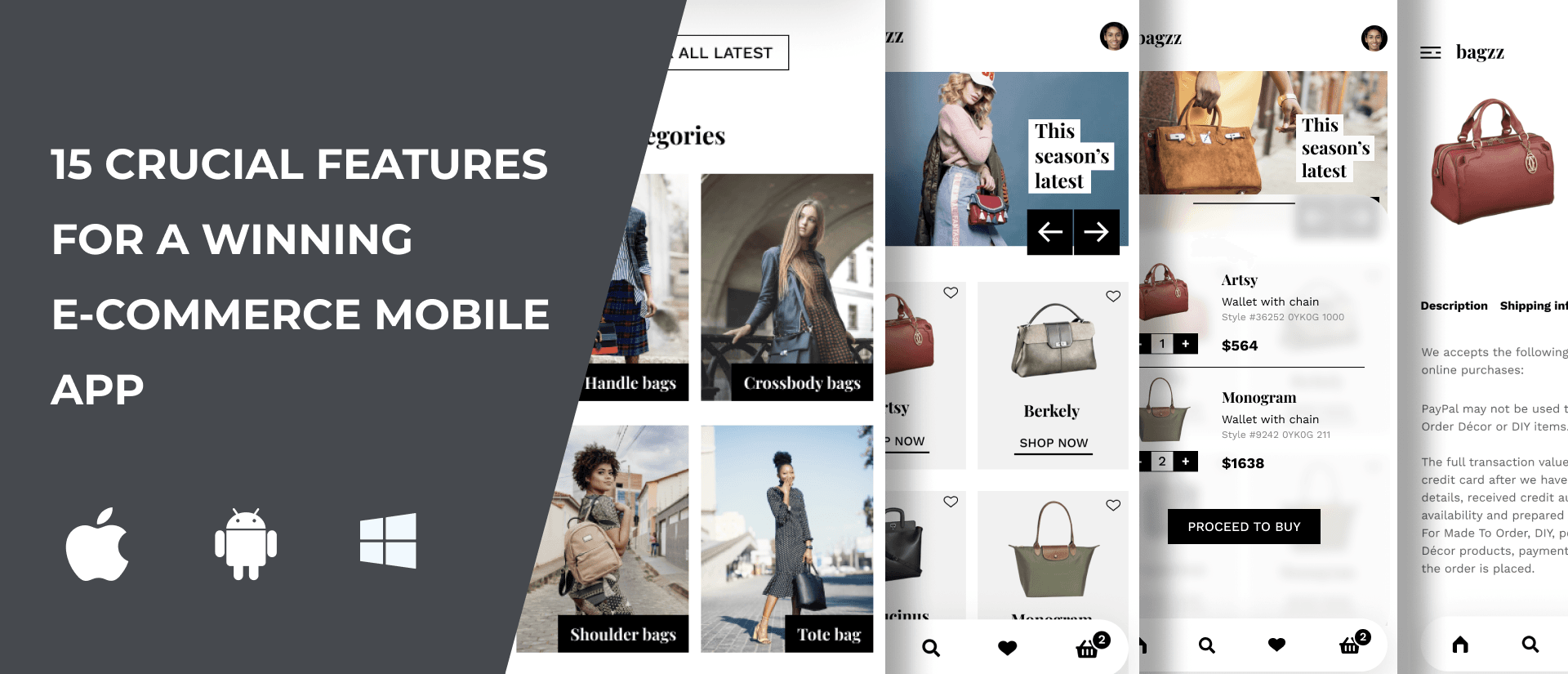
The exponential growth of e-commerce mobile apps has propelled them beyond mere transactional tools, transforming them into indispensable companions for modern consumers. As the competition intensifies among e-commerce giants, the battle for supremacy hinges significantly on the ecommerce app features that these mobile apps offer. Just how much are mobile apps driving e-commerce growth? We’ll unveil the eye-opening numbers. Mobile commerce already accounts for a whopping 31% of all retail e-commerce sales in the United States, and that number is projected to grow to 53% by 2025. Conversion rates from mobile apps are three times higher than mobile sites, and mobile shoppers spend twice as much money as other customers. When developing an e-commerce mobile app, it’s crucial to carefully consider the e-commerce mobile app features that align with your business goals and customer needs. But be aware e-commerce mobile apps are not equal. So, what is the difference?
This article embarks on a journey to unravel the best-in-class features that set the most successful e-commerce mobile apps apart. From seamless user interfaces to cutting-edge augmented reality experiences, we explore how these features are revolutionizing the way consumers engage with their favourite brands. As we navigate the digital marketplace, our focus will be on uncovering the key elements that contribute to an unparalleled user experience, making certain apps rise to the top of the e-commerce echelon.
These features are non-negotiable these days and if you are looking to build an e-commerce app you have to have these. We are now going to deep dive in dissecting each feature that enhances user satisfaction, streamlines transactions, and creates a shopping experience that goes beyond the ordinary. In this exploration of digital innovation, we shed light on the forefront of e-commerce, where features aren’t just functionalities but the building blocks of a new era in online shopping.
Top 15 e-commerce mobile app features
1.) One Click Registration and Login
Login and registration is the gateway to any e-commerce app. Striking the right balance between user convenience and robust security measures is paramount in ensuring a seamless onboarding process. First and foremost, simplicity is key.
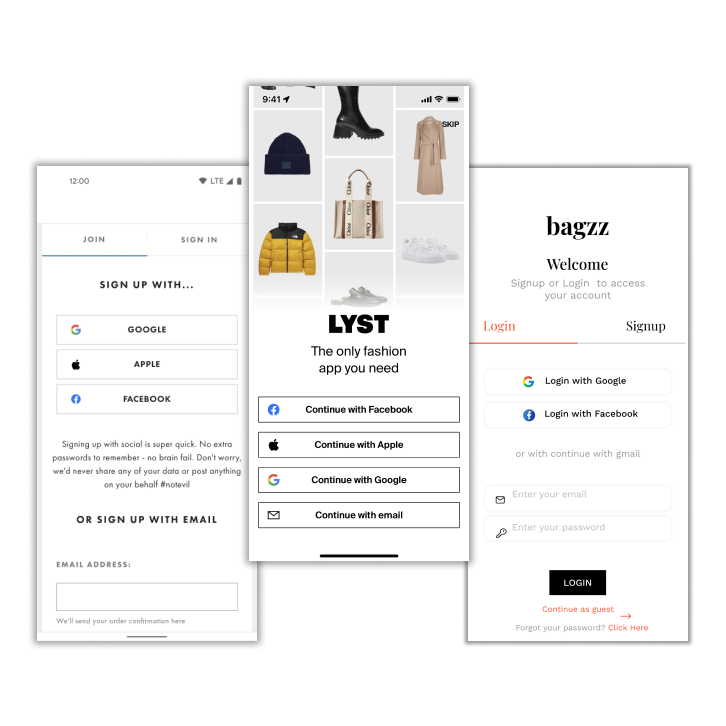
E-commerce apps should prioritize a straightforward and user-friendly registration process, minimizing the number of required fields while collecting essential information. The use of social media logins or single sign-on options can expedite the registration process, offering users a hassle-free entry into the platform. Use popular social logins such as Google or Facebook to cover majority of the targeted audience.
Implementing robust authentication measures, such as two-factor authentication, adds an extra layer of protection to user accounts, safeguarding sensitive information. A “remember me” feature should be provided to save user details for faster login sessions.
Remember a well-crafted onboarding experience not only ensures user retention but also sets the stage for a lasting and mutually beneficial relationship between consumers and the e-commerce platform.
2.) Product Search Engine
A robust product search engine can be listed as the most important out of all the e-commerce mobile app features. It is the heartbeat of any successful e-commerce platform, dictating the ease with which users can discover and acquire desired items. In the realm of e-commerce, where product catalogues can be vast and diverse, an effective search engine is crucial for delivering a seamless and satisfying shopping experience.
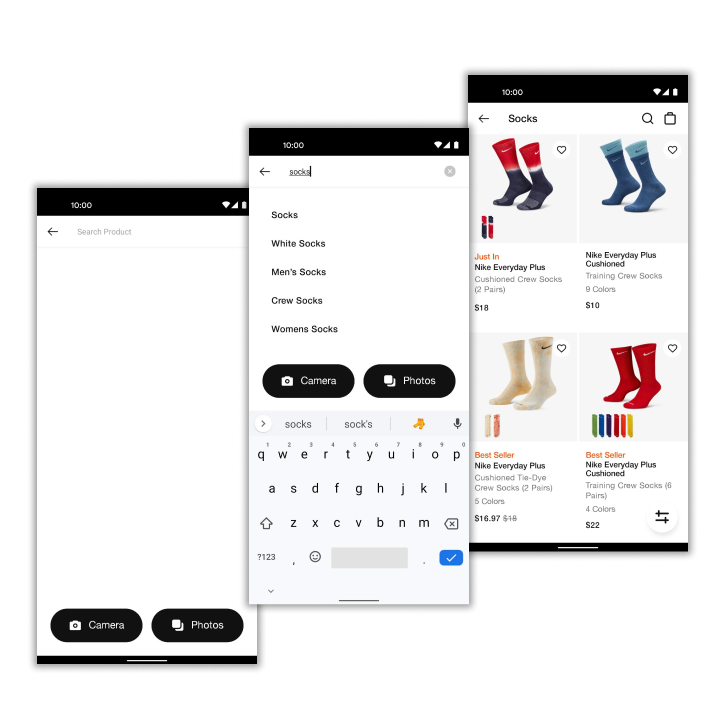
Firstly, intuitive search functionality is paramount. Implementing auto-suggestions, predictive text, and a responsive search bar accelerates the user’s ability to find products effortlessly. Incorporating natural language processing capabilities further refines search results, enabling users to input queries in a manner that feels conversational and familiar.
In addition to text-based search, visual search capabilities are increasingly becoming indispensable. Leveraging image recognition technology, users can simply upload a photo or take a snapshot to find visually similar products, enhancing the overall search experience and catering to users who may struggle to articulate their search queries.
Filtering and sorting options play a pivotal role in empowering users to narrow down their search results based on specific criteria such as price range, brand, size, or color. Moreover, incorporating machine learning algorithms that adapt to user preferences over time enhances the accuracy of search results, providing a more personalized and relevant shopping journey.
3.) Guest Checkout
Guest checkout provides a swift and straightforward entry point for spontaneous shoppers who seek a quick and hassle-free transaction. During the guest checkout process, it’s essential to collect only the most necessary information. Requesting minimal details, such as shipping address, payment information, and contact details, streamlines the process, reducing friction and enhancing the overall speed of the transaction. Offering the option for users to save their information for future purchases can further incentivize account creation without impeding the immediate checkout process.
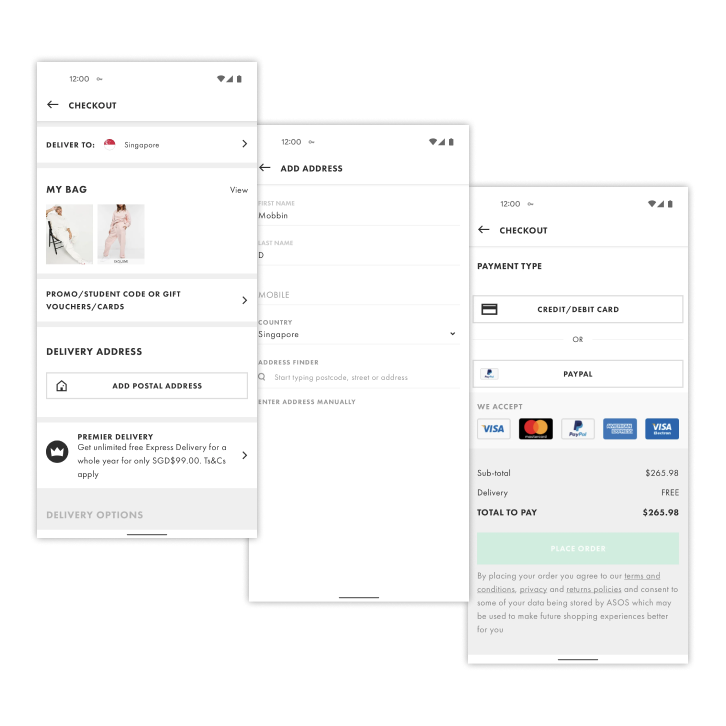
Additionally, transparency is crucial. Clearly communicating the benefits of creating an account, such as order tracking, personalized recommendations, and exclusive promotions, can encourage users to consider account registration while still allowing them the freedom to proceed as guests. Security remains a top priority, even in guest checkout scenarios. Employing robust encryption and secure payment gateways instils confidence in users, reassuring them that their information is handled with the utmost care.
An effective guest checkout is a must have feature that allows e-commerce platforms can cater to a diverse range of users, fostering positive impressions and encouraging both immediate and potential future transactions.
4.) Detailed Product Section
Out of all the ecommerce app features a detailed product section serves as a critical component, acting as the virtual showroom where users make informed purchasing decisions. A good detailed product section provides comprehensive information about the product, including specifications, features, sizing guides, and customer reviews. This wealth of information empowers users with the knowledge needed to make informed choices, reducing uncertainties and minimizing the likelihood of post-purchase dissatisfaction.
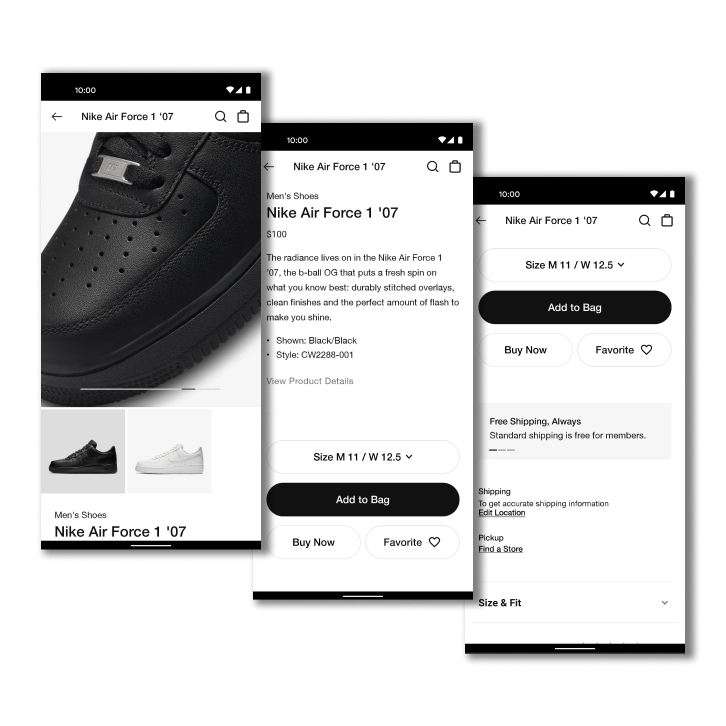
An awesome detailed product section goes beyond the basics, incorporating high-quality images or videos that showcase the product from multiple angles, allowing users to visualize and assess it more effectively. Interactive elements, such as zoom and 360-degree views, further enrich the user experience, providing a virtual touch-and-feel aspect to online shopping.
Effective cross-selling and upselling opportunities can also be integrated within the detailed product section, suggesting related items or complementary products that enhance the user’s shopping journey and potentially increase the average order value.
Effective cross-selling and upselling opportunities can also be integrated within the detailed product section, suggesting related items or complementary products that enhance the user’s shopping journey and potentially increase the average order value.
5.) Order Placement and Checkout
Order Placement and Checkout Section in e-commerce apps stands as a mission-critical feature, representing the culmination of the user’s journey and the gateway to completing a transaction. It is not only a must-have but also a focal point where user experience, security, and convenience converge. A streamlined and efficient checkout process is imperative in preventing cart abandonment and ensuring a positive user experience. A good checkout section should be designed to minimize steps, providing a clear and intuitive flow for users to input shipping details, select payment options, and review their order before finalizing the purchase.
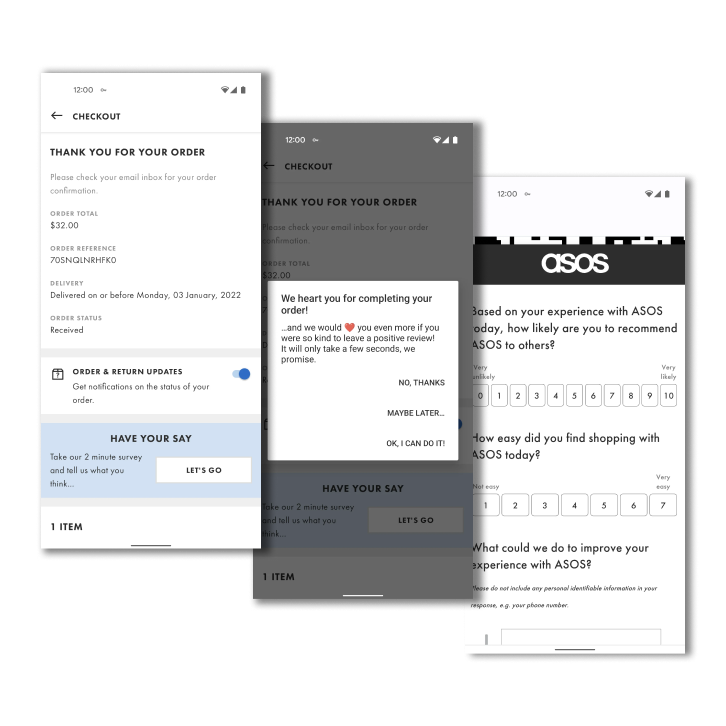
A well-designed Order Placing and Checkout Section also includes transparent information regarding shipping costs, delivery times, and applicable taxes. Clear communication at this stage helps in managing customer expectations and eliminates any potential surprises during the final stages of the transaction.
Moreover, the inclusion of order summaries and confirmation emails adds an extra layer of assurance for users, providing a comprehensive overview of their purchase and facilitating easy reference for future inquiries. Incorporating secure payment gateways is among the essential e-commerce mobile app features to build trust and ensure seamless transactions for your customers.
6.) Wishlist
Wishlist is one of those ecommerce app features that allows users to curate a list of desired items they may not be ready to purchase immediately but wish to keep track of or revisit later. A well-implemented Wishlist Section serves as a powerful tool for customer retention. It enables users to create a personalized shopping list, facilitating a seamless transition from product discovery to eventual purchase. By providing the option to save items for later, the Wishlist Section caters to the diverse needs and preferences of users, encouraging them to return to the app when ready to make a buying decision.
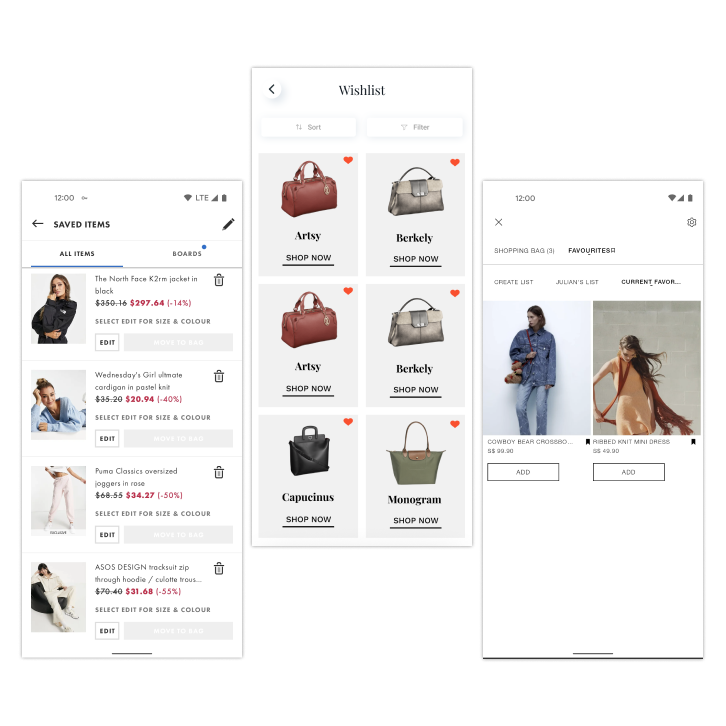
Furthermore, the Wishlist Section acts as a valuable data source for e-commerce platforms, offering insights into customer preferences and popular products. This information can be leveraged for targeted marketing efforts, personalized recommendations, and strategic inventory management.
7.) Personalization
Personalization in e-commerce apps is a must-have feature because it caters to the unique preferences and behaviors of individual users, creating a tailored and engaging shopping experience. This not only increases customer satisfaction but also plays a pivotal role in driving conversions and fostering long-term customer loyalty.
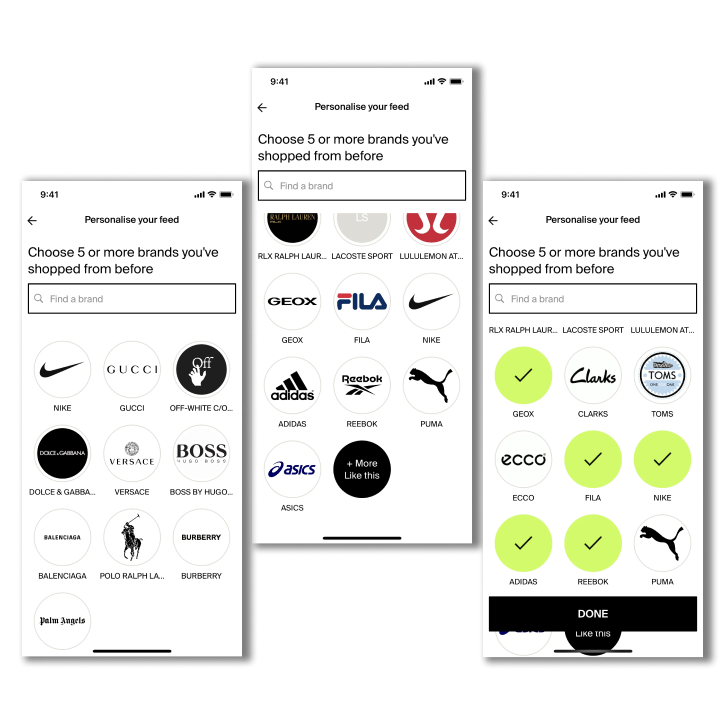
One of the key benefits of personalization is enhanced user engagement. By analyzing user data such as past purchases, browsing history, and preferences, e-commerce apps can deliver personalized product recommendations. These recommendations create a curated shopping experience, saving users time and effort in finding products that align with their tastes.
Another crucial aspect of personalization is a customized user interface. E-commerce apps can adapt their layouts, content, and promotions based on user behavior. For example, showing recently viewed items, highlighting personalized deals, or tailoring the homepage to reflect a user’s interests can significantly improve the overall user experience.
Dynamic pricing is another effective personalization feature. By considering factors such as a user’s location, purchase history, or loyalty status, e-commerce apps can display personalized pricing or exclusive discounts. This not only incentivizes purchases but also makes users feel valued and appreciated.
Personalized communication is integral to creating a connection with users. Sending targeted emails, push notifications, or in-app messages that reflect the user’s preferences, abandoned carts, or upcoming promotions helps maintain engagement and keeps the user informed about relevant updates. Algorithmic and personalized recommendations, driven by machine learning algorithms, are essential e-commerce mobile app features to boost upselling and cross-selling opportunities based on user preferences.
Ideally personalization should also extend to the post-purchase experience. Recommending complementary products based on past purchases, providing personalized order tracking, or offering exclusive post-purchase deals encourages customers to return to the app for future shopping needs.
Relatively new out of all the ecommerce app features, personalization should seamlessly extend across devices. A user’s preferences and interactions should be synchronized across platforms, ensuring a consistent and personalized experience whether they are using the app on a mobile device, tablet, or desktop.
8.) Loyalty Points
The Loyalty Rewards Section in e-commerce apps stands as a pivotal and must-have feature that not only incentivizes customer retention but also encourages a sense of appreciation and exclusivity. This feature is instrumental in cultivating long-term relationships with customers, driving repeat business, and distinguishing the app in a competitive market.
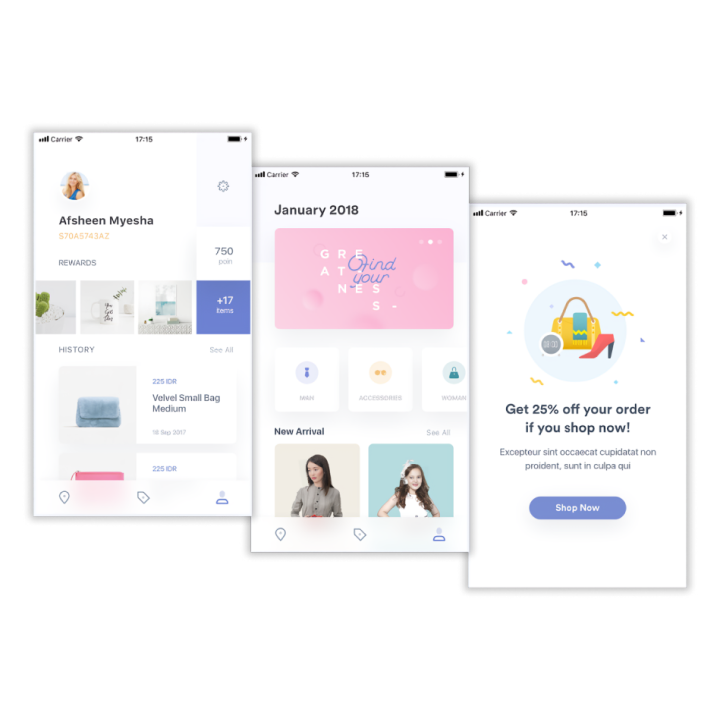
One key reason for the importance of a Loyalty Rewards Section is its ability to create a sense of value and appreciation for customer loyalty. By offering rewards, discounts, or exclusive perks to repeat customers, e-commerce apps can demonstrate a commitment to their clientele, encouraging them to return for future purchases. This not only enhances customer satisfaction but also contributes to a positive brand perception.
An ideal loyalty rewards section incorporates several features to maximize its effectiveness. One of the most popular way to incorporate loyalty is using the points-based system. Implementing a points-based reward system involves features where users accumulate points with each purchase encourages repeat business.
These points can be redeemed for discounts, free products, or other exclusive benefits.
This can further be enhanced to a tiered loyalty program. This allows graduated loyalty tiers based on a customer’s spending or engagement level offering a sense of progression and additional rewards as users move up the ranks. This encourages users to strive for higher tiers, increasing their loyalty and lifetime value.
A few e-commerce apps also use personalized rewards. They tailor rewards based on individual customer preferences, purchase history, or demographics. Another way to incorporate loyalty is using exclusive access. The app provides loyalty members with early access to sales, product launches, or special events creating a sense of exclusivity and privilege. You can also recognize and reward customers on special occasions such as birthdays or anniversaries adding a personal touch, reinforcing the relationship and making customers feel valued.
9.) Product Ratings and Reviews
Product ratings and reviews in e-commerce apps as they play a pivotal role in building trust and informing purchase decisions. This feature acts as a valuable resource for potential buyers, providing real-world insights into the quality, performance, and satisfaction associated with a product. An ideal Ratings and Review section incorporates several key features to maximize its effectiveness. Firstly, authenticity is crucial, and the section should actively encourage genuine feedback from verified purchasers, instilling confidence in the reliability of the information. A well-designed review section should allow users to rate products on various parameters and include written reviews, offering a comprehensive view of the product’s strengths and potential drawbacks. Implementing a structured and easy-to-navigate interface that allows users to filter and sort reviews based on relevance, date, or helpfulness ensures that shoppers can efficiently access the most pertinent information. Additionally, incorporating a system for users to mark reviews as helpful or report irrelevant content promotes community engagement and maintains the integrity of the review section.
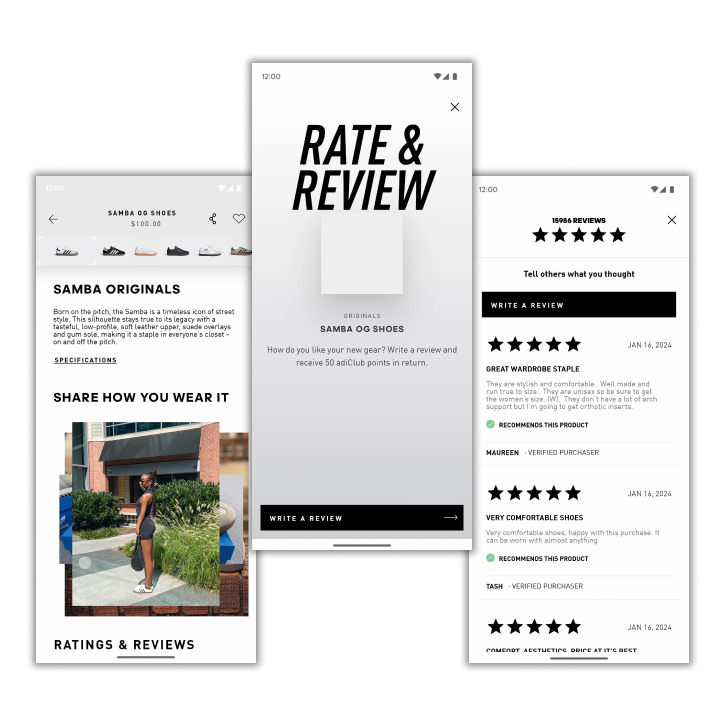
Responding to reviews, whether by the e-commerce platform or the product manufacturer, demonstrates a commitment to customer satisfaction and addresses concerns in a transparent manner. Integration with social media platforms for sharing reviews, coupled with features like embedded images or videos, adds a multimedia dimension to the feedback, providing potential buyers with a more immersive and authentic understanding of the product. The user generated content carries more weightage than any branding or endorsements from the company itself and thus is a much required feature these days. Reviews and ratings, as e-commerce mobile app features, contribute to building credibility and aiding customers in making informed purchase decisions based on others’ experiences.
10.) Shipping and Returns
In the realm of ecommerce, where physical interaction with products is limited, shipping and returns information is the key for many buyers. Transparent shipping options with estimated delivery times empower customers to make informed decisions, while clear return policies alleviate concerns about receiving the wrong size, colour, or damaged item. This reduces cart abandonment and lower purchase decision times when buyer is on the checkout screen. A great shipping and returns section should be a frictionless experience. Offer multiple shipping options with costs and timeframes clearly displayed. Include self-service return initiation within the app, allowing customers to generate return labels and track their shipment’s progress with real-time updates. Remember, the easier the process, the higher the likelihood of returns being completed smoothly.
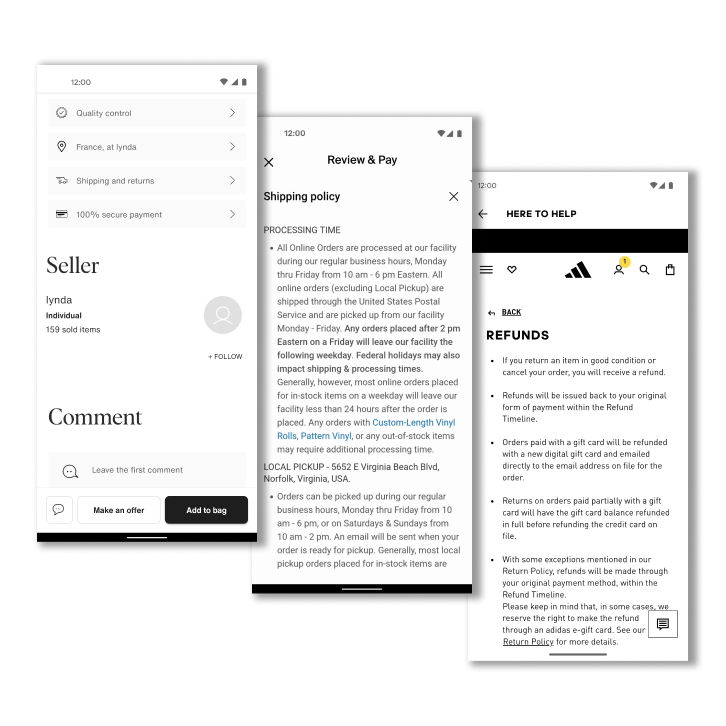
You need to cater to diverse customer needs. Provide varied delivery speeds and locations, including convenient in-store pickup options. Explore flexible return windows catering to various product categories and user preferences. Consider offering free returns for specific items or membership tiers to incentivize purchases. Be upfront about fees associated with shipping and returns. Clearly communicate policies regarding restocking fees, return eligibility, and processing times. Offer easily accessible FAQs and live chat support to address any questions or concerns promptly. Remember, transparency fosters trust and encourages future purchases.Consider partnering with eco-friendly shipping providers and offering carbon offset options to align with environmentally conscious consumers. Explore sustainable packaging solutions and encourage customers to reuse them for returns. Showcasing your commitment to sustainability enhances your brand image and resonates with eco-conscious buyers.
As per research this is one of the most crucial one out of all the ecommerce app features. By prioritizing ease, transparency, and flexibility in your shipping and returns section, you’ll not only remove purchase barriers but also have happier customers and a thriving ecommerce business.
11.) Business Invoices
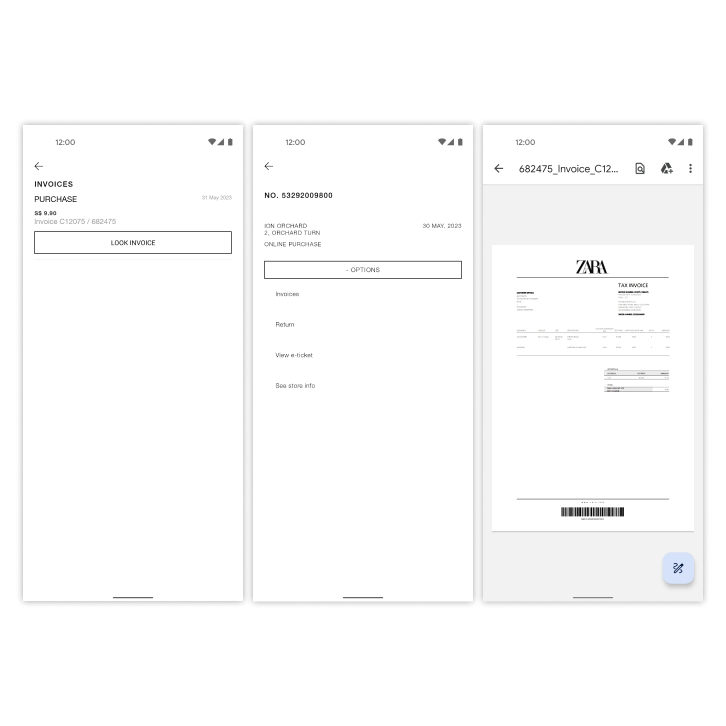
The inclusion of business invoices in e-commerce apps is crucial for both sellers and buyers, as it streamlines financial transactions and facilitates efficient record-keeping. This must-have feature is essential for businesses, providing a systematic and organized way to manage transactions, track sales, and maintain a clear record of financial activities. You should offer customizable invoice templates that allow sellers to include essential details such as product descriptions, quantities, prices, and applicable taxes. Integration with various payment gateways ensures that the payment status is clearly indicated on the invoice, reducing ambiguity and streamlining reconciliation processes. To enhance professionalism and trust, the invoice section should support the inclusion of business logos, contact information, and terms of service. Automation features, such as automatic generation of invoices upon successful transactions, not only save time but also reduce the likelihood of errors. Additionally, the ability to generate downloadable and printable invoices in various formats, such as PDF or CSV, facilitates easy record-keeping and accounting for both sellers and buyers. An organized and searchable invoice history, allowing users to quickly retrieve past transactions, is fundamental for efficient financial management. Lastly, integration with accounting software or tools further streamlines the reconciliation process, providing businesses with a comprehensive overview of their financial health.
12.) Live Chat Support
When it comes to online shopping, instantaneous support is crucial for overcoming roadblocks and converting hesitant buyers. That’s where live chat support in your ecommerce app shines. And here’s why it’s a must-have:
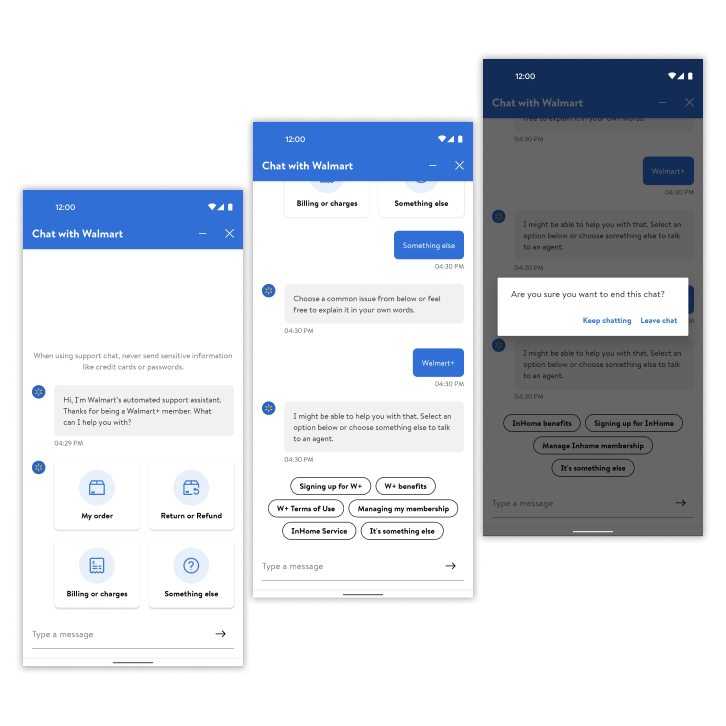
- Quicker answers, higher conversions: Customers expect immediate solutions. Live chat allows them to get quick answers to product questions, address concerns, and receive personalized guidance, all within the app. This reduces friction in the buying journey, leading to higher conversion rates and increased sales.
- Convenience is king: Imagine facing an issue while browsing on your phone and having to hunt for contact information, fill out forms, or wait on hold. Live chat eliminates this frustration. It’s readily available within the app, offering effortless communication and building customer satisfaction.
- Personalized service: Forget generic responses. Live chat allows agents to access customer information and offer tailored support. They can address individual needs, recommend relevant products, and even proactively offer assistance based on browsing behavior.
- Real-time problem-solving: Unlike emails or tickets, live chat enables immediate issue resolution. This minimizes frustration and empowers agents to offer solutions in real-time, leading to happier customers and fewer abandoned carts.
- Data-driven insights: Beyond resolving issues, live chat conversations offer valuable data. Analyze common questions and pain points to improve product information, user experience, and marketing strategies. This data-driven approach leads to continuous improvement and better customer experiences.
- Some quick tips: Offer chat pop-ups based on browsing behaviour or cart abandonment. Be present during peak hours and offer quick reply times. Cater to a wider audience with language options. Offer visual assistance for complex issues.
Allow offline messaging and email integration for continued help. Offer self-service options for quick answers to common questions. Multi-language support is an inclusive feature of e-commerce mobile apps, breaking language barriers and making the app accessible to a global audience.
13.) Visual Search
Visual search in ecommerce apps unlocks a powerful tool for both customers and businesses. With visual search your customers will not struggle with keyword descriptions. Customers can simply snap a picture of an item they like (clothing, furniture, even a competitor’s product) and instantly find similar or exact matches within your app. This eliminates guesswork and frustration, leading to faster discovery and higher purchase intent.
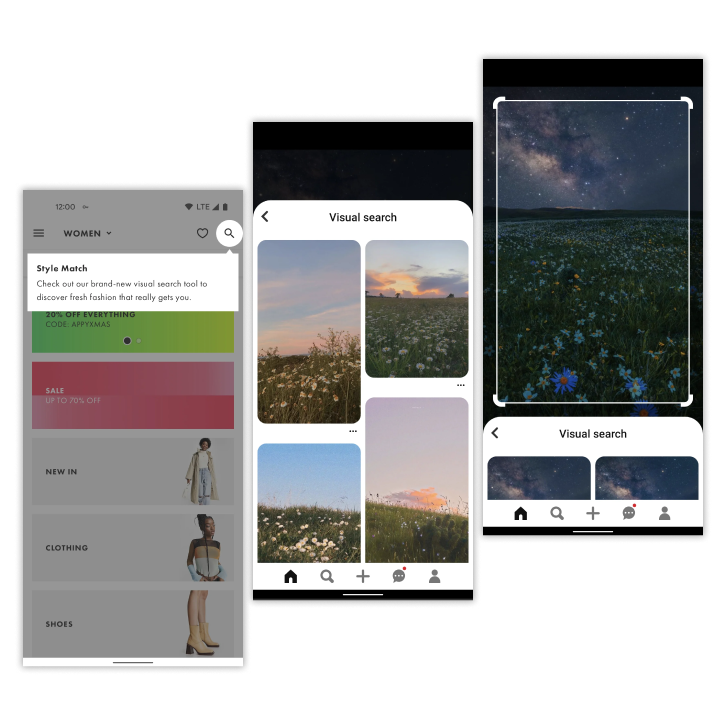
Visual search fuels inspiration. Users can upload pictures of styles they admire, colour palettes they love, or even their current outfits to discover complementary products and create new looks. Describing specific details like intricate patterns or unique cuts through text can be challenging. Visual search eliminates this barrier. Users can capture specific features they desire, enabling the app to identify similar products with high accuracy, even amidst vast catalogues.
Visual search expands beyond individual items. Imagine customers uploading a picture of their living room and finding furniture pieces that seamlessly blend in. This spatial search capability personalizes the shopping experience and increases conversion rates.
It is tricky to perfect visual search so ensure the technology delivers relevant matches across various product categories, styles, and brands. You should allow users to upload photos from their gallery, camera, or even social media for seamless integration. You can offer filters based on color, style, brand, and price to refine search results and cater to specific needs. And finally integrate visual search results seamlessly into your product pages for easy exploration and purchase.
14.) In Store Inventory
The lines between online and offline shopping are blurring. And that’s where in-store inventory features in ecommerce apps come in, offering a win-win for both customers and businesses. Imagine browsing online, finding the perfect item, and realizing it’s gathering dust in a nearby store! In-store inventory allows customers to check real-time stock levels for specific items at chosen locations. This eliminates wasted trips and the frustration of online-only availability, offering unparalleled convenience.
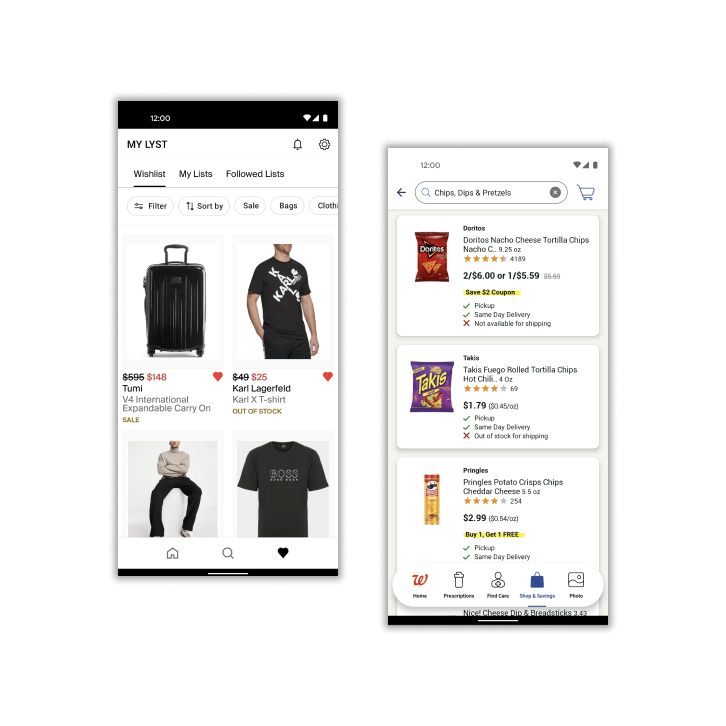
Customers get flexibility in how they receive their purchases. They can opt for in-store pickup, avoiding shipping costs and waiting times. This caters to immediate needs and impulsive buyers, driving conversion rates. Customers can verify size and color availability before purchase, leading to fewer abandoned carts and increased confidence in online shopping. Efficiently integrating features of an e-commerce mobile app with in-store inventory helps streamline order fulfillment processes, minimizing discrepancies and ensuring a seamless online-to-offline shopping experience.
15.) Complete the look
One of the latest e-commerce mobile app features in vogue is “complete the look”. It acts like a virtual stylist, seamlessly suggesting complementary items, and their impact goes beyond aesthetics.
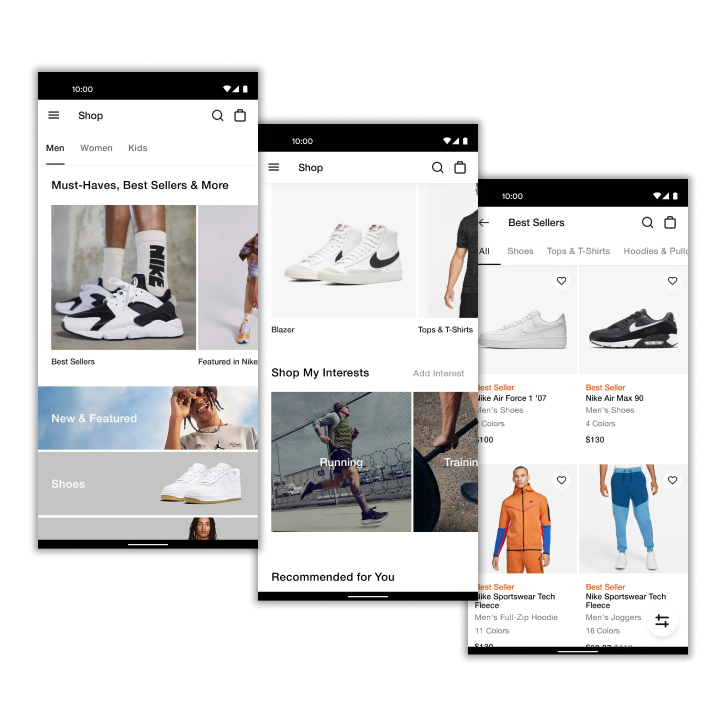
Imagine browsing a dress and seeing perfectly paired shoes, jewelry, and accessories. The temptation to “complete the look” adds them to the cart, driving higher average order values. Again, struggling to find matching items can frustrate customers and lead to cart abandonment. This feature eliminates guesswork, guiding them towards a cohesive outfit, improving conversion rates.
Customers stumble upon hidden gems they might not have found otherwise. This sparks new ideas and encourages them to explore beyond their initial intent, leading to higher sales.
Read More-
10 Cardinal E-commerce Ux Mistakes You Cannot Afford To Make
18 Strategies To Implement When Building A Custom Ecommerce Website
FAQs
Q: How can I improve my e-commerce app’s user experience and conversion rate?
To enhance your e-commerce app’s user experience and conversion rate, prioritize intuitive navigation, streamline the checkout process, employ responsive design, offer personalized recommendations, and gather user feedback for continuous improvement.
Q: What are some common mistakes to avoid when developing an e-commerce mobile app?
Avoid common e-commerce app development mistakes such as neglecting mobile optimization, complex navigation, insufficient security measures, slow loading times, not building essential ecommerce app features and overlooking user testing. Regularly update your app to fix bugs and improve functionality based on user feedback.
Q: How can I make my e-commerce app stand out from the competition?
Differentiate your e-commerce app by focusing on a unique selling proposition, providing exceptional customer service, optimizing site performance, incorporating innovative features, implementing a visually appealing design, and engaging customers through social media and personalized marketing strategies.
Q: What are the best practices for promoting and marketing an e-commerce mobile app?
Effectively promote and market your e-commerce mobile app by leveraging social media platforms, optimizing app store listings with compelling visuals and keywords, implementing email marketing campaigns, offering exclusive promotions, collaborating with influencers, and continuously analyze user data within the features of the e-commerce mobile app to refine marketing strategies and achieve optimal results.
