7 Golden Scalability Rules to Engineer in Your Product
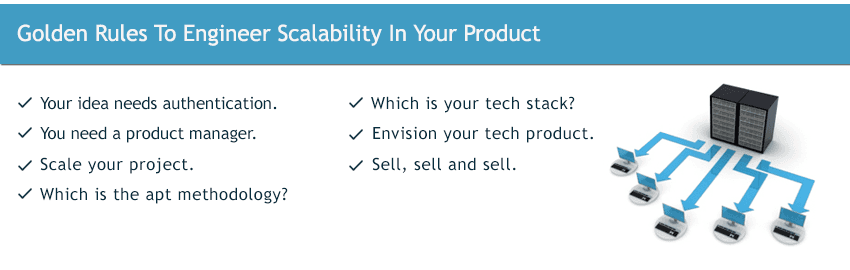
“The true success of a digital product is not measured at launch, but in how well it scales with growth.” In today’s rapidly evolving digital ecosystem, launching a product has become easier than ever. However, building a product that can sustain growth, handle increasing user demand, and maintain performance is where most businesses struggle. Many startups experience early traction but fail when their systems cannot support scale.
Scalability is not just a technical decision. It is a strategic foundation that determines whether your product will grow smoothly or collapse under pressure. This is why businesses today increasingly rely on experienced mobile app development companies that understand how to design systems for long-term scalability.
In this guide, we explore seven essential rules that help you engineer scalability into your product while aligning with modern development practices.
Understanding Scalability in Product Development
Scalability refers to the ability of a system to handle increasing workloads without compromising performance. As your user base grows, your product should be able to process more data, handle more requests, and deliver a consistent experience.
This is where structured custom software development services play a critical role. Instead of building systems that work only for the present, scalable development focuses on preparing for future growth.
A well-scaled product ensures:
- Smooth user experience
- Faster performance under load
- Reduced downtime
- Long-term cost efficiency
Scalability is not just about infrastructure. It includes architecture, code quality, and system design.
1. Validate Your Idea Before You Build
Every scalable product starts with a validated idea. Many businesses fail because they build products based on assumptions rather than real user needs.
Before development begins, it is important to understand your target audience, identify their pain points, and test whether your solution provides real value.
This is where MVP development services become essential. By building a minimum viable product, businesses can test their idea with minimal investment and gather real user feedback.
An MVP allows you to:
- Launch quickly
- Validate demand
- Reduce development risk
- Improve based on real data
Companies like Dropbox and Airbnb used MVPs to validate their ideas before scaling globally.
A validated idea ensures that your product has the potential to grow before you invest in scaling it.
2. Build with Clear Product Ownership and Strategy
Scalability is not just about technology. It is about clarity in execution.
A product without direction often becomes overloaded with features, making it difficult to scale. Strong product ownership ensures that every feature aligns with the overall vision.
Businesses often collaborate with a product development company to ensure structured execution, proper feature prioritization, and alignment between business goals and technical implementation.
When a product is built with a clear roadmap, it evolves in a structured way. This reduces complexity and makes it easier to scale over time.
3. Design for Scalability from Day One
One of the biggest mistakes startups make is delaying scalability planning. They focus on building quickly and assume they can fix scalability issues later.
However, redesigning a system after growth begins is expensive and time-consuming.
Modern systems are built using flexible and scalable infrastructure. Many companies today adopt cloud application development services to ensure that their products can dynamically scale based on demand.
Cloud-based systems allow businesses to:
- Scale resources automatically
- Handle traffic spikes efficiently
- Optimize infrastructure costs
Designing for scalability early ensures that your product can grow without major disruptions.
4. Adopt a Flexible Development Approach
The development methodology you choose plays a significant role in scalability.
Agile development has become the preferred approach because it allows teams to build in iterations, adapt to feedback, and continuously improve the product.
Unlike rigid development models, Agile enables businesses to:
- Launch faster
- Improve continuously
- Adapt to changing user needs
This flexibility is essential for scalability because it allows your product to evolve without major structural changes.
5. Choose the Right Technology Stack
Technology decisions directly impact your product’s ability to scale.
A well-chosen tech stack ensures that your system can handle increasing workloads while maintaining performance.
This is why businesses often partner with a mobile app development company that understands how to select the right technologies based on project requirements.
A strong tech stack includes:
- Scalable backend systems
- Responsive frontend frameworks
- Reliable cloud infrastructure
- Efficient database design
Choosing the wrong technologies can lead to performance issues and limit your growth potential. Choosing the right ones creates a strong foundation for scalability.
6. Define and Communicate a Clear Product Vision
A scalable product requires alignment across teams. Developers, designers, and stakeholders must all understand the product’s goals and direction.
Clear communication ensures that:
- Features are prioritized correctly
- Development stays focused
- Complexity is minimized
When teams understand the long-term vision, they can make better decisions that support scalability.
This alignment becomes even more critical when working with external teams or scaling development operations.
7. Launch Early and Learn Continuously
Waiting for a perfect product often delays growth. Instead, successful businesses launch early and improve based on feedback.
Early launches help you understand:
- User behavior
- System performance under real conditions
- Feature effectiveness
With continuous feedback, you can refine your product and improve scalability over time.
Scalability is not a one-time effort. It is an ongoing process that evolves with your product.

Advanced Considerations for Scalable Systems
As your product grows, additional strategies become important. Modern applications rely on distributed systems, load balancing, caching, and performance monitoring to maintain efficiency.
Scalable systems are designed to handle failures gracefully. Instead of breaking under pressure, they recover quickly and continue functioning.
Continuous monitoring allows businesses to identify bottlenecks and optimize performance before issues impact users.
These practices ensure that your product remains reliable even as it scales.
How Promatics Technologies Builds Scalable Products
At Promatics Technologies, scalability is integrated into every stage of product development. From idea validation to architecture design and performance optimization, the focus is on building systems that grow seamlessly.
By combining deep technical expertise with strategic thinking, Promatics helps businesses create products that are not only functional but also future-ready.
Whether it is developing MVPs, designing scalable architectures, or selecting the right technology stack, the approach is always aligned with long-term growth.
Conclusion
Scalability is the backbone of every successful digital product. It defines how well your system performs, adapts, and grows as your business expands.
When you validate your idea early, build with clarity, choose the right technologies, and continuously evolve your product, you are not just creating an application — you are building a system designed for long-term growth.
The takeaway is simple: a product built with scalability in mind does not struggle with success. It accelerates because of it.
If you are planning to build a digital product, now is the time to prioritize scalability from day one. The right approach can be the difference between a product that stalls and one that scales effortlessly.
Looking to build a scalable, future-ready product? Connect with the experts at Promatics Technologies and turn your idea into a high-performing digital solution.
FAQs
1. What is scalability in product development?
Scalability is the ability of a system to handle increasing users, data, and workload without performance issues.
2. Why is scalability important for startups?
Scalability ensures that a product can grow without crashing or slowing down, which is essential for user experience and business success.
3. When should scalability be planned?
Scalability should be planned from the beginning of product development to avoid costly changes later.
4. What technologies help in scalability?
Cloud platforms, microservices architecture, and scalable databases play a key role in building scalable systems.
5. Can scalability be added later?
While possible, it is expensive and complex. It is always better to design for scalability from the start.
