From Tradition to Transformation: 10 Dating App Ideas to Expand Your Horizons in 2023
Dating apps: Near Future and Beyond
Along with the tech influx in our lives, it is only natural that it took the dating world by storm. With the vivid convenience and excitement that they bring to a user’s experience, dating apps are a new favorite on the market. Thus, when it comes to dating apps, the odds remain in favor of the online dating business. Revenue in the Online Dating segment amounts to US$2.98bn in 2023 with an annual growth rate (CAGR 2023-2027) of 3.28%, states a Statista report
It is the business of love, and it is all set to bloom in the times to come. Investors are taking notice of the market in its bloom as analysts estimate the global online dating market could cross $12 billion in two-three years from now. Add to its bright prospects, tailwind factors like untapped markets, the launch of new apps based on innovative dating app ideas, increasing spending power of the millennials, delay in life milestones as well as working longer hours, the future seems bright for the online dating industry on the whole.
How Online Dating App Businesses Bring Home Revenues?
If you are still wondering, we would like to inform you that dating apps do make money and loads of it. Broadly speaking, the business model for dating apps falls into three broad categories namely:
a.) Subscription Plans
The subscription model allows users to use the app for a fee. It is usually for a set period of time (usually a week or a month). The payments remain typically recurring and become a higher barrier to entry for use. However, people value dating apps with subscription-based models because these apps are focused on finding people a serious relationship.
b.) Freemium Model
The freemium model allows users to sign up and use the basic functionalities of the app for free. The app generates revenue either through advertising or unlocking enhanced features for a fee. In the absence of a barrier to entry, freemium dating apps are highly scalable and enjoy a loyal and active user base until they introduce paid features. In-app advertising is often used to generate shared revenue with advertisers from clicks, views or transactions.
c.) In-app Purchases
Though basic membership is free in this type of model, users often pay for enhanced features. This model is perfect for turning any dating app ideas into big businesses which intend to build its user base and loyalty before turning on the monetization engine.
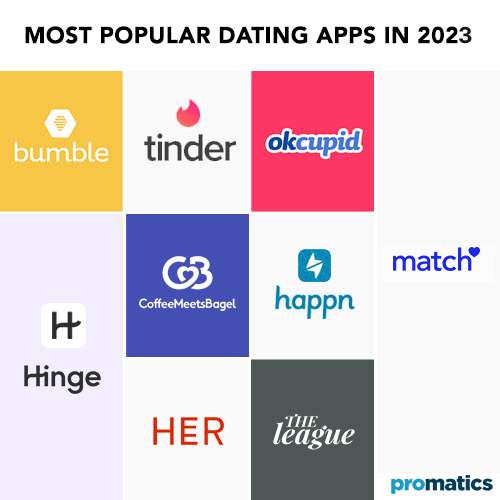
Top Dating Apps of 2023
Bumble
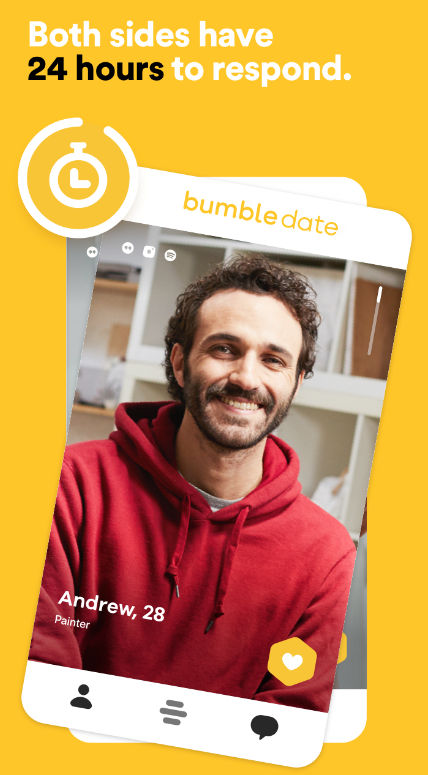
Bumble is a dating app with a strict timer that requires women to message first. If they fail to get a message back within 24 hours, the recipient of the message loses the potential dates.
Tinder
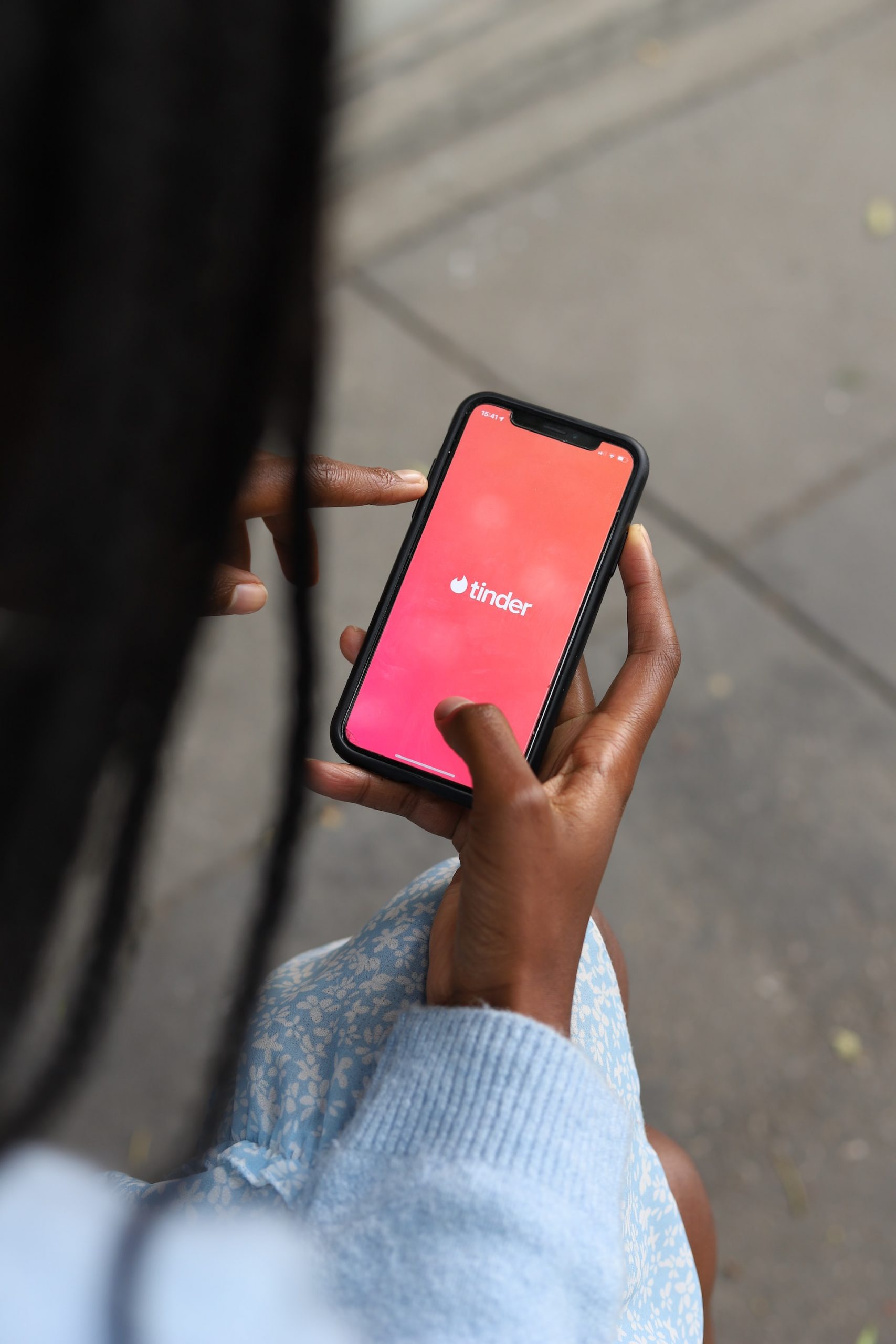
Tinder is a go-to dating app for a hookup, friendships and everything else. It features brief profiles to streamline decision making.
OkCupid
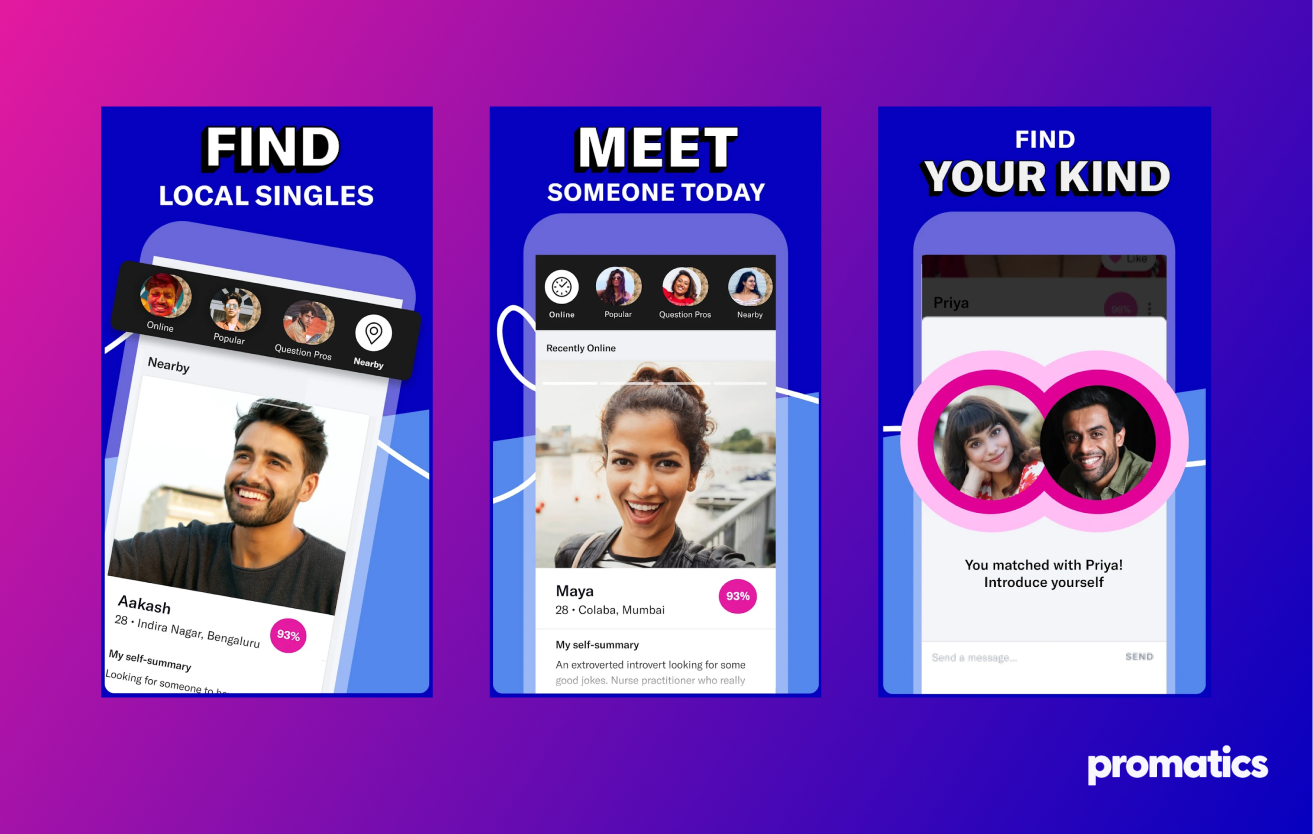
OkCupid features lengthy profiles and churns out reasonable match/enemy percentage ratio on profiles to help people assess compatibility based on interests.
Hinge
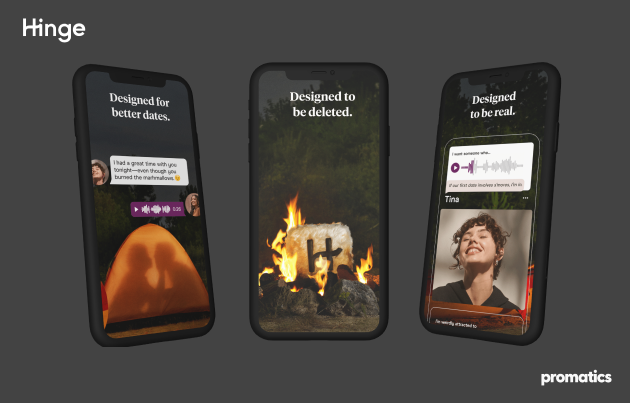
Hinge focused on standard connections and mutual friends that you and your potential partner shared on social media. With engaging user profiles, it helps users find serious relationships.
Coffee Meets Bagel
Get better-quality matches with coffee meets bagel. The app suggests ice-breakers for first messages and features detailed profiles.