How to Turn Your Shopify Store Into a Mobile App Successfully

TL;DR
- A Shopify mobile app helps increase customer engagement, retention, and repeat purchases.
- If most of your traffic comes from mobile devices, it may be time to convert your Shopify store to mobile app.
- Mobile apps offer advantages such as push notifications, personalized recommendations, loyalty programs, and faster checkout experiences.
- You can choose from app builders, cross-platform app development, or custom app development based on your goals and budget.
- Key features include secure payments, real-time order tracking, customer support, and multiple payment options.
- Emerging trends like AI-powered shopping, AR experiences, and predictive commerce are reshaping mobile commerce.
What if your customers could access your store with a single tap instead of opening a browser, searching for your website, and navigating through multiple pages? That’s exactly why more ecommerce brands are turning their Shopify store to mobile app strategies into a competitive advantage.
Today’s shoppers expect speed, convenience, and personalized experiences. While a Shopify website is essential for attracting customers, a mobile app can help keep them engaged long after their first visit. Features like push notifications, one-tap checkout, loyalty rewards, personalized recommendations, and real-time order updates make it easier to build stronger customer relationships and encourage repeat purchases.
As mobile commerce continues to dominate online shopping, businesses are increasingly investing in Shopify mobile app development to create seamless shopping experiences that customers can access anytime, anywhere.
The good news? Turning your Shopify store into a mobile app is easier than ever.
Whether you choose a no-code app builder, cross-platform app development, or a fully customized solution, there are multiple ways to bring your brand closer to your customers.
In this blog, we’ll explore how to convert a Shopify store into a mobile app, the different development options available, key features to include, associated costs, and best practices to help you maximize engagement, retention, and revenue.
Why Convert Your Shopify Store Into a Mobile App?
Mobile commerce has evolved from a convenience into a dominant force in ecommerce. Today, consumers rely on smartphones for everything from product discovery and comparison to purchases and post-purchase interactions. As mobile-first shopping behavior continues to grow, businesses can no longer afford to treat mobile experiences as an afterthought.
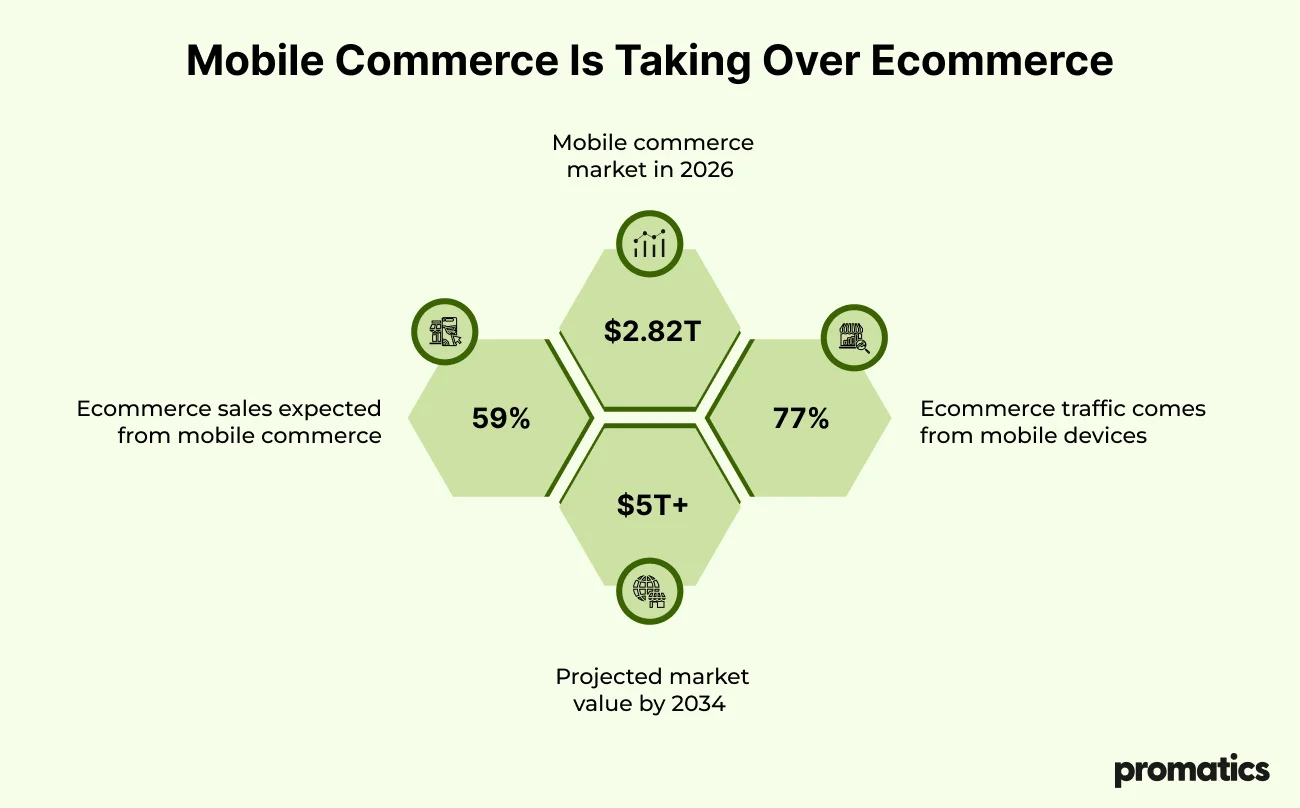
Recent market projections highlight just how significant this shift has become. The global mobile commerce market is expected to grow from $2.82 trillion in 2026 to over $5 trillion by 2034, reflecting the increasing role of smartphones in online shopping journeys.
Several factors are driving this growth:
- Widespread smartphone adoption
- Faster mobile internet and 5G connectivity
- Growing use of digital wallets and mobile payments
- Increased consumer demand for convenient shopping experiences
- The rise of social commerce and app-based purchasing
Modern consumers expect seamless experiences across every touchpoint. They want to browse products, receive personalized recommendations, save items for later, and complete purchases with minimal effort. Mobile apps are uniquely positioned to meet these expectations through features that traditional websites often struggle to deliver.
Industry trends also show a growing preference for mobile shopping apps over mobile websites. Features such as one-click ordering, personalized offers, loyalty rewards, and push notifications help brands create more engaging customer experiences while increasing conversion opportunities. In many cases, app users spend more and shop more frequently than website visitors.
As mobile commerce continues to expand, businesses are increasingly investing in Shopify mobile app development to strengthen customer engagement and drive repeat purchases. Converting a Shopify store to a mobile app is no longer just a competitive advantage. For many ecommerce brands, it is becoming a key strategy for long-term growth in a mobile-first marketplace.
Key Benefits of a Shopify Mobile App
Converting a Shopify store to a mobile app does more than give your business a presence on app stores. It creates opportunities to deliver a faster, more personalized, and more engaging shopping experience that can directly impact customer retention and revenue growth.
Here are some of the biggest benefits of investing in Shopify mobile app development:
Faster Shopping Experience
Speed plays a critical role in ecommerce success. While mobile websites have improved significantly, mobile apps generally provide faster load times and smoother navigation. Customers can browse products, search collections, and complete purchases with fewer delays, creating a more enjoyable shopping experience.
A well-designed ecommerce mobile app can reduce friction throughout the buying journey, helping improve customer satisfaction and conversion rates.
Improved Customer Retention
Acquiring customers is important, but retaining them is often more profitable. Mobile apps keep your brand accessible on customers’ devices, making it easier for them to return and make repeat purchases.
With a dedicated Shopify mobile app, customers don’t need to search for your website every time they want to shop. A single tap can bring them directly into your store, encouraging stronger brand engagement and loyalty.
Personalized Shopping Experiences
Modern consumers expect personalized interactions. Mobile apps allow businesses to tailor product recommendations, promotions, and content based on customer behavior and preferences.
Through custom mobile app development, brands can create highly personalized shopping journeys that increase engagement and help customers discover products that match their interests.
Direct Customer Communication Through Push Notifications
One of the biggest advantages of a mobile app is the ability to send push notifications directly to customers.
Unlike email campaigns that may go unopened, push notifications provide an instant communication channel for:
- New product launches
- Flash sales
- Personalized offers
- Abandoned cart reminders
- Order updates
This feature alone makes Shopify app development services an attractive investment for ecommerce businesses focused on increasing customer engagement and repeat purchases.
Higher Conversion Rates
Mobile apps simplify the purchasing process through features such as saved payment methods, one-tap checkout, personalized recommendations, and streamlined navigation.
By reducing barriers to purchase, a Shopify ecommerce app can help customers complete transactions more quickly and efficiently, leading to higher conversion rates compared to traditional mobile websites.
Stronger Brand Loyalty
A mobile app creates a dedicated space where customers interact directly with your brand. Features such as loyalty programs, exclusive discounts, reward points, and personalized experiences encourage customers to return more frequently.
Businesses investing in Shopify mobile commerce solutions often find that mobile app users become some of their most valuable and loyal customers.
Better Customer Insights
Mobile apps provide valuable data about customer behavior, including browsing patterns, purchase history, engagement levels, and product preferences.
These insights can help businesses make smarter decisions regarding inventory management, marketing campaigns, product recommendations, and customer retention strategies.
When combined with ecommerce app development best practices, this data can significantly improve long-term business performance.
Competitive Advantage in a Mobile-First Market
As mobile commerce continues to grow, customers increasingly expect brands to offer app-based shopping experiences. Businesses that invest in Shopify mobile app development can differentiate themselves from competitors that rely solely on websites.
A mobile app signals innovation, convenience, and a commitment to delivering exceptional customer experiences, helping brands stay competitive in an increasingly crowded ecommerce landscape.
Shopify Website vs Mobile App: What’s the Difference?
Many ecommerce businesses assume that having a mobile-responsive Shopify website is enough to meet customer expectations. While a responsive website is essential, it doesn’t always deliver the same level of convenience, engagement, and personalization as a dedicated mobile app.
When evaluating a Shopify store to mobile app strategy, it’s important to understand how a website experience differs from a dedicated app experience and why businesses are increasingly investing in Shopify mobile app development.
| Feature | Shopify Website | Shopify Mobile App |
| Accessibility | Requires users to open a browser and search for the website | Accessible instantly with a single tap |
| Loading Speed | Depends on browser and internet connection | Faster and optimized for mobile devices |
| User Experience | Limited by browser capabilities | Designed specifically for mobile users |
| Push Notifications | Limited options | Real-time customer engagement |
| Personalization | Basic personalization | Advanced behavior-based recommendations |
| Customer Retention | Lower retention potential | Higher repeat engagement |
| Checkout Experience | Multiple steps | Faster and streamlined |
| Loyalty Programs | Requires additional setup | Seamlessly integrated |
| Customer Engagement | Email and SMS dependent | Push notifications and in-app messaging |
Faster and More Convenient Shopping
A Shopify website allows customers to browse and purchase products from any device. However, a dedicated Shopify ecommerce app removes many of the friction points that can slow down the shopping journey.
Customers can save preferences, payment methods, and shipping details, making repeat purchases significantly easier. This is one of the primary reasons businesses invest in ecommerce mobile app development as they scale.
Better Customer Engagement
One of the biggest differences between a website and an app is the ability to communicate directly with customers.
With a custom mobile app development solution, brands can send personalized push notifications about promotions, abandoned carts, order updates, and new product launches. This direct communication channel helps increase customer engagement and drive repeat purchases.
Improved Customer Retention
A website is something customers visit occasionally.
A mobile app is something customers carry with them every day.
Businesses that invest in Shopify app development services often see higher customer retention because their brand remains easily accessible on the customer’s device. Features like loyalty programs, wishlists, and personalized offers further strengthen long-term engagement.
Enhanced Performance and User Experience
Modern consumers expect fast and seamless digital experiences. A well-designed Shopify mobile app can offer smoother navigation, quicker loading times, and a more intuitive user interface than a traditional mobile website.
Whether you’re building through React Native app development or Flutter app development, mobile apps can provide a consistent experience across both iOS and Android devices.
Why Growing Brands Need Both
A Shopify website remains essential for search visibility, content marketing, and customer acquisition. At the same time, a mobile app helps businesses maximize engagement, retention, and lifetime customer value.
Rather than replacing your website, Shopify mobile commerce solutions work alongside it to create a complete omnichannel shopping experience.
For businesses focused on long-term growth, combining a high-performing Shopify store with professional Shopify mobile app development services can create a stronger foundation for customer loyalty, higher conversions, and sustained revenue growth.
Signs Your Shopify Store Needs a Mobile App
The question isn’t whether mobile commerce is growing. It’s whether your business is keeping up with how customers prefer to shop.
Mobile devices now account for a significant share of ecommerce traffic and sales. In fact, mobile phones generated 77% of ecommerce website visits in 2025, while mobile commerce is expected to account for nearly 59% of all retail ecommerce sales worldwide. Shopify merchants are seeing the same trend, with mobile devices responsible for a large percentage of store traffic and purchases.
If any of the following signs sound familiar, it may be time to invest in Shopify mobile app development and transform your Shopify store to mobile app.
1. Your Mobile Traffic Is Growing Faster Than Desktop Traffic
Open your Shopify analytics dashboard.
If more than half of your visitors are coming from smartphones, your customers are already telling you how they want to shop.
Industry reports show that mobile traffic now accounts for more than 60% of all website traffic globally and often exceeds 70% for ecommerce stores. Meanwhile, Shopify reports that mobile devices continue to dominate ecommerce browsing behavior.
While a responsive website is important, a dedicated Shopify mobile app can provide:
- Faster loading times
- Smoother navigation
- Personalized experiences
- One-tap checkout
- Better customer engagement
For brands experiencing rapid mobile growth, ecommerce mobile app development can significantly improve the customer experience and increase conversions.
2. Repeat Purchases Are Critical to Your Revenue
Not all ecommerce businesses operate the same way.
If your customers regularly reorder products, whether they’re buying fashion, cosmetics, supplements, pet supplies, or subscription-based products, customer retention becomes just as important as customer acquisition.
A Shopify ecommerce app makes repeat purchases easier by allowing customers to:
- Save payment methods
- Store shipping information
- Reorder products in seconds
- Access personalized recommendations
- Receive exclusive app-only offers
The fewer steps customers need to take, the more likely they are to return and purchase again.
3. You’re Focused on Increasing Customer Retention
Customer acquisition costs continue to rise across digital channels.
As a result, many successful ecommerce brands are investing more heavily in customer retention strategies.
A website helps customers discover your brand.
A mobile app helps customers stay connected to it.
With custom mobile app development, businesses can offer loyalty programs, rewards, personalized offers, and tailored shopping experiences that keep customers engaged long after their first purchase.
This is one reason why brands investing in Shopify app development services often see higher customer lifetime value and stronger retention rates.
4. You Need a More Effective Marketing Channel
Email marketing remains important, but inbox competition is intense.
Mobile apps give brands something even more powerful: direct access to their customers through push notifications.
With a dedicated Shopify mobile commerce solution, you can instantly notify customers about:
- Flash sales
- New arrivals
- Abandoned carts
- Back-in-stock products
- Personalized discounts
- Loyalty rewards
Research shows that consumers spend billions of hours annually using shopping apps, making app-based engagement one of the most effective ways to stay visible throughout the customer journey.
5. Your Competitors Already Have Mobile Apps
Consumer expectations evolve quickly.
Many leading ecommerce brands now offer dedicated mobile apps because customers increasingly prefer app-based shopping experiences.
Apps provide a level of convenience that websites often cannot match, including:
- Faster browsing
- Saved preferences
- Personalized recommendations
- Seamless checkout
- Loyalty rewards
- Push notifications
If competitors in your niche are already investing in Shopify mobile app development services, relying solely on a website could make it harder to compete for customer attention and repeat purchases.
6. You Want to Capitalize on the Growth of Mobile Commerce
Mobile commerce isn’t a temporary trend.
Global mobile commerce sales exceeded $2.5 trillion in 2025 and are projected to continue growing rapidly over the coming years. Some forecasts suggest mobile commerce could represent more than 60% of total ecommerce sales worldwide within the next few years.
For Shopify merchants, this creates a significant opportunity.
Businesses that invest early in Shopify mobile app development can position themselves to capture more mobile sales, improve customer engagement, and build stronger long-term relationships with shoppers.
Is Your Shopify Store Ready for a Mobile App?
If your business is seeing growing mobile traffic, depends on repeat purchases, values customer retention, or wants a stronger direct marketing channel, the answer may already be clear.
A well-designed Shopify store to mobile app strategy can help you improve customer engagement, increase retention, boost conversions, and unlock new revenue opportunities in an increasingly mobile-first ecommerce landscape.
Different Ways to Convert a Shopify Store Into a Mobile App
If you’ve decided to convert your Shopify store to a mobile app, the next question is: which approach should you choose?
The good news is that there is no shortage of options. From no-code app builders to fully customized native applications, businesses can choose a solution that aligns with their budget, technical requirements, and growth goals.
The right choice depends on factors such as how quickly you want to launch, the level of customization you need, and how important mobile commerce is to your long-term strategy.
1. Using a Shopify Mobile App Builder
For many Shopify merchants, a mobile app builder is the easiest way to enter the app market.
These platforms are designed specifically for Shopify stores and allow businesses to create mobile apps without building everything from scratch. Most app builders integrate directly with Shopify, automatically syncing products, collections, inventory, customer accounts, and orders.
Instead of spending months on development, merchants can often launch an app within weeks.
How It Works
A Shopify app builder connects to your store and converts your existing ecommerce experience into an Android and iOS application. Updates made to your Shopify store are automatically reflected in the app, reducing maintenance efforts.
Advantages
- Faster launch timelines
- Lower upfront investment
- Minimal technical expertise required
- Automatic synchronization with Shopify
- Built-in support for app store publishing
- Ongoing platform maintenance and updates
Limitations
While app builders are convenient, they may not provide the flexibility needed for businesses with highly specific requirements. Custom workflows, unique customer experiences, or advanced integrations can sometimes be difficult to implement.
Best For
- Small and medium-sized businesses
- New Shopify merchants
- Brands looking to test mobile commerce
- Businesses seeking a faster go-to-market strategy
For many merchants, app builders offer an excellent first step into Shopify mobile app development without requiring significant investment.
2. Developing a Custom Shopify Mobile App
As businesses grow, they often need more than what pre-built solutions can offer.
Custom development allows brands to create a completely unique application tailored to their customers, products, and business objectives. Rather than adapting to the limitations of a platform, businesses can build experiences that reflect their exact vision.
This approach is particularly valuable for brands that want to stand out in competitive markets.
How It Works
Developers build the mobile application from the ground up while connecting it to Shopify through APIs. This provides complete control over design, features, integrations, and customer journeys.
Advantages
- Fully customized user experience
- Greater design flexibility
- Advanced functionality and integrations
- Better scalability for future growth
- Stronger brand differentiation
- Ability to implement unique business logic
Limitations
Custom development requires a larger investment and typically involves longer development cycles. However, the added flexibility often justifies the cost for growing brands.
Best For
- Established ecommerce businesses
- Shopify Plus merchants
- High-growth brands
- Businesses with unique operational requirements
Many companies choose to work with a Shopify mobile app development company when pursuing a custom solution because it provides access to experienced designers, developers, and ecommerce specialists.
3. Cross-Platform App Development
Cross-platform development has emerged as one of the most popular approaches for modern ecommerce mobile app development.
Instead of building separate apps for Android and iOS, developers create a single codebase that works across both platforms. Technologies such as Flutter app development and React Native app development make this possible.
This approach strikes a balance between affordability and customization.
How It Works
Developers create one application that can be deployed on multiple operating systems. This significantly reduces development time while maintaining a near-native user experience.
Advantages
- Faster development process
- Lower development and maintenance costs
- Consistent experience across devices
- Easier updates and feature releases
- Efficient scalability
Limitations
While modern cross-platform frameworks perform exceptionally well, some highly advanced device-specific features may still require additional development work.
Best For
- Growing ecommerce brands
- Businesses targeting both Android and iOS users
- Companies looking for a balance between cost and performance
Today, many businesses choose cross-platform development because it delivers an excellent mix of flexibility, speed, and long-term value.
4. Native Mobile App Development
Native development remains the gold standard for businesses seeking the highest levels of performance and user experience.
In this approach, separate applications are built specifically for Android and iOS using platform-specific technologies.
Because these apps are developed exclusively for each operating system, they can fully leverage device capabilities and deliver highly optimized performance.
Advantages
- Superior speed and responsiveness
- Enhanced user experience
- Full access to native device features
- Greater security and reliability
- Better performance under heavy usage
Limitations
Native development requires separate development efforts for Android and iOS, which increases both costs and timelines.
Best For
- Enterprise ecommerce businesses
- Large retail brands
- Businesses with complex mobile requirements
- Brands prioritizing premium user experiences
Although native development involves higher investment, it can deliver significant long-term value for businesses where mobile commerce plays a central role.
Which Approach Should You Choose?
There is no universal answer because every business has different goals.
If speed and affordability are your priorities, a Shopify app builder may be the right fit.
If you need complete flexibility and advanced functionality, custom mobile app development is likely the better choice.
If you’re looking for a balance between cost, scalability, and performance, cross-platform app development using Flutter or React Native often provides the best value.
The most important consideration is choosing an approach that supports both your current needs and future growth plans. A mobile app is not simply another sales channel. When executed well, it becomes a powerful tool for customer engagement, retention, and long-term revenue growth.
For businesses serious about mobile commerce, investing in the right Shopify mobile app development services can create a competitive advantage that extends far beyond the app stores.
Step-by-Step Guide to Converting a Shopify Store Into a Mobile App
Once you’ve decided to invest in Shopify mobile app development, the next step is understanding how the conversion process works.
Whether you’re using an app builder or pursuing a custom solution, successful mobile app projects follow a structured approach. Simply replicating your website inside an app isn’t enough. The goal is to create a mobile-first shopping experience that is fast, intuitive, and designed to increase engagement and conversions.
Here’s a step-by-step guide to turning your Shopify store into a mobile app successfully.
Step 1: Define Your Business Goals
Before choosing a development approach, start by identifying what you want your mobile app to achieve.
Ask yourself:
- Do you want to increase mobile sales?
- Improve customer retention?
- Drive more repeat purchases?
- Enhance customer engagement?
- Create a loyalty program?
- Reduce cart abandonment?
Clear objectives will help determine the features, design priorities, and development approach that best support your business.
For example, a brand focused on customer retention may prioritize push notifications and loyalty rewards, while a business targeting higher conversions may focus on checkout optimization and personalized recommendations.
Step 2: Analyze Your Mobile Customer Behavior
Your Shopify analytics can provide valuable insights into how customers interact with your store.
Review metrics such as:
- Mobile traffic percentage
- Bounce rates
- Conversion rates
- Average order value
- Cart abandonment rates
- Repeat purchase behavior
Understanding customer behavior helps identify opportunities where a Shopify ecommerce app can deliver the greatest impact.
For example, if mobile traffic is high but conversions are low, a dedicated mobile app may help reduce friction and improve the purchasing experience.
Step 3: Choose the Right Development Approach
The next step is selecting the most suitable development method.
Your options typically include:
- Shopify mobile app builders
- Cross-platform app development
- Custom mobile app development
- Native iOS and Android app development
The right choice depends on your budget, timeline, customization requirements, and long-term growth plans.
Many growing businesses choose Flutter app development or React Native app development because these frameworks offer a balance between performance, scalability, and development efficiency.
Step 4: Design a Mobile-First User Experience
One of the most common mistakes businesses make is treating an app like a smaller version of a website.
Mobile users behave differently than desktop users.
A successful Shopify mobile app should prioritize:
- Simple navigation
- Fast product discovery
- Streamlined checkout
- Personalized recommendations
- Easy account management
Every screen should be designed to minimize friction and help users complete actions quickly.
The easier it is for customers to browse and purchase products, the more likely they are to convert.
Step 5: Sync Your Shopify Store Data
A mobile app should function as a seamless extension of your Shopify store.
This requires real-time synchronization of:
- Product catalogs
- Inventory levels
- Customer accounts
- Orders
- Pricing information
- Discounts and promotions
Reliable synchronization ensures customers always see accurate information regardless of whether they shop through the website or app.
Most professional Shopify app development services use Shopify APIs to maintain consistent data across all channels.
Step 6: Add Features That Enhance the Mobile Experience
A mobile app should offer more value than a mobile website.
Some of the most effective features include:
- Push notifications
- Personalized recommendations
- Wishlist functionality
- Loyalty and rewards programs
- Social login
- In-app customer support
- Order tracking
- One-click checkout
- Multiple payment options
These features help improve engagement, retention, and customer satisfaction while creating a stronger shopping experience.
Step 7: Test Across Devices and Platforms
Before launch, thorough testing is essential.
Your app should be evaluated across different:
- Screen sizes
- Operating systems
- Device models
- Network conditions
Testing helps identify usability issues, performance bottlenecks, broken workflows, and compatibility problems before customers encounter them.
For businesses investing in Shopify mobile app development services, quality assurance is often one of the most important stages of the project.
Step 8: Publish Your App on Google Play and the App Store
Once testing is complete, the app can be submitted to:
- Google Play Store
- Apple App Store
Each platform has its own review process and compliance requirements.
This stage includes:
- App store optimization (ASO)
- App descriptions
- Screenshots
- Privacy policies
- Performance and security reviews
A properly optimized app listing can significantly improve discoverability and downloads.
Step 9: Launch, Measure, and Continuously Improve
Launching your app is only the beginning.
Successful brands continuously monitor performance using metrics such as:
- App downloads
- Active users
- Conversion rates
- Retention rates
- Customer lifetime value
- Average order value
These insights help businesses identify opportunities for improvement and release new features that align with customer needs.
The most successful Shopify mobile commerce solutions evolve alongside customer expectations rather than remaining static after launch.
Step 10: Use Your App to Build Long-Term Customer Relationships
The true value of a mobile app extends beyond transactions.
A well-designed app creates an ongoing connection between your brand and your customers through personalized experiences, loyalty programs, exclusive offers, and timely communication.
By combining a strong ecommerce strategy with professional Shopify mobile app development, businesses can create a powerful channel for increasing customer engagement, improving retention, and driving sustainable revenue growth.
Converting a Shopify store to a mobile app is not simply a technical project. It’s an investment in creating a better customer experience and building stronger relationships with the people who matter most to your business.
Shopify Mobile App Development Cost
One of the most common questions merchants ask is: How much does it cost to convert a Shopify store into a mobile app?
The answer depends on several factors, including the app’s complexity, the features you want to include, the technology stack used, and the level of customization required.
While a simple app builder solution can be launched relatively affordably, a fully customized Shopify mobile app development project may require a larger investment but deliver significantly greater flexibility and scalability.
Factors Affecting Shopify Mobile App Development Cost
App Complexity
The complexity of your app has the biggest impact on cost.
A basic app that displays products and supports checkout will cost considerably less than an app with advanced features such as AI-powered recommendations, loyalty programs, real-time inventory management, and custom integrations.
Design Requirements
Custom UI/UX design requires additional effort compared to using pre-built templates.
Brands looking to create a unique shopping experience often invest in custom designs that align with their brand identity and improve user engagement.
Number of Features
The more functionality you add, the higher the development effort.
Features such as:
- Push notifications
- Loyalty programs
- Product recommendations
- Multi-language support
- Customer support integration
- AR product visualization
can all influence the overall project scope.
Technology Stack
The development approach you choose also affects cost.
Options include:
- No-code app builders
- Cross-platform app development
- React Native app development
- Flutter app development
- Native iOS and Android development
Each approach offers different trade-offs in terms of cost, performance, and scalability.
Third-Party Integrations
Many ecommerce businesses rely on integrations with:
- CRM systems
- Marketing automation tools
- Analytics platforms
- Payment gateways
- Loyalty platforms
- Inventory management systems
Custom integrations often increase development effort and costs.
Estimated Shopify Mobile App Development Cost
| Development Approach | Estimated Cost Range | Best For |
| No-Code Shopify App Builder | $500 – $5,000/year | Startups and small businesses |
| Cross-Platform App Development | $15,000 – $50,000+ | Growing ecommerce brands |
| Custom Native App Development | $40,000 – $150,000+ | Enterprise and high-growth businesses |
Actual costs vary depending on project requirements, integrations, design complexity, and feature sets.
Ongoing Maintenance Costs
Launching an app is only the beginning.
Businesses should also budget for:
- App updates
- Security patches
- Feature enhancements
- Server and infrastructure costs
- API maintenance
- App store compliance updates
Most businesses allocate approximately 15-25% of the initial development cost annually for maintenance and ongoing optimization.
Common Challenges and How to Overcome Them
While converting a Shopify store to mobile app offers significant benefits, businesses often face several challenges during development and deployment.
Understanding these challenges early can help avoid costly mistakes.
Maintaining Data Synchronization
One of the biggest challenges is ensuring that inventory, pricing, products, customer accounts, and orders remain synchronized between Shopify and the mobile app.
Solution
Leverage Shopify APIs and implement real-time synchronization processes to ensure customers always see accurate information.
Delivering a Consistent User Experience
Customers often switch between websites, mobile apps, and social commerce channels.
Inconsistent experiences can create confusion and reduce trust.
Solution
Maintain consistent branding, navigation patterns, pricing, promotions, and messaging across all channels.
App Store Approval Requirements
Both Apple and Google have strict review guidelines.
Failure to meet these requirements can delay launch timelines.
Solution
Work with experienced Shopify mobile app development services providers who understand App Store and Google Play submission requirements.
Managing Push Notifications Effectively
Push notifications are powerful, but excessive messaging can lead users to disable notifications or uninstall the app.
Solution
Focus on relevance and personalization. Send notifications based on customer behavior and preferences rather than generic promotions.
Ensuring Security and Compliance
Ecommerce apps handle sensitive customer and payment information.
Security vulnerabilities can damage customer trust and expose businesses to legal risks.
Solution
Implement:
- End-to-end encryption
- Secure payment processing
- Multi-factor authentication
- GDPR and privacy compliance measures
- Regular security audits
Best Practices for Shopify Mobile App Success
Launching an app is only the first step. Long-term success depends on delivering exceptional customer experiences.
Focus on Speed and Performance
Mobile users expect fast-loading experiences.
Optimize:
- Image sizes
- API requests
- App architecture
- Caching mechanisms
A faster app typically leads to better engagement and higher conversion rates.
Simplify the Checkout Process
Every additional step increases the likelihood of abandonment.
Best practices include:
- One-page checkout
- Guest checkout options
- Saved payment methods
- Auto-filled customer information
Use Personalization Strategically
Personalization can significantly improve customer experiences when implemented thoughtfully.
Examples include:
- Product recommendations
- Personalized promotions
- Dynamic home screens
- Behavioral targeting
Leverage Push Notifications Carefully
Use push notifications to provide value rather than interruptions.
Effective notifications include:
- Order updates
- Personalized offers
- Restock alerts
- Loyalty rewards
Collect and Act on User Feedback
Customer feedback helps identify usability issues and opportunities for improvement.
Encourage users to:
- Submit reviews
- Complete surveys
- Share feature requests
Continuously Optimize Based on Analytics
Monitor key performance metrics such as:
- Retention rates
- Conversion rates
- Average order value
- Customer lifetime value
- Session duration
Analytics-driven optimization helps ensure your app continues delivering business value over time.
Future Trends in Shopify Mobile App Development
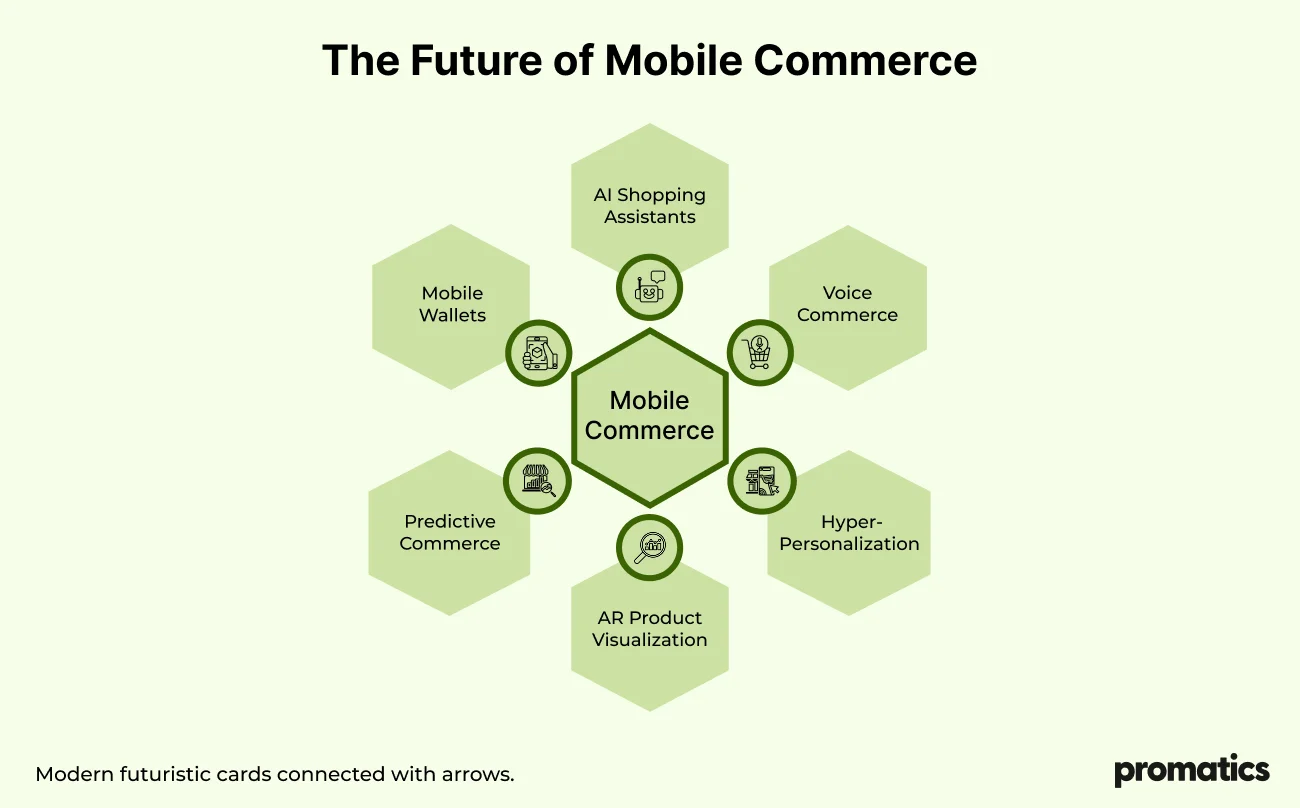
Mobile commerce continues to evolve rapidly. Businesses that embrace emerging technologies can create more engaging shopping experiences and gain a competitive advantage.
AI-Powered Shopping Experiences
Artificial intelligence is transforming ecommerce through:
- Product recommendations
- AI shopping assistants
- Smart search functionality
- Customer behavior analysis
AI is becoming a major component of modern Shopify mobile app development.
Voice Commerce
Voice-enabled shopping is becoming increasingly popular with consumers using smart devices and virtual assistants.
Future apps may allow customers to:
- Search products by voice
- Place orders verbally
- Track deliveries using voice commands
AR Product Visualization
Augmented Reality helps customers visualize products before purchasing.
Popular applications include:
- Furniture placement previews
- Virtual try-ons
- Product demonstrations
AR can improve purchase confidence and reduce returns.
Hyper-Personalization
Future ecommerce apps will move beyond basic recommendations and deliver experiences tailored to individual users in real time.
Mobile Wallet Adoption
Digital payment solutions continue to grow globally.
Successful apps increasingly support:
- Apple Pay
- Google Pay
- PayPal
- Buy Now, Pay Later services
Predictive Commerce
Predictive analytics helps businesses anticipate customer needs before customers actively search for products.
This can improve engagement, conversions, and customer satisfaction.
Why Partner With a Shopify Mobile App Development Company?
Building a successful Shopify mobile app requires more than technical development. It requires a deep understanding of ecommerce, user behavior, performance optimization, and long-term scalability.
Expertise That Reduces Risk
An experienced Shopify mobile app development company understands:
- Shopify APIs and integrations
- Mobile UX best practices
- App Store and Google Play requirements
- Ecommerce conversion strategies
- Performance and security optimization
This expertise helps businesses launch faster while avoiding common development challenges.
Faster Time-to-Market
Working with an experienced team means streamlined processes, efficient development cycles, and quicker deployment. This allows businesses to bring their app to market faster and start engaging customers sooner.
Scalable and Custom Solutions
As your business grows, your app should grow with it.
Whether you need CRM integrations, loyalty programs, advanced analytics, or custom features, a professional development partner can build a solution that supports your long-term goals.
Ongoing Support and Optimization
Launching your app is just the beginning.
Regular updates, performance improvements, security enhancements, and feature upgrades are essential for long-term success. A trusted partner ensures your app continues to deliver value as customer expectations evolve.
Why Promatics Technologies?
At Promatics Technologies, we help ecommerce brands transform their Shopify stores into high-performing mobile apps that drive engagement, retention, and sales.
From Shopify mobile app development and cross-platform app development to custom integrations and ongoing support, our team builds scalable mobile commerce solutions designed for growth.
The result? A faster, more engaging shopping experience that keeps customers coming back.
Conclusion
Mobile commerce is no longer a trend. It’s how customers prefer to shop.
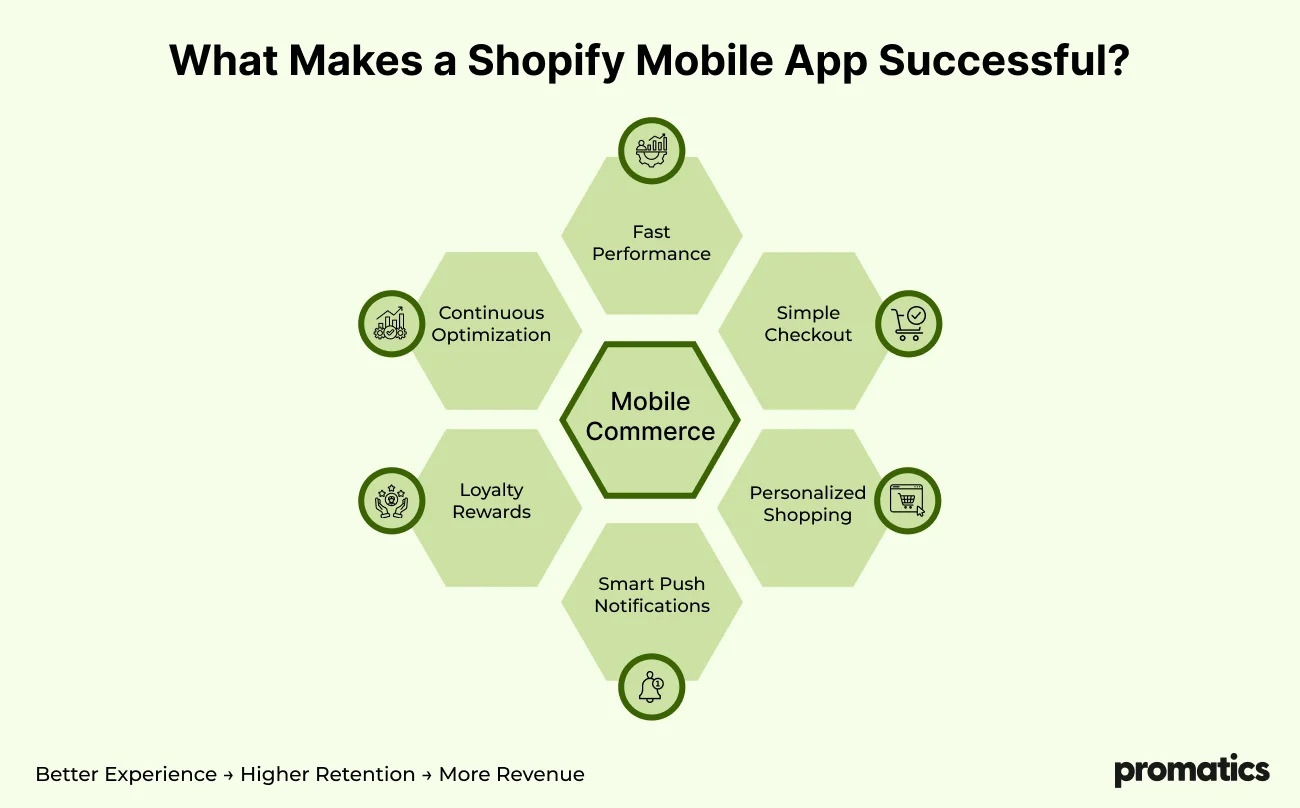
As consumer expectations continue to evolve, ecommerce brands need more than a mobile-friendly website to stay competitive. A dedicated Shopify mobile app helps create faster shopping experiences, stronger customer relationships, and more opportunities for repeat purchases.
The key is choosing the right approach. Whether it’s a no-code solution or a fully customized Shopify mobile app development project, success ultimately depends on delivering convenience, personalization, and value at every stage of the customer journey.
For businesses looking to increase engagement, improve retention, and build long-term customer loyalty, investing in a mobile app can be a powerful growth driver.
At Promatics Technologies, we help ecommerce brands transform their Shopify stores into scalable, high-performing mobile apps designed to support real business growth. From strategy and design to development and ongoing optimization, our team can help you create a mobile commerce experience that keeps customers engaged and coming back.
Looking to launch your Shopify mobile app? Connect with our experts to explore the best solution for your business and turn your mobile commerce vision into reality.