What Does It Take to Build a Loan Disbursal App?

The global financial ecosystem is undergoing a rapid transformation, with digital lending solutions emerging as one of the most disruptive innovations in recent years. Loan disbursal apps have become a cornerstone of this shift, enabling users to access credit in a way that is faster, more convenient, and significantly more efficient than traditional banking systems. In the past, applying for a loan involved multiple steps such as visiting a bank branch, submitting extensive paperwork, and waiting days or even weeks for approval.
Today, these processes have been replaced by seamless mobile experiences where users can apply for loans, receive approval, and access funds within hours or even minutes. This transformation is powered by advancements in fintech technologies, including artificial intelligence, machine learning, cloud computing, and big data analytics, all of which work together to streamline operations and enhance decision-making.
As user expectations continue to evolve, businesses are increasingly investing in loan disbursal apps to deliver faster services, improve accessibility, and stay competitive in a digitally driven financial landscape.
Understanding Loan Disbursal Apps
Loan disbursal apps are comprehensive digital platforms designed to manage the entire lending lifecycle, from initial user onboarding to loan repayment and customer support. These applications are built with a user-first approach, ensuring that every step of the borrowing process is intuitive, transparent, and efficient. At their core, these apps integrate multiple financial services, allowing users not only to apply for loans but also to track repayments, manage their credit profiles, and receive personalized financial recommendations.
They support a wide range of lending use cases, including personal loans, business financing, peer-to-peer lending, and microfinance, making them versatile solutions for different market segments. By leveraging data-driven insights and automation, loan disbursal apps reduce manual intervention, minimize errors, and provide a more consistent and reliable user experience. Additionally, they play a crucial role in promoting financial inclusion by enabling individuals with limited access to traditional banking systems to obtain credit through alternative data and digital verification methods.
Types of Loan Lending Apps
Before building a loan disbursal app, it is essential to understand the different types of lending models available, as each model comes with its own set of requirements, opportunities, and challenges. Peer-to-peer (P2P) lending apps are among the most popular, as they connect borrowers directly with individual lenders, eliminating traditional financial intermediaries and enabling faster, more transparent transactions.
Personal loan apps focus on providing unsecured loans to individuals based on their creditworthiness, often using advanced algorithms to assess risk and determine eligibility. Business loan apps cater to small and medium-sized enterprises (SMEs) and startups, offering financial support for growth and operations. Microfinance apps, on the other hand, are designed to serve underserved or unbanked populations by providing small-ticket loans with flexible repayment options.
Each of these models requires a tailored approach to risk assessment, regulatory compliance, and user experience, making it crucial for businesses to clearly define their target audience and objectives before development begins.
Must-Have Features of a Loan Disbursal App
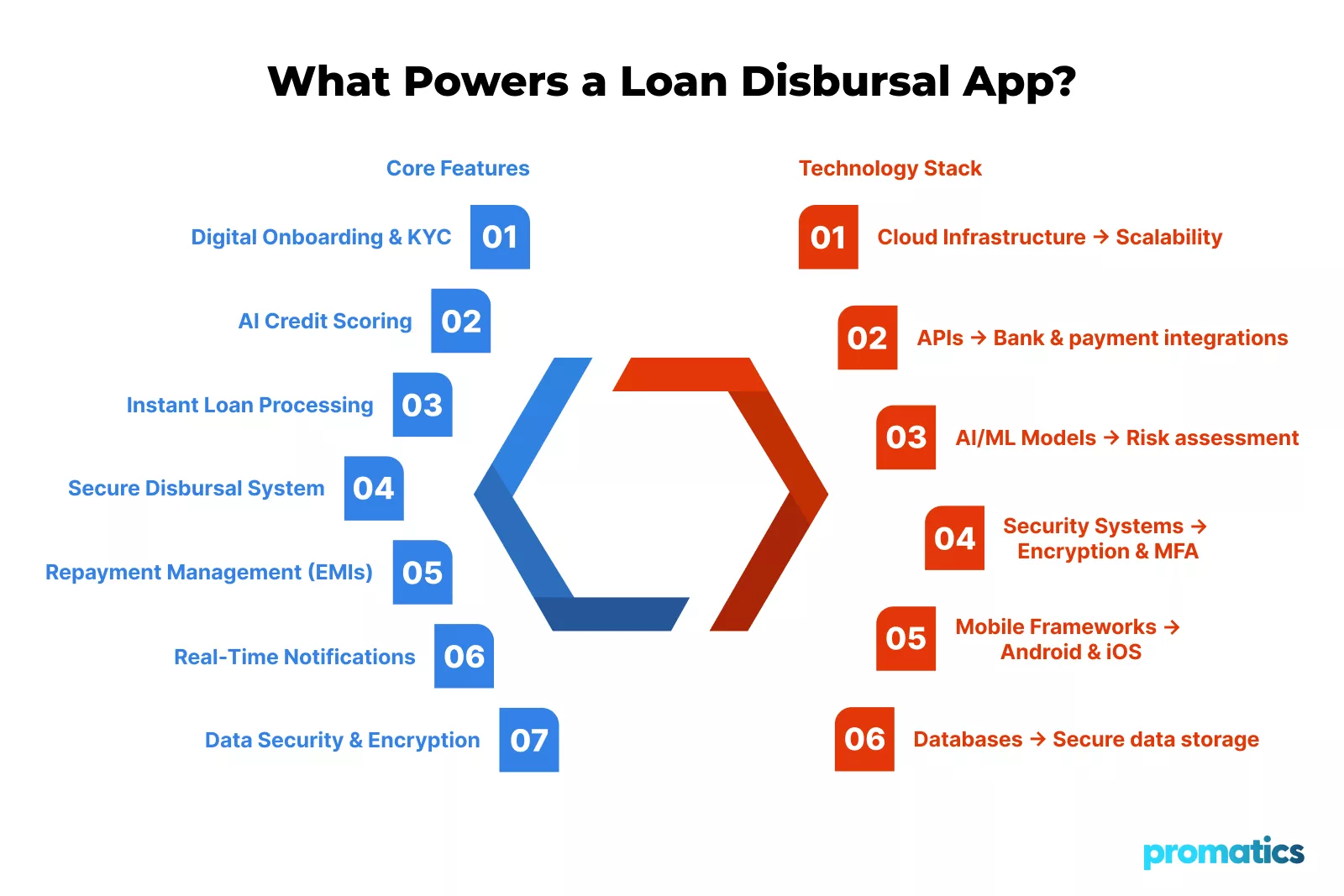
The success of a loan disbursal app largely depends on its ability to deliver a seamless, secure, and efficient user experience, which is achieved through a well-defined set of features. A smooth onboarding process is essential, allowing users to register quickly and complete KYC verification through digital methods such as document uploads and biometric authentication.
Advanced credit scoring systems powered by artificial intelligence analyze user data, including financial history, transaction patterns, and behavioral insights, to determine creditworthiness accurately. Automated loan processing ensures that applications are reviewed and approved in real time, significantly reducing processing time and operational costs. Secure disbursal systems enable instant fund transfers to users’ bank accounts, while repayment management features allow users to track EMIs, set reminders, and manage their financial obligations effectively.
Additionally, real-time notifications keep users informed about application status, payment schedules, and other important updates. Strong security measures, including encryption, multi-factor authentication, and fraud detection systems, are critical for protecting sensitive financial data and building trust among users.
How Loan Disbursal Apps Work
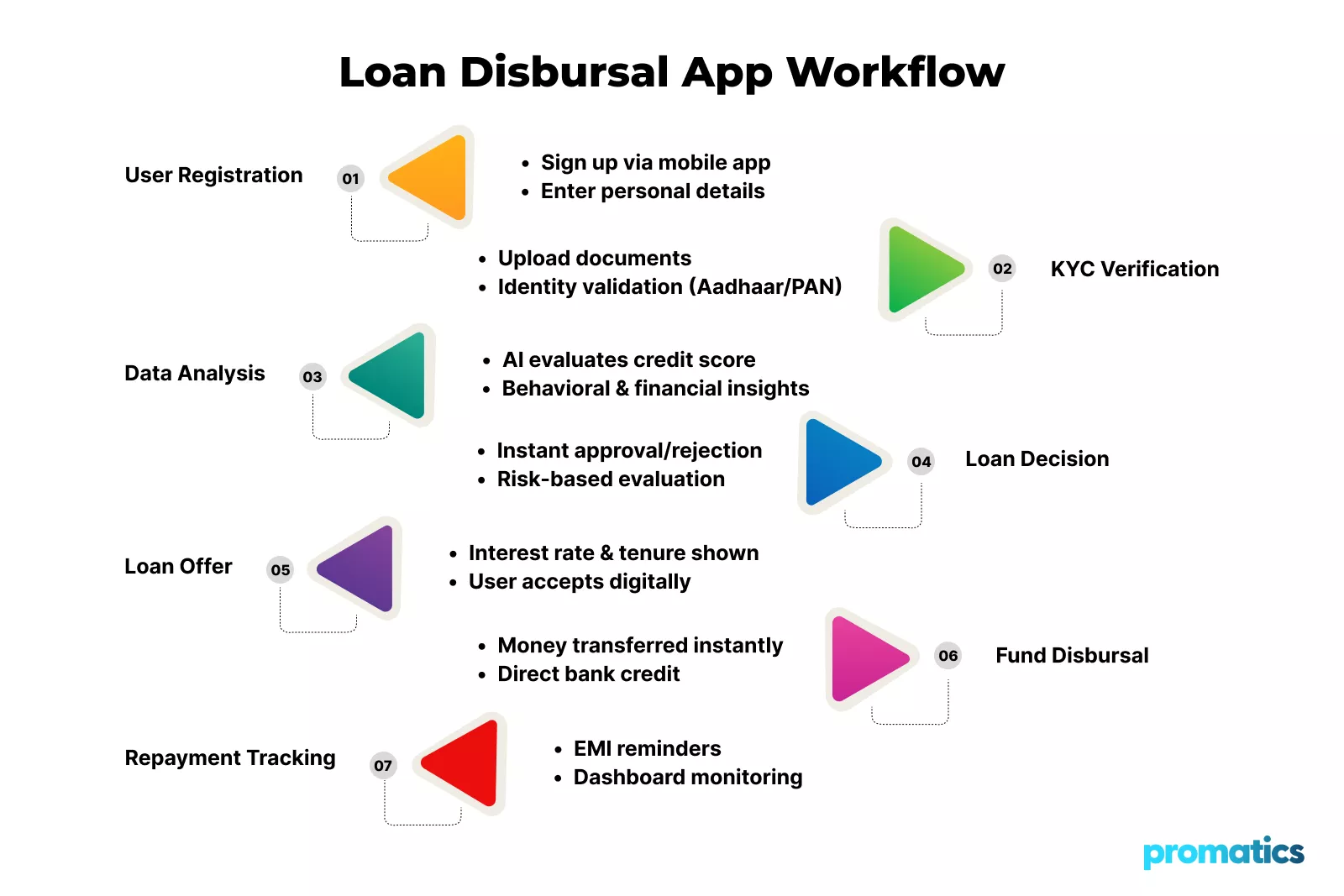
The working mechanism of a loan disbursal app is designed to be highly automated, ensuring speed and efficiency at every stage of the lending process. The journey begins when a user downloads the app, registers an account, and submits personal and financial details. This is followed by digital KYC verification, where identity and documents are validated using secure and automated systems.
Once the verification is complete, the app’s backend algorithms analyze the user’s data to assess creditworthiness, taking into account factors such as income, credit history, transaction behavior, and even alternative data sources. Based on this analysis, the system generates a risk score and determines whether the loan should be approved or rejected.
If approved, the user is presented with loan terms, including interest rates and repayment schedules, which can be accepted digitally. The funds are then disbursed directly to the user’s bank account, completing the process in a matter of minutes or hours. This streamlined workflow eliminates the need for manual intervention, reduces errors, and significantly enhances the overall user experience.
Steps to Build a Loan Disbursal App
Building a loan disbursal app requires a strategic and well-structured approach that combines market insights, technical expertise, and regulatory compliance. The process begins with thorough market research to identify target users, analyze competitors, and understand market trends. This helps in defining a clear value proposition and identifying gaps that the app can address.
The next step involves selecting an appropriate business model and defining revenue streams, such as interest rates, processing fees, or subscription-based services. Once the business strategy is in place, the focus shifts to designing an intuitive user interface that ensures a seamless and engaging user experience.
The development phase involves building the app’s frontend and backend systems, integrating third-party services such as payment gateways and credit bureaus, and implementing robust security measures. Rigorous testing is conducted to ensure performance, reliability, and compliance with regulatory standards. Finally, the app is launched with a well-planned marketing strategy aimed at attracting users and driving adoption, followed by continuous updates and improvements based on user feedback and market demands.
Technology Stack & Architecture
The technology stack and architecture of a loan disbursal app play a critical role in determining its performance, scalability, and security. Cloud computing is a key component, providing the infrastructure needed to handle large volumes of users and transactions while ensuring high availability and reliability.
APIs enable seamless integration with external systems, such as banking networks, payment gateways, and identity verification services, allowing the app to function as part of a larger financial ecosystem. Artificial intelligence and machine learning models are used to enhance credit scoring, detect fraud, and optimize decision-making processes.
Secure databases and encryption protocols ensure that sensitive user data is protected at all times, while cross-platform development frameworks enable the app to deliver a consistent experience across Android and iOS devices. A well-designed architecture not only supports current operations but also allows for future scalability, enabling the app to grow and adapt to changing market needs.
Benefits of Loan Disbursal Apps
Loan disbursal apps offer numerous benefits for both users and businesses, making them a preferred choice in modern financial services. For users, these apps provide instant access to credit, eliminating the need for lengthy application processes and enabling quick financial decision-making.
The simplified and transparent nature of these apps enhances user satisfaction and builds trust. For businesses, loan apps offer increased efficiency by automating processes and reducing the need for manual intervention. This leads to lower operational costs and faster turnaround times.
Additionally, data-driven insights enable better risk management and more accurate customer targeting, improving overall profitability. These platforms also create opportunities for cross-selling additional financial products, such as insurance and investment services, further enhancing revenue streams and customer engagement.
Challenges in Loan App Development
Despite their many advantages, developing a loan disbursal app comes with several challenges that must be carefully managed. Regulatory compliance is one of the most significant hurdles, as financial applications must adhere to strict laws and guidelines related to data protection, lending practices, and user privacy.
Ensuring robust data security is equally critical, given the sensitive nature of financial information handled by these apps. Developing accurate credit scoring models can be challenging, particularly for users with limited or no credit history, requiring the use of alternative data sources and advanced analytics.
Integration with multiple third-party services, such as payment gateways and credit bureaus, adds complexity to the development process and requires a well-designed architecture. Additionally, maintaining a balance between user experience and risk management is essential, as overly strict measures can deter users while lenient policies can increase financial risk.
What features can make the lending applications better?
Building a loan disbursal app is not just about developing a mobile interface, it requires creating a complete financial ecosystem that combines user experience, data intelligence, regulatory compliance, and scalable technology. At its core, a successful loan app must simplify borrowing while maintaining strict risk management and security standards.
Modern lending platforms are expected to deliver instant approvals, seamless onboarding, and transparent repayment systems, all powered by automation and AI-driven decision-making. According to industry insights, digital lending is growing rapidly due to increasing smartphone adoption and user preference for faster financial services, making it essential for businesses to invest in robust, future-ready solutions.
To achieve this, businesses need to focus on multiple interconnected components, including user journey design, backend architecture, compliance frameworks, and continuous optimization. A loan app must not only attract users but also build long-term trust through transparency, data protection, and reliable performance.
Key Requirements to Build a Loan Disbursal App:
- User-Centric Design: The app should offer a seamless and intuitive interface that simplifies the loan journey, from registration to repayment. A smooth onboarding experience with minimal friction is critical for user acquisition and retention.
- Digital KYC & Verification Systems: Automated KYC processes, including document uploads and identity verification, are essential to ensure compliance and reduce fraud risks. These systems enable faster approvals while maintaining regulatory standards.
- AI-Powered Credit Scoring: Advanced algorithms analyze financial data, credit history, and behavioral patterns to assess risk and determine loan eligibility. This reduces manual intervention and improves decision accuracy.
- Automated Loan Processing: End-to-end automation from application review to approval and disbursal ensures faster turnaround times and reduces operational costs for businesses.
- Secure Payment & Disbursal Infrastructure: Integration with banking systems and payment gateways enables instant fund transfers while ensuring secure financial transactions.
- Flexible Repayment Management: Modern loan apps support multiple repayment options such as EMIs, partial payments, and early settlements, improving user convenience and financial flexibility.
- Compliance & Regulatory Framework: Loan apps must adhere to financial regulations such as KYC, AML, and data protection laws. Compliance should be embedded into the system architecture from the beginning to avoid legal risks.
- Data Security & Privacy: Strong encryption, secure APIs, and multi-factor authentication are essential to protect sensitive financial data and build user trust.
- Scalable Technology Stack: Cloud-based infrastructure, APIs, and modular architecture ensure that the app can handle increasing users and transactions without performance issues.
- Real-Time Notifications & Transparency: Users should receive updates on loan status, approvals, and repayments, ensuring transparency and improving engagement.
Conclusion
Ready to Build Your Loan Disbursal App with Experts? If you’re planning to launch a high-performing, secure, and scalable loan disbursal app, partnering with the right technology team can make all the difference. Promatics Technologies brings deep expertise in fintech development, helping businesses turn complex lending ideas into powerful digital platforms that are fast, compliant, and user-friendly.
With a strong focus on innovation, Promatics delivers end-to-end solutions from strategy and UI/UX design to development, integration, and post-launch support. Whether you’re building a personal loan app, P2P lending platform, or a full-scale digital lending ecosystem, their team ensures seamless performance, advanced security, and AI-driven capabilities that align with modern user expectations.
Looking to build a future-ready lending app? Connect with Promatics Technologies today and transform your vision into a scalable fintech solution that drives growth, trust, and long-term success.
