Generative AI in App Development: Transforming User Experiences

TL;DR
- Fundamentals of generative AI application development.
- AI models, NLP systems, automation, and machine learning workflows.
- Chatbots, recommendation systems, and intelligent assistant use cases.
- Scalability, infrastructure, and AI ethics considerations.
- Business applications and future trends in generative AI.
Introduction: Where GenAI Meets Real Impact in App Development
The generative AI in the creation of apps has been able to reach a stage where it is changing the users’ expectations from the digital products. The applications are no longer only limited to fixed screens or predictable interactions. They can now access the context, understand natural language, change their behaviour interactively, and offer services which are more similar to actual human help.
We at Promatics Technologies have demonstrated this through the many projects that we have developed. Machines which used to require you to input a vast number of settings can now figure out what to do with just a few words from the user. This is not magic, it is engineering, design, and a different way of thinking about interactions. However, the ultimate aim here is to convey the level at which this single technology is affecting user experience worldwide.
Understanding the Power of Generative AI in Modern Apps
A. Personalization That Feels Human
Generative models are far more aware of the context than the traditional algorithms. They do not follow a strict set of rules, but rather behave by observing the behaviour, the intent, and then they create their response accordingly. In other words, apps can become a source of expert guidance which users are increasingly demanding in the areas of fitness, finance, learning, and lifestyle apps.
Generative systems are not just “if-this-then-that” mechanisms, instead, they figure out how users talk, what users want and how users’ habits change over time.
B. Contextual Intelligence & Natural Inputs
One more significant innovation is the new way of data collection by apps. The user is not required to fill lengthy forms or answer the questions of a structured survey but can just speak or write in a normal manner.
One of them is a sustainability platform developed by Promatics Technologies. Users were asked to report their everyday habits,
I drive to work, or I drive with the air conditioning on for six hours.
The system converted these descriptions into Carbon footprint data that was both organized and did not require any calculations. This conversational style removed the discomfort and made the experience easy.
GenAI for Hyper-Personalized User Journeys
Generative AI empowers apps to invent user journeys on the fly. User interface, content, and offers may alter depending on the user’s behavior, interests, and level of engagement.
In the above sustainability project, the platform did not merely record the carbon levels. It offered personalized measures, energy-saving routines, lifestyle choices, and habit-based recommendations depending on the user’s condition. The changes made the journey more significant for those who were seeking to lower their environmental impact.
You can see similar principles applied in modern app experiences discussed on trends shaping mobile experiences.
Conversational Interfaces: The New User Interface
Based on LLM, conversational interfaces are fast becoming a major interface in app navigation. By interacting with the system through questions, users get the desired information without going through the menus.
People might ask in our sustainability platform:
Why have my emissions been higher this month?
or
What are the things that I need to work on during this week to decrease my footprint?
The app provided context-based answers and thus the experience was like talking to a well-informed consultant. This change is happening in various industries, e.g., banking assistants to travel planners, showing that natural interfaces are gradually replacing the rigid ones.
Automated Insights & Content Generation: A Practical Tool
Just gathering the figures is only half the work. People want the significance of the data, not only the graphs.
Present-day machines convert the raw input into consumable items, such as weekly summaries, progress notes, easy-to-understand reports, habits breakdown. In our sustainability project, monthly reports were not feeling like a data dump. They appeared like a brief message from someone who gets your habits and can point out the obvious next steps.
This is a useful tool for developers and product teams: content that was hard and time-consuming to write can now be generated instantly, regularly, and at volume.
For organizations thinking of launching new digital products, this aligns with broader strategies described in Digital Transformation Best Practices.
Intelligent UX That Adapts to Behavior
Behavioral UX is a perfect example of one of the most useful applications of generative intelligence. The user interface can be changed according to the user’s interaction with the app:
- A fast logger of entries gets to have a simple input screen.
- Those who want data and numbers get more detailed metrics.
- If the energy level is good, then a timely push will be felt.
- If there is a drop in activities, then interaction prompts change.
The UI of our eco-friendly app was such that it automatically adjusted to the rhythm of each user. It made the transition exceptionally nice, especially for those people who liked to have short interactions rather than those who demanded in-depth analysis.
Real-Time Decision Support: AI as a Smart Advisor
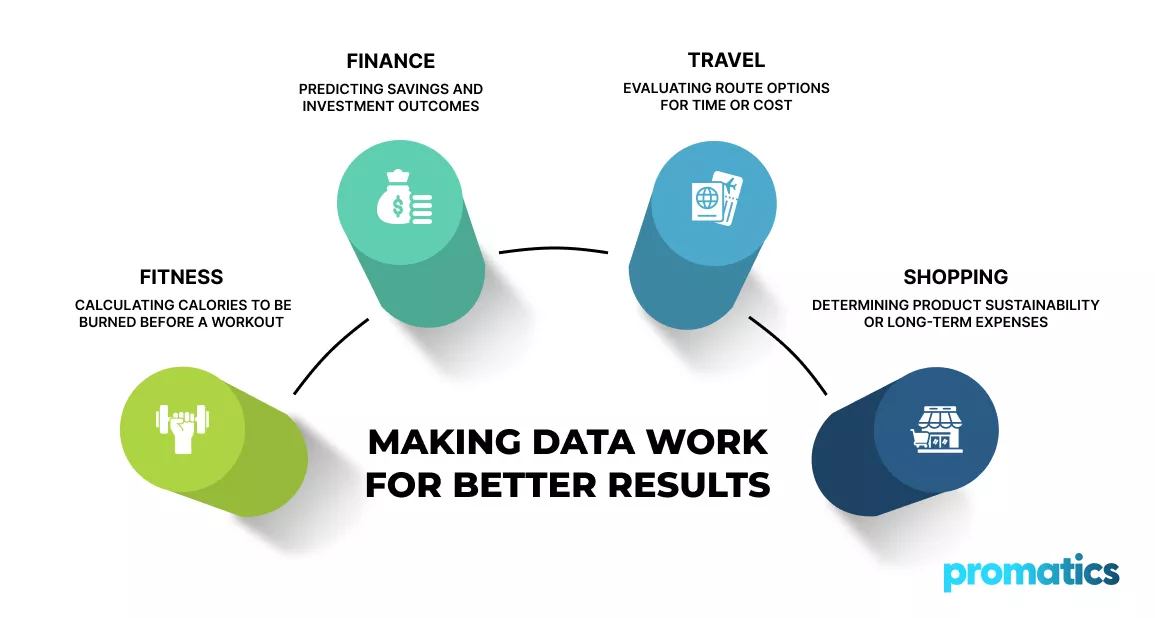
Generative systems are slowly becoming dependable advisors that pre-emptively help people with decision-making.
Examples across sectors:
- Fitness: calculating calories to be burned before a workout
- Finance: predicting savings and investment outcomes
- Travel: evaluating route options for time or cost
- Shopping: determining product sustainability or long-term expenses
Users of our sustainability platform were comparing the carbon footprints of transportation or their daily routines in advance. It helped them to be proactive rather than reactive.
Such a resource as NIST AI Risk Framework is a great help in providing necessary guidance for the creation of responsible decision-support systems.
Architectural Essentials for GenAI-Powered Apps
Following a layered architecture is helpful in building robust, scalable, secure generative AI-powered apps. The major building blocks comprise:
- LLM Integration Layer: Merges cloud-based or on-device models (e.g. GPT, Gemini, custom models) to work in unison.
- Context Engine & Embeddings: It is the storage for user history, preferences, and behavioral data and also the means of understanding them.
- Generative Intelligence Layer: It is the source that can create tailored content, recommend, respond conversationally, and give insights.
- Client Integration Layer: Deals with mobile/web APIs, data movement, caching, offline mode, and user interaction pipelines.
- Security, Privacy & Ethical Guardrails: Ensure that user data is secured, the output is safe and unbiased, and the user’s confidence is kept.
This architecture aligns well with modern best practices in scalable app development, similar to what’s described on Custom Web & Mobile Development Services page.
AI Automation for Developers — Not Just End Users
Generative AI does not result in only end users’ benefits, but the development of apps is also sped up and improved. Teams can use it for:
- Automatic code generation (boilerplate, API scaffolding, UI templates)
- Test cases and test data generation
- Documentation drafting or wiring initial architecture
- Quick prototyping and getting work done in short bursts of time
At Promatics, we combine these capabilities with our deep engineering experience to deliver projects fast without compromising on quality.
Industry-Specific Applications of Generative AI
A. Healthcare
- Tailored health recommendations
- Interactive symptom guides
- Automatically created care summaries
B. Sustainability & Environment
- Carbon emission estimation
- Intelligent eco-tips
- Lifestyle change prediction based on the past data
C. Fintech
- Budgeting tools that adjust to spending habits
- Investment forecasting
- Personalized financial education
D. Ecommerce
- Automatically created product descriptions
- Personalized product bundles
- Intelligent search and recommendation engines
E. Education
- Correctly generated study notes
- Customized learning paths
- Interactive tutoring companions
Promatics has a great article on digital disruption trends if you want to understand how new technologies impact business models.
A Practical Roadmap to Integrate GenAI into Your App
Generative intelligence can be integrated into your app through a real-life step-by-step roadmap which is as follows:
- Define: What user problems would really be improved by generative interaction or automation.
- Start Small: A small proof-of-concept (PoC) is where you should start to test viability.
- Select: Decide on the best model, cloud-based API, private instance, or on-device model.
- Design: Designing prompts, user flows, and conversational scripts.
- Secure Data: Secure data handling and privacy compliance should be there.
- Build Adaptive UI/UX: Develop workflows that change according to user behavior and feedback.
- Refine: Monitor, test, gather feedback, and refine over time for better accuracy and user experience.
The phased and thoughtful manner of this work serves to lessen the risk while at the same time maximize the value.
Challenges & Considerations
Generative AI presents several problems, which the following list represents:
- The chance of producing wrong or misleading results (hallucinations)
- Privacy of data, security, and compliance issues
- Large models may come with high computational or operational costs
- Performance limitations may arise on mobile devices or low-resource environments
- The need for constant monitoring, ethical control of output, and bias reduction
For broad frameworks and industry-standard guidelines, reports such as the Stanford AI Index are useful for understanding long-term implications and risks
The Future of AI-Powered App Experiences
The subsequent generative evolution will be characterized by:
- On-device AI, thus real-time intelligence without the need for cloud
- Emotion-sensitive interfaces that detect the tone and the intent
- Multi-modal experiences that combine voice, images, and text
- Digital companions that keep track of goals and routines
- Applications that can decide on their own what to do next, not just respond to commands
By these changes apps will be coming closer to working as proactive assistants rather than reactive tools.
Key Takeaways
Generative AI in app development is a major factor in the evolution of users’ expectations of digital products. The transition to adaptive, conversational, and personalized experiences is speeded up, and companies that follow this trend will be the ones to keep their place in the next ten years.
Promatics is still collaborating with businesses in the creation of well-thought-out, user-friendly products that use generative intelligence and are not only for today but for the fast-changing digital future.
If you’d like to learn more, you may visit:
- Mobile application services
- Web development expertise
- Our project case studies
