What Skills Are Essential for Mobile App Development?
TL;DR
- Essential technical and soft skills for app developers.
- Programming, APIs, UI/UX design, databases, and debugging expertise.
- AI integration, cloud technologies, and cybersecurity awareness.
- Agile collaboration and problem-solving capabilities.
- Skills required for modern mobile app development careers.
The mobile app industry is booming. There are millions of apps in app stores today, but only a few succeed. As of early September 2025, the Google Play Store hosts approximately 2,066,223 apps, while the Apple App Store lists around 1,990,284 apps.
To stand out, developers need more than just coding knowledge. Mastering mobile app development skills is key to career growth and building apps people actually use.
Success depends on strong technical abilities, creative design skills, solid security practices, and soft skills like communication. These skills together help turn an idea into a reliable and engaging mobile app. In this blog, we’ll explore the essential skills every mobile app developer needs to thrive.
Core Technical Skills for Mobile App Developers
If you want to build great mobile apps, you need a solid technical foundation. Think of it as your toolkit; without the right tools, it’s hard to get the job done well. Let’s break down the must-have technical mobile app development skills every developer should focus on.
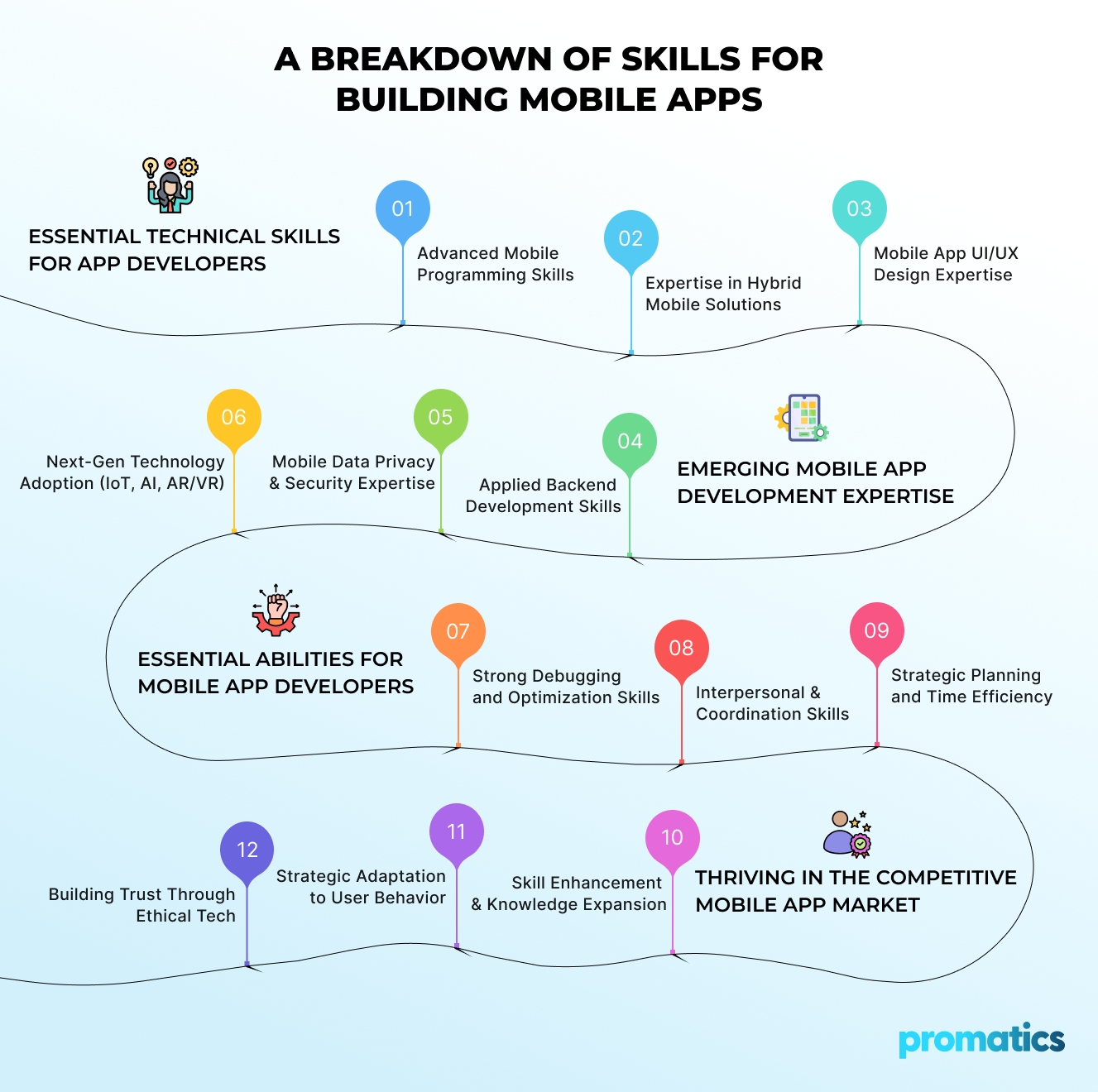
1. Programming Proficiency in Mobile Development
First things first, coding is the backbone of app development. You’ll need to know the key languages that power mobile apps. For iOS, Swift is the go-to language, while Kotlin and Java dominate the Android space. If you’re leaning toward cross-platform apps, Dart (used with Flutter) and JavaScript are essentials you’ll often work with.
It’s also important to understand the difference between native development and cross-platform coding. Native app development gives you more control and performance because you’re building directly for iOS or Android. Cross-platform, on the other hand, allows you to write once and deploy everywhere, a big time saver when done right.
No matter which path you take, always aim to write clean, maintainable, and scalable code. This makes debugging easier, helps teams collaborate, and ensures your app can grow without becoming a tangled mess of code.
2. Cross-Platform Development Expertise
Many companies today want apps that work smoothly on both iOS and Android without doubling the effort. That’s where cross-platform frameworks come in. Tools like Flutter, React Native, and .NET MAUI let developers build apps faster and often with fewer bugs.
One of the biggest advantages here is code reusability. Instead of writing the same feature twice for iOS and Android app development, you can reuse most of your codebase, saving time and money. This is especially valuable for startups or smaller teams.
Of course, cross-platform isn’t without its challenges. You’ll still need to handle platform-specific adaptations. For example, some design elements or device features behave differently on iOS and Android, so you’ll have to tweak your app accordingly. The key is balancing efficiency with a smooth, native-like user experience.
3. UI/UX Design Principles for Mobile Apps
A mobile app isn’t just about functionality; it’s also about how it feels in the user’s hands. That’s where UI/UX design principles come in. A great app should have an intuitive, user-friendly layout that makes people feel comfortable from the first tap.
Good design also means understanding user psychology and navigation flow. People expect apps to be easy to explore, with clear menus, logical steps, and minimal frustration. If users get lost or confused, they’ll likely uninstall and never return.
Accessibility is another crucial factor. Designing with inclusive practices means making sure your app works for everyone, including users with visual, auditory, or motor challenges. Features like voice commands, readable fonts, and proper contrast can make a huge difference in user satisfaction.
Advanced and Emerging Mobile App Development Skills
Once you’ve mastered the fundamentals, it’s time to level up. Advanced and emerging skills are what set standout developers apart. They not only make your apps more powerful but also keep you ahead in a fast-changing industry. Let’s break down three areas that are becoming increasingly important.
4. Backend Development Skills
A great mobile app isn’t just about what users see on the screen; it also needs a strong engine running behind it. That’s where backend development skills come into play. Knowing server-side programming languages like Node.js, Python, or Golang gives you the power to build scalable and reliable app backends.
Equally important is API development and integration. APIs act like bridges between your app and other services, letting you pull in data, connect with third-party tools, or sync with the cloud. A well-designed API can make your app far more useful and connected.
Finally, backend work often involves handling sensitive information. That means getting familiar with authentication, authorization, and secure data handling. Whether it’s login systems, payment processing, or personal data storage, security at the backend ensures your app stays trustworthy and compliant.
5. Mobile App Security Best Practices
Security isn’t optional; it’s a must-have. A staggering 75% of mobile apps contain at least one security vulnerability, and unpatched flaws are involved in 60% of data breaches.
Users trust apps with their data, and breaking that trust can destroy your reputation. Additionally, one in four mobile apps contains at least one high-risk security flaw, and among apps with 5–10 million downloads, 50% have a security issue.
One of the first steps is applying data encryption, secure APIs, and strong authentication methods to protect information from prying eyes. It’s also vital to guard against common vulnerabilities like SQL injection and cross-site scripting (XSS).
These attacks can expose sensitive data or even take down your app. Proactively testing and patching weaknesses keeps hackers at bay.
And don’t forget compliance. Laws like GDPR and HIPPA require apps to respect user privacy and give people control over their data. Staying compliant not only avoids fines but also builds user confidence that your app takes security seriously.
6. Emerging Tech Integration (IoT, AI, AR/VR)
Mobile apps are no longer just about basic functionality. Today’s top apps are enhanced with emerging technologies that create richer experiences. For example, IoT app development connects mobile devices with smart gadgets, allowing users to control everything from thermostats to wearables right from their phone.
Another game-changer is AI-powered features. Think of chatbots that provide instant support, recommendation engines that personalize content, or image recognition that makes apps smarter. These tools make apps more engaging and valuable in daily life.
Then there’s the exciting world of AR and VR. Augmented reality can bring interactive elements into real-world environments, while virtual reality creates fully immersive experiences. From gaming to shopping to education, these technologies open up entirely new possibilities for mobile apps.
Essential Soft Skills for Mobile App Developers
Technical knowledge is crucial, but it’s not enough on its own. The best mobile app developers also bring strong soft skills to the table. These skills help you work smarter, communicate better, and keep projects on track. Let’s look at the most important ones.
7. Problem-Solving and Debugging Skills
No app works perfectly the first time; bugs and glitches are part of the process. That’s why debugging tools and approaches are a must-have in your skillset. Whether you’re using built-in tools in Xcode, Android Studio, or third-party platforms, being able to identify issues quickly saves time and stress.
Beyond just fixing bugs, developers also need to think about optimizing performance and solving bottlenecks. Maybe the app runs too slowly on older devices, or a feature eats up too much battery life. Spotting these issues early and resolving them can mean the difference between a five-star review and an uninstall.
And let’s not forget about creativity. Sometimes, solving problems requires more than just following a guide; it’s about thinking outside the box and finding innovative solutions that make your app smoother and smarter.
8. Communication and Team Collaboration
App development is rarely a solo job. You’ll often be working alongside designers, testers, and clients, each with different perspectives and goals. Good communication keeps everyone aligned and reduces misunderstandings.
Developers also need the ability to explain technical details in simple terms. Not everyone you work with will understand code, so breaking things down into clear, non-technical language helps build trust and avoids confusion.
There’s also a big element of negotiating and managing expectations. Sometimes, clients want features that aren’t realistic within the budget or timeline. It’s your job to guide them toward better options while still keeping them satisfied with the final product.
9. Time Management and Project Organization
Mobile app projects can get complex quickly, which is why good time management is essential. Many teams use Agile or Scrum methodologies to stay organized. These frameworks break work into smaller, manageable chunks called sprints, making progress easier to track.
Another key skill is prioritizing features and managing sprints effectively. Not every feature can be built at once, so you’ll need to decide what’s most important and what can wait for later updates. This keeps development focused and avoids scope creep.
Finally, great developers know how to meet deadlines without sacrificing quality. Rushing can lead to buggy apps and frustrated users, but dragging out a project can kill momentum. Striking the right balance is what sets reliable developers apart.
Staying Ahead in the Mobile App Development Industry
Mobile app development doesn’t stand still. New tools, shifting user expectations, and evolving regulations mean developers need to keep learning new mobile app development skills if they want to stay competitive.
Success isn’t just about building an app today; it’s about growing with the industry. Let’s look at three key ways developers can stay ahead of the curve.
10. Continuous Learning and Skill Upgradation
Technology moves fast, and apps that felt cutting-edge a year ago might seem outdated today. That’s why developers need to keep up with new frameworks, tools, and operating system updates. For example, when iOS or Android releases new features, users quickly expect apps to support them. Developers who adapt early gain a big advantage.
One of the best ways to stay informed is by following industry blogs, podcasts, and communities. Platforms like Medium, Stack Overflow, and developer podcasts can keep you in the loop on best practices and upcoming trends. Networking in these spaces also helps you learn from others’ experiences.
Practical experience matters too. Joining hackathons and coding challenges is a great way to sharpen skills, experiment with new ideas, and get creative under time pressure. These events not only build technical confidence but also expose you to collaborative problem-solving in real-world scenarios.
11. Adapting to Market and User Trends
Even the best code won’t save an app that doesn’t meet user expectations. That’s why it’s important to analyze competitor apps and spot opportunities for improvement. Maybe their design is clunky, or they lack a feature users are asking for; these gaps can guide your own development strategy.
Another powerful tool is tracking analytics for user behaviour insights. Metrics like retention rates, session times, and feature usage can reveal what people love (and what frustrates them). Data-driven decisions help you refine the user experience instead of guessing what might work.
Finally, apps succeed when they adjust features to match audience needs. That might mean adding new payment methods in a finance app, simplifying navigation for older users, or expanding language support for a global audience. Staying flexible keeps your app relevant in a crowded marketplace.
12. Ethical Development Practices
In today’s digital world, ethics play a huge role in how users perceive your app. Developers should avoid dark UX patterns, tricks like confusing unsubscribe buttons or sneaky opt-ins that frustrate users. While they may drive short-term engagement, they damage trust in the long run.
Building apps with inclusivity and sustainability in mind is also becoming more important. That includes making apps accessible to people with disabilities, designing for diverse audiences, and even considering the environmental impact of resource-heavy features. Ethical choices make your app more widely usable and socially responsible.
Lastly, respecting user privacy and consent is non-negotiable. Users want to know how their data is collected, stored, and used. Clear consent forms, transparent policies, and secure handling of information show users that your app puts their trust first, and in today’s market, that can be a major differentiator.
How to Find the Right App Development Company
Choosing the right mobile application development company can make or break your project. A great partner doesn’t just write code; they understand your vision, help refine your ideas, and deliver a product that truly connects with users. Here are five qualities to look for when picking the best team for your app.
1. Strong Technical Expertise
Check whether the company has experience with the latest programming languages, frameworks, and platforms. A skilled team should be comfortable with both native and cross-platform development.
2. Proven Portfolio
A good track record speaks volumes. Review their past projects to see if they’ve built apps similar to what you’re aiming for. Real-world results are better than promises.
3. User-Centered Design Approach
A reliable company doesn’t just think about features; they focus on UI/UX that ensures your app is intuitive and engaging. Design can be the difference between an app people love and one they abandon.
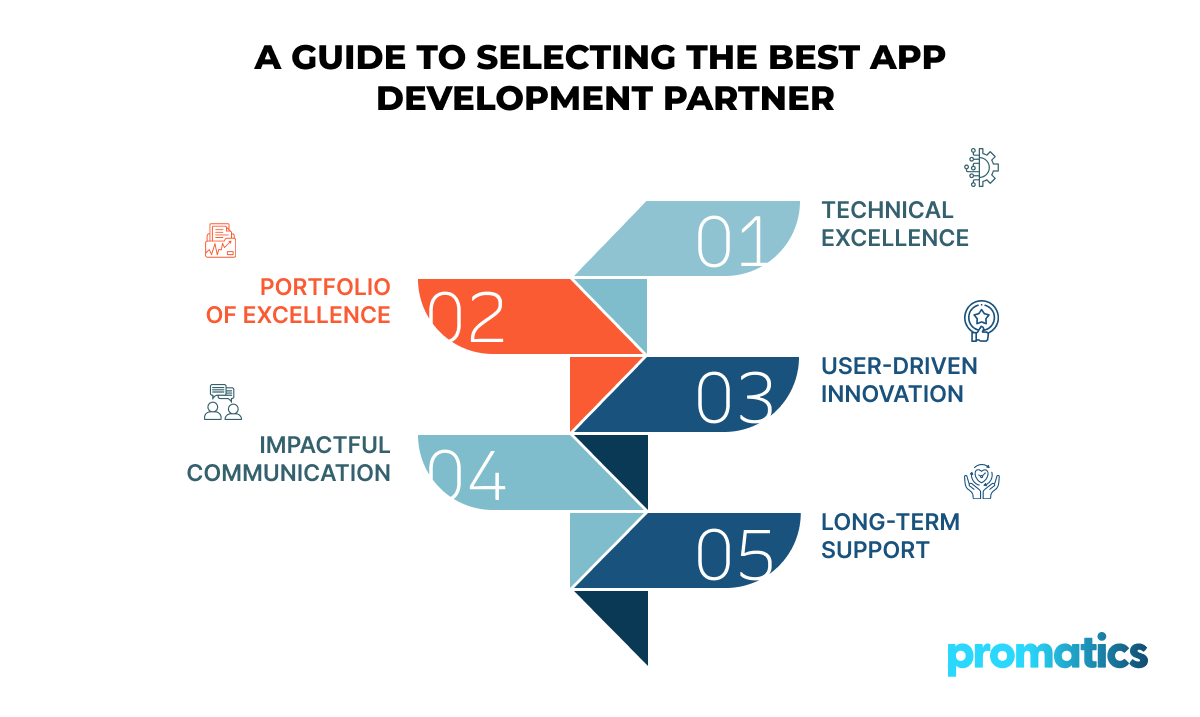
4. Clear Communication
The best companies keep you in the loop. They explain technical concepts in plain language, provide regular updates, and make collaboration easy. Transparency is key to building trust.
5. Post-Launch Support
App development doesn’t end at launch. Look for a company that offers updates, bug fixes, and ongoing support to keep your app relevant and high-performing.
Ready to Build Your App?
At Promatics, we bring together technical expertise, creative design, and long-term support to help businesses succeed in the mobile world. Whether you’re launching your first app or scaling an existing one, our team is here to turn your vision into reality. Contact Promatics today, and let’s start building your next big app.
Concluding Words
The future of mobile app development belongs to those who go beyond coding. Blending technology, design, security, and soft skills is the formula for creating apps people love. The industry never stands still, and neither should developers.
By embracing continuous learning and staying ahead of trends, you can transform ideas into impactful mobile experiences. In 2025 and beyond, adaptability, innovation, and constantly upgrading your mobile app development skills will be the real superpowers that set great developers apart.
