Insights
Discover the latest trends, insights, and best practices in web and mobile app development
Blockchain Development Company in India: Enterprise Blockchain Solutions Explained

Blockchain is no longer limited to cryptocurrencies. Today, enterprises use blockchain to secure transactions, automate business processes, improve transparency, and build trusted digital ecosystems. From banking and healthcare to logistics and manufacturing, organizations are investing in blockchain to increase efficiency while reducing operational risks.
AI Agent Development Services for Enterprise Automation

Artificial intelligence is rapidly evolving from a tool that answers questions to one that performs meaningful work. While chatbots and generative AI assistants have transformed customer interactions and content creation, businesses are now adopting AI agents capable of understanding objectives, making decisions, and executing multi-step workflows with minimal human intervention.
Healthcare App Development in 2026: AI, Compliance, and Patient Experience

Software has become the backbone of modern businesses, but the way enterprises build and deliver software is changing rapidly. Customers expect seamless digital experiences, faster feature releases, stronger security, and always-on availability.
Enterprise SaaS Transformation: Modern SaaS Architecture for Growing Businesses

Software has become the backbone of modern businesses, but the way enterprises build and deliver software is changing rapidly. Customers expect seamless digital experiences, faster feature releases, stronger security, and always-on availability.
AI/ML Development Solutions: How Enterprises Are Building Smarter Applications

Artificial Intelligence (AI) is no longer a futuristic concept; it’s a business growth driver. According to McKinsey, 92% of organizations plan to increase their AI investments over the next three years, while IBM reports that 61% of CEOs are already adopting AI agents or preparing to scale them across their organizations.
React Native vs Swift: Which Is Better for Enterprise Mobile App Development?

Choosing between React Native and Swift isn’t just a technical decision. It influences your development costs, time to market, long-term maintenance, scalability, and ultimately, your return on investment.
iPhone App Development Services: Find the Right iOS Development Company

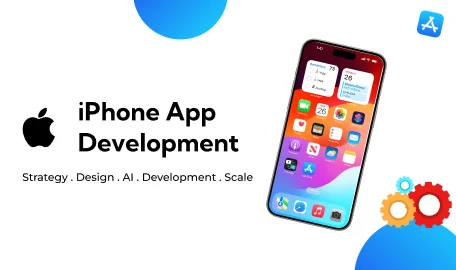
Building an iPhone app is easy. Building one that attracts users, scales with your business, and delivers measurable ROI is far more challenging. Many projects fail because of poor planning, choosing the wrong technology, or partnering with an inexperienced iOS app development company.
Quick Commerce App Development: Technology Behind 10-Minute Delivery Apps

Consumer expectations have fundamentally reshaped digital retail. Waiting three or four days for an online order is no longer considered convenient, and even same-day delivery is rapidly becoming the baseline rather than a competitive advantage. As a result, businesses across industries are investing in quick commerce app development to deliver groceries, medicines, electronics, and everyday essentials within minutes while creating seamless, on-demand customer experiences.
Healthcare App Development Trends Reshaping Digital Healthcare in 2026

Healthcare is undergoing one of its biggest digital transformations, with mobile technology and artificial intelligence changing how patients access care and how providers deliver it. From virtual consultations and remote patient monitoring to AI-powered diagnostics and personalized treatment plans, healthcare apps are becoming the foundation of modern healthcare experiences.