Insights
Discover the latest trends, insights, and best practices in web and mobile app development
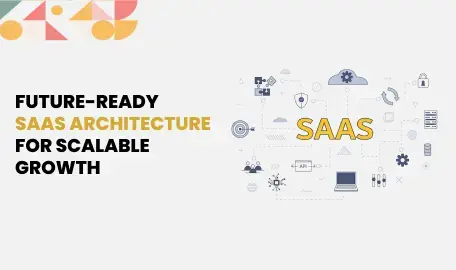
SaaS Application Architecture: Designing for Multi-Tenancy and Scale in 2026

SaaS is no longer just a software delivery model; it is the infrastructure powering today’s digital economy. From fintech platforms processing millions of transactions to AI-driven systems shaping enterprise decisions, modern SaaS applications sit at the heart of mission-critical operations. As adoption accelerates, architectural pressure intensifies.
Mobile App Development Architecture: Why It Matters for Scalable Business Growth

Users don’t judge mobile apps by their code or architecture, they judge them by how effortlessly they work. An app that loads instantly, responds smoothly, and feels reliable earns trust. One that lags, crashes, or breaks under pressure is quickly abandoned. What separates these two experiences is not just design or features, but the foundation beneath them: mobile app development architecture.

Native vs. Hybrid App Development Cost Comparison: A Practical Guide for Modern Businesses

Mobile applications have evolved far beyond supporting digital tools. Today, they function as core business platforms that drive customer engagement, operational efficiency, and scalable growth. From eCommerce and digital payments to healthcare, logistics, and enterprise systems, mobile apps now sit at the center of modern business strategy.

When Should Businesses Invest in SaaS Application Development?

Software as a Service (SaaS) has evolved beyond a simple software delivery mechanism. It now represents a fundamental shift in how digital products are architected, scaled, and monetized. For modern enterprises, SaaS is no longer just a technology choice—it is a strategic growth model that enables elastic scalability, operational agility, and predictable recurring revenue streams.
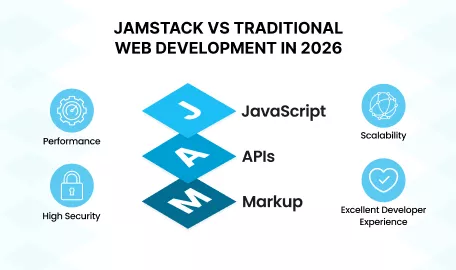
JAMstack vs Traditional Web Development: What’s Better in 2026?

Web development has evolved far beyond creating static websites. Today businesses rely on digital platforms that can scale seamlessly, support real-time interactions, integrate with multiple systems and deliver consistent performance across devices. As a result, choosing the right web development company has become a key business decision.
Why Custom Mobile App Development Services Are Better for Business Growth
In today’s mobile-first world, generic mobile apps do not satisfy the advanced needs of modern companies. Modern people spend around 4 hours and 37 minutes daily on their smartphones.
UI/UX Design Drives Conversions and User Engagement

Your website has less than three seconds or less to make a positive impact on the visitors. Miss that window, and more than half of your potential clients are gone silently and permanently.
Enterprise Web Development: Building Scalable, Secure, and Future-Ready Solutions

Enterprise businesses depend on robust web applications to unify operations, automate processes, and support large-scale digital ecosystems. Creation of such applications calls for strategic engineering, profound security, and architectures that are ready for the future.
Why Progressive Web Apps (PWAs) Are the Future of Web Development

Today, users demand quick, dependable, and app-like experiences without the need to download heavy mobile apps. This is precisely where Progressive Web Apps (PWAs) come in to revolutionize the situation. PWAs combine the best features of both websites and native apps with great speed, offline capabilities, and high-quality performance.