Insights
Discover the latest trends, insights, and best practices in web and mobile app development
Autonomous AI Agents: How Businesses Are Building Self-Operating Systems in 2026

Imagine arriving at work and discovering that customer support tickets were resolved overnight, marketing campaigns optimized automatically, sales opportunities prioritized, and operational issues fixed before anyone even noticed them. What once sounded futuristic is quickly becoming reality.

Cross-Platform App Development in 2026: React Native vs Flutter vs MAUI

Your eCommerce business is growing fast. More traffic. More orders. More customers. On the surface, everything looks like success. But behind the scenes, the cracks start to appear.

Headless Commerce vs Traditional eCommerce: Which is Better for Scaling?

Your eCommerce business is growing fast. More traffic. More orders. More customers. On the surface, everything looks like success. But behind the scenes, the cracks start to appear.
AI Agent Development Services: Is It Worth Investing in 2026?
Businesses are moving beyond traditional automation and basic chatbots. As customer expectations rise and operations become more data-driven, companies need intelligent systems that can automate tasks, analyze data, make decisions, and adapt in real time.
What Are AI Agents? Top Reasons Enterprises Are Adopting Them Fast

Businesses are moving beyond basic automation and entering a new era of intelligent, autonomous AI systems capable of handling complex workflows with minimal human involvement.
Enterprise MVP Development with AI: Faster, Smarter & Scalable Product Builds in 2026
Launching a product has never been easier, but building one that can truly scale is where most businesses struggle.
In today’s fast-moving digital market, companies are under constant pressure to launch faster, innovate continuously, and respond quickly to changing customer expectations.
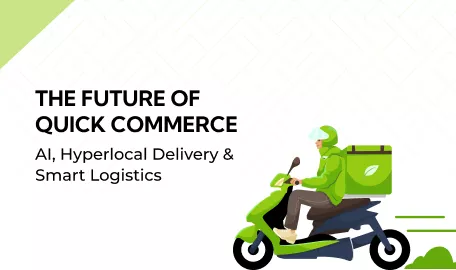
AI-Powered Quick Commerce App Development: Features, Cost & Tech Stack (Blinkit/Swiggy Model)

Quick commerce is rapidly transforming online shopping as consumers increasingly expect groceries, medicines, and daily essentials to be delivered within minutes. This growing demand has fueled the rise of platforms like Blinkit, Swiggy Instamart, and Zepto, where speed and convenience drive customer loyalty.

Mobile Wallet App Development Guide 2026: Build Apps Like PayPal & Stripe

Digital payments have become the backbone of modern commerce, transforming how people pay, transfer money, and manage finances. From buying groceries and paying utility bills to sending money instantly, users now expect payment experiences that are fast, secure, and effortless.

DevOps in FinTech: CI/CD, Compliance & Security
Speed is no longer a differentiator in fintech. It is the minimum expectation. The industry runs on real time transactions, constant innovation, and zero tolerance for downtime. In such a high stakes environment, the ability to deliver quickly must be matched with consistency, security, and reliability. This is where DevOps moves beyond technical practice and becomes a strategic pillar.