
Insights
Discover the latest trends, insights, and best practices in web and mobile app development
How To Hire Mobile App Developers In India

Mobile applications are no longer optional for businesses; they are strategic assets that drive customer engagement, operational efficiency, and long-term growth. From startups launching innovative products to enterprises modernizing legacy systems, mobile apps now play a central role in digital transformation strategies. However, the success of any mobile initiative begins with one crucial decision: hiring the right mobile app developer.

Hybrid App Development Explained: Building Scalable Mobile Apps in 2026

Mobile applications have evolved from simple digital touchpoints into essential business infrastructure. In 2026, they play a critical role in customer acquisition, brand engagement, operational efficiency, and long-term revenue growth. For startups, mobile apps accelerate market validation and user feedback. For enterprises, they drive large-scale digital transformation and ecosystem expansion.
API First Development: Future-Proofing Your Web and Mobile Applications

Digital transformation has fundamentally changed how businesses build and scale technology. Applications are no longer isolated systems serving a single interface. Today, a digital product may simultaneously power a web platform, mobile apps, internal dashboards, partner ecosystems, analytics tools, AI engines, and third-party integrations.
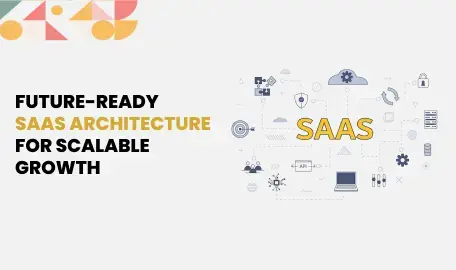
SaaS Application Architecture: Designing for Multi-Tenancy and Scale in 2026

SaaS is no longer just a software delivery model; it is the infrastructure powering today’s digital economy. From fintech platforms processing millions of transactions to AI-driven systems shaping enterprise decisions, modern SaaS applications sit at the heart of mission-critical operations. As adoption accelerates, architectural pressure intensifies.
Mobile App Development Architecture: Why It Matters for Scalable Business Growth
Users don’t judge mobile apps by their code or architecture, they judge them by how effortlessly they work. An app that loads instantly, responds smoothly, and feels reliable earns trust. One that lags, crashes, or breaks under pressure is quickly abandoned. What separates these two experiences is not just design or features, but the foundation beneath them: mobile app development architecture.

Native vs. Hybrid App Development Cost Comparison: A Practical Guide for Modern Businesses

Mobile applications have evolved far beyond supporting digital tools. Today, they function as core business platforms that drive customer engagement, operational efficiency, and scalable growth. From eCommerce and digital payments to healthcare, logistics, and enterprise systems, mobile apps now sit at the center of modern business strategy.

When Should Businesses Invest in SaaS Application Development?

Software as a Service (SaaS) has evolved beyond a simple software delivery mechanism. It now represents a fundamental shift in how digital products are architected, scaled, and monetized. For modern enterprises, SaaS is no longer just a technology choice—it is a strategic growth model that enables elastic scalability, operational agility, and predictable recurring revenue streams.

Cloud-Based vs Edge-Based IoT Software Development: Which Is Better?

As enterprises across the US and global markets accelerate digital transformation, the Internet of Things (IoT) has emerged as a critical enabler of intelligent operations. Today, every forward-thinking IoT software development company is helping organizations across manufacturing plants, logistics networks, energy systems, and smart infrastructure leverage connected devices and sensors that continuously generate massive volumes of real-time data.
From Automation to Intelligence: How AI Development Companies Are Evolving

Artificial intelligence, commonly known as AI, is not just a distant concept confined to research labs or speculative technology. As of 2025, AI is deeply embedded in multiple industries, and artificial intelligence companies serve as key architects of this integration. They are innovators, problem-solvers, and visionaries shaping the AI ecosystem’s rapid evolution.